
La Chapelle à Golfe Juan — History & Facts
Can paint confess what words never could? In La Chapelle à Golfe Juan, the canvas reveals a sanctuary imbued with light and color, transcending mere representation to evoke the sacred. Look to the center, where the soft contours of the chapel emerge, washed in warm hues of ochre and ivory. Dufy's brushwork dances across the surface, capturing the vibrancy of the Mediterranean landscape. Notice how the dappled sunlight filters through the branches of surrounding trees, casting an ethereal glow that draws the eye into the serenity of the scene.
The fluid lines and bold strokes create a sense of movement, inviting viewers to wander through this tranquil space. Amidst the purity of the chapel, hidden tensions arise. The vivid colors contrast with the stillness of the architecture, suggesting a longing for connection and peace in a chaotic world. The interplay of light and shadow conveys a sense of spirituality, while the background hills, painted with gentle waves of blue and green, evoke the rhythm of nature, reminding us of our place within it.
Each brushstroke serves as a meditative reminder that beauty can elevate the soul beyond the mundane. In 1923, Raoul Dufy painted this work during a time of personal reflection, as he sought to unify his explorations in color and form. Living in the vibrant artistic milieu of Paris, he was deeply influenced by the Fauvism movement, which prioritized emotion and the experience of the viewer over realistic representation. This painting encapsulates his desire to express a transcendent beauty, rooted in the everyday yet elevated by the artist's vision.
More Artworks by Raoul Dufy
Browse all →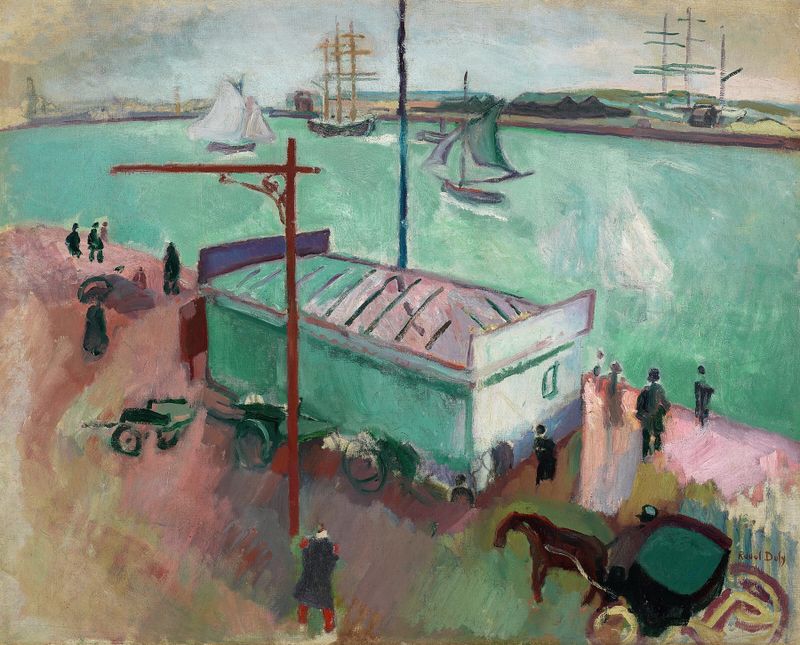
Le Port du Havre
Raoul Dufy
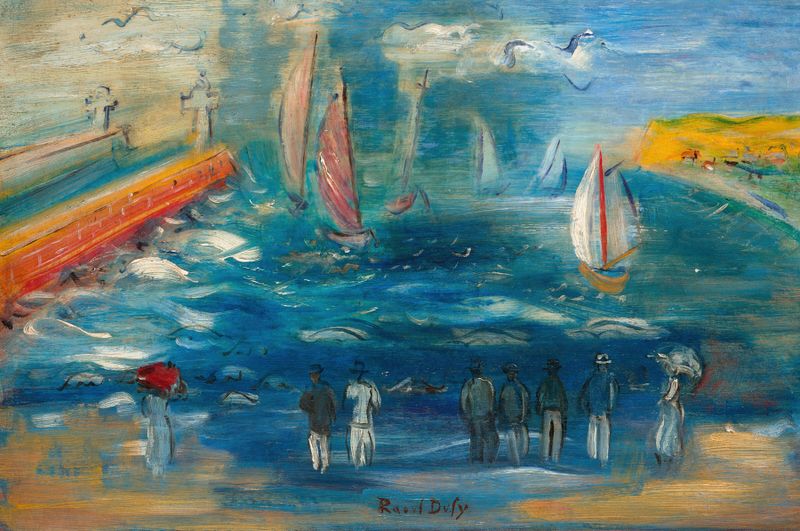
Départ des régates
Raoul Dufy

Les canotiers sur la Marne
Raoul Dufy
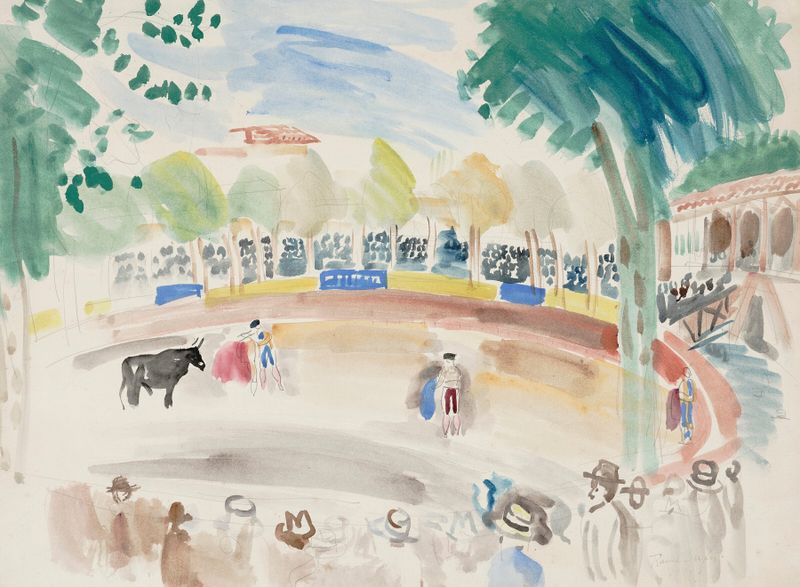
La corrida
Raoul Dufy

Composition au port et à la fontaine
Raoul Dufy
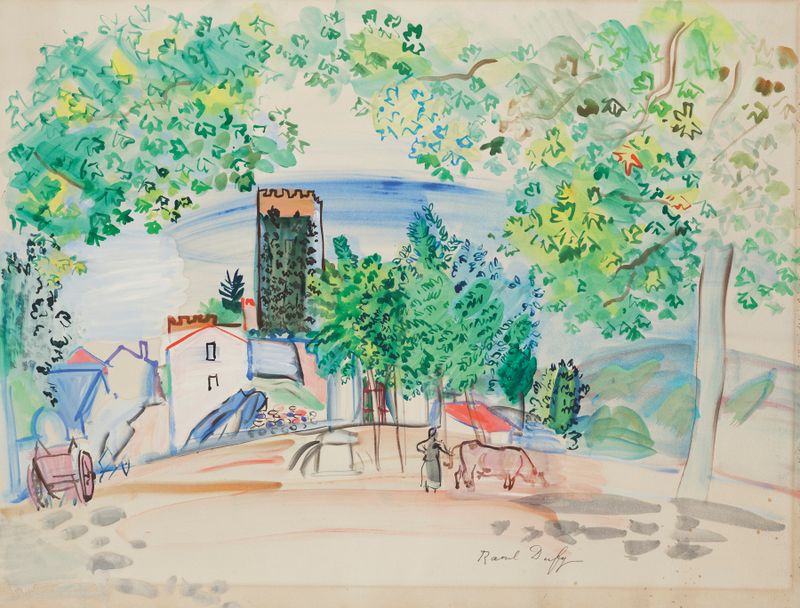
Vue de la Tour de Vernet-les-Bains
Raoul Dufy
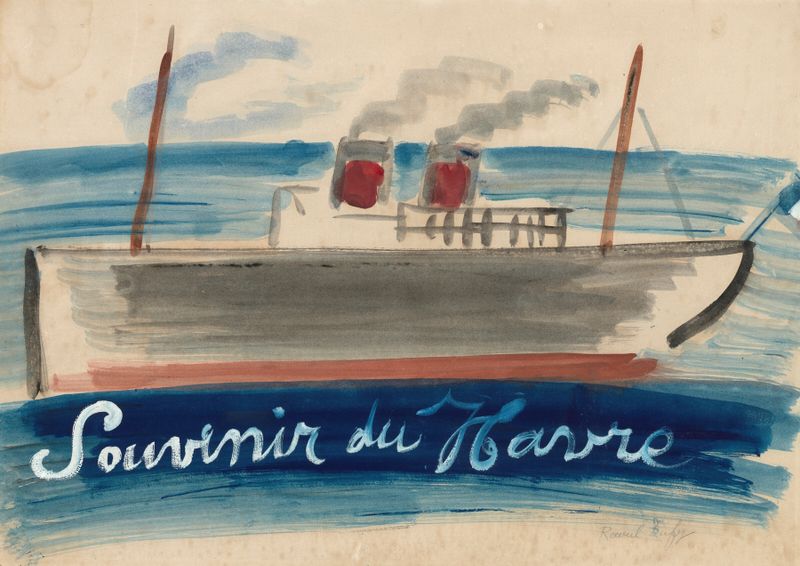
Souvenir du Havre
Raoul Dufy

Les Barques
Raoul Dufy
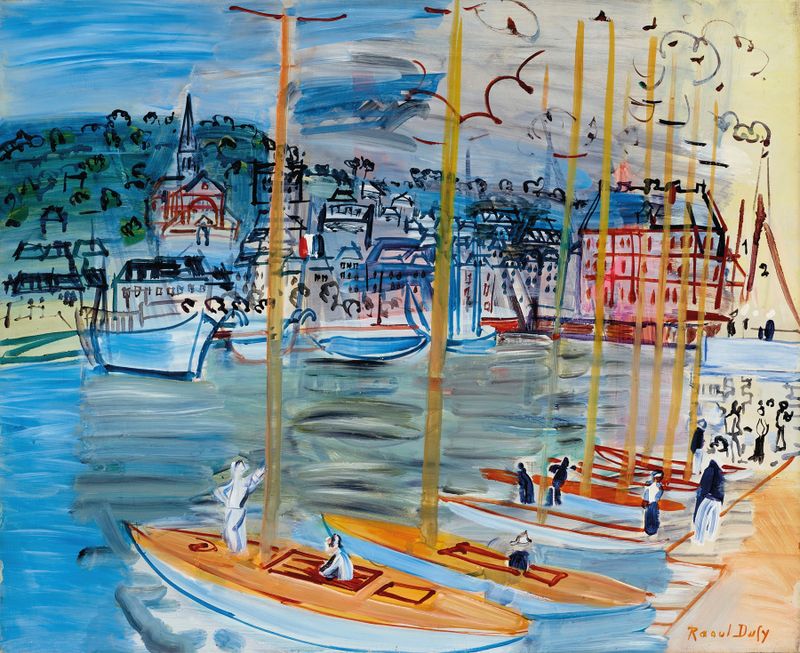
Le bassin de Deauville
Raoul Dufy

Régates à Deauville
Raoul Dufy
More Architecture Art
Browse all →
The statue of Liberty
Frédéric Auguste Bartholdi

View of Houses in Delft, Known as ‘The Little Street’
Johannes Vermeer

View of Houses in Delft, Known as ‘The Little Street’
Johannes Vermeer

The Cathedral in Rouen. The portal, Grey Weather
Claude Monet

The yellow house
Vincent van Gogh

The Church in Auvers-sur-Oise, View from the Chevet
Vincent van Gogh