
La Cité, Paris, matinée d'automne — History & Facts
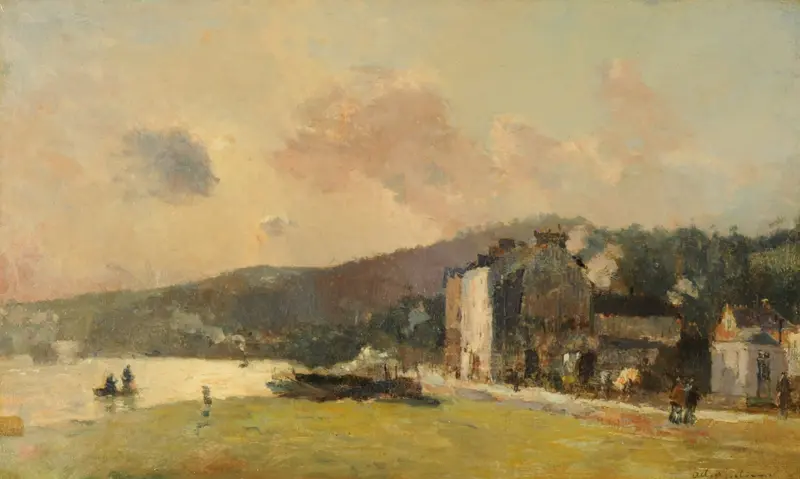
The first thing that catches the eye in La Cité, Paris, matinée d'automne is the way light seems to dissolve the city into a memory. The sun, a hazy disc suspended in a sky of shifting pastel clouds, hovers above the silhouetted rooftops and spires, its glow diffusing into every corner of the canvas. The brushwork is loose, almost trembling, and the boundaries between water, stone, and sky blur as if Paris itself is drifting into the autumn morning.
The bridge arches quietly across the river, its reflections trembling in the cool water below, while the island’s foliage glows with the muted golds and greens of the season. Lebourg’s palette sets a mood of gentle melancholy, inviting the viewer to linger in this suspended moment where the city is both present and vanishing. Painted in 1909, this work belongs to a period when artists across France were captivated by the changing face of their cities and the fleeting effects of atmosphere. While history has kept few traces of the specific journey of this painting, its place in the Paris Musées collection ties it to a broader tradition of urban landscape painting at the turn of the twentieth century.
Such works were often created for a growing middle class eager to celebrate the beauty and modernity of their surroundings, yet Lebourg’s vision is more meditative than triumphant. In the world of La Cité, Paris, matinée d'automne, the city is not a monument but a living presence, seen through the veil of autumn air—step closer, and the brushstrokes themselves seem to shimmer with the memory of that morning.
More Artworks by Albert Charles Lebourg

Le Jardin du Docteur Viau
Albert Charles Lebourg
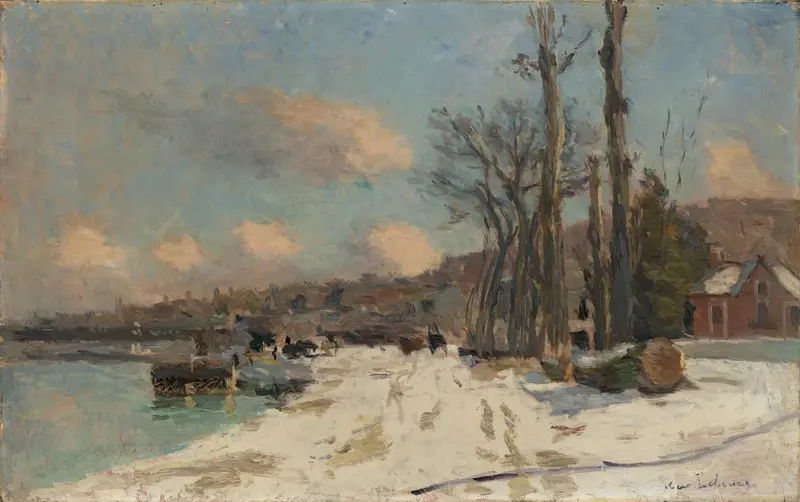
Snow Scene at Bougival
Albert Charles Lebourg
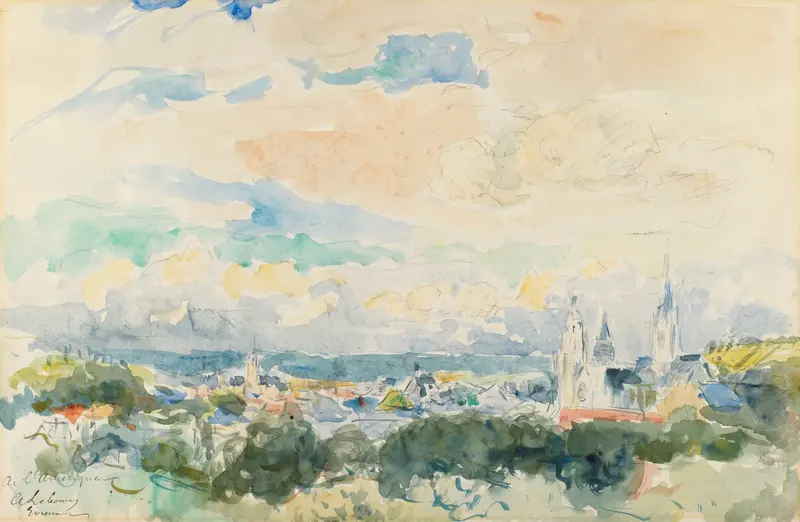
Sketch of a Village
Albert Charles Lebourg
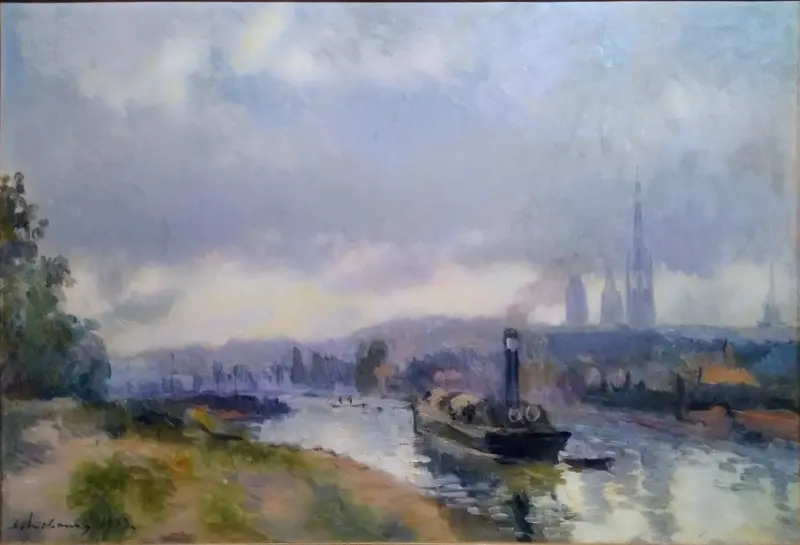
Remorqueurs à Rouen
Albert Charles Lebourg
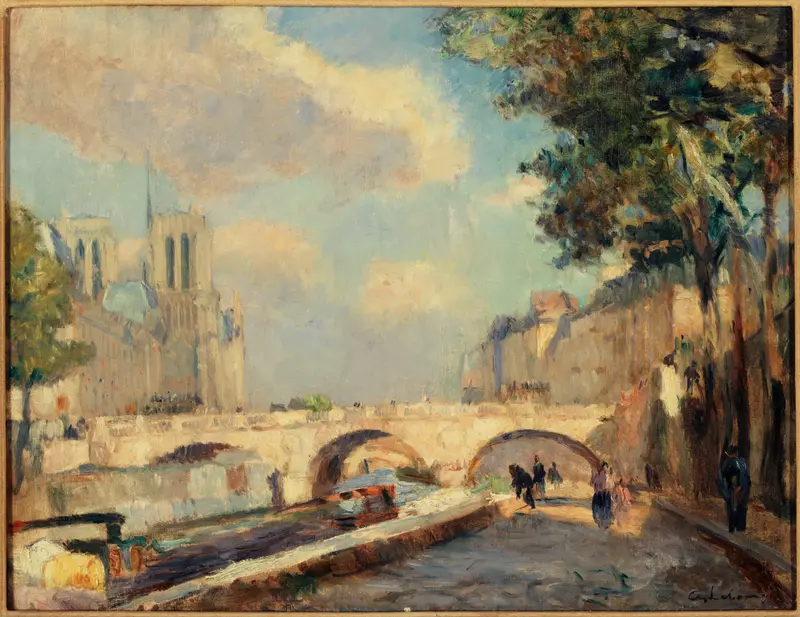
Le pont Saint Michel et Notre Dame, vus du quai des Grands Augustins P459 Musée Carnavalet
Albert Charles Lebourg
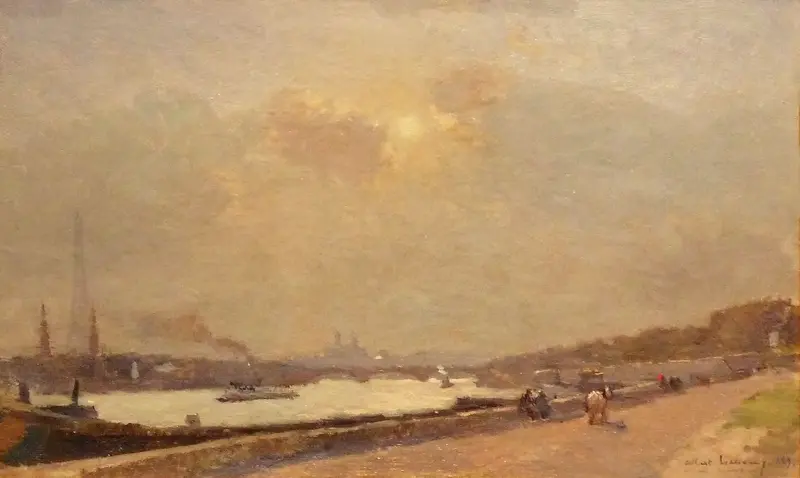
Banks of the Seine, Cours La Reine
Albert Charles Lebourg
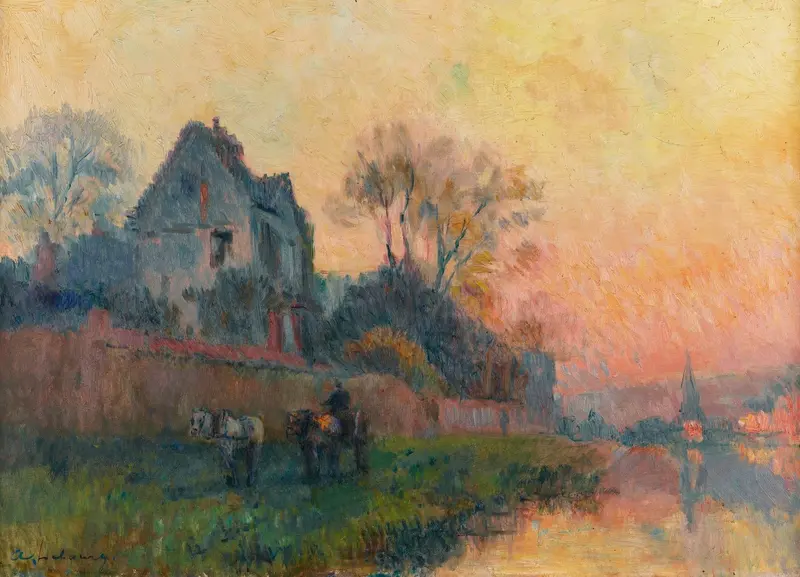
Bords de Seine à Chatou, oil on canvas, 46.4 by 65.1cm, 18.25 by 25.6 in
Albert Charles Lebourg
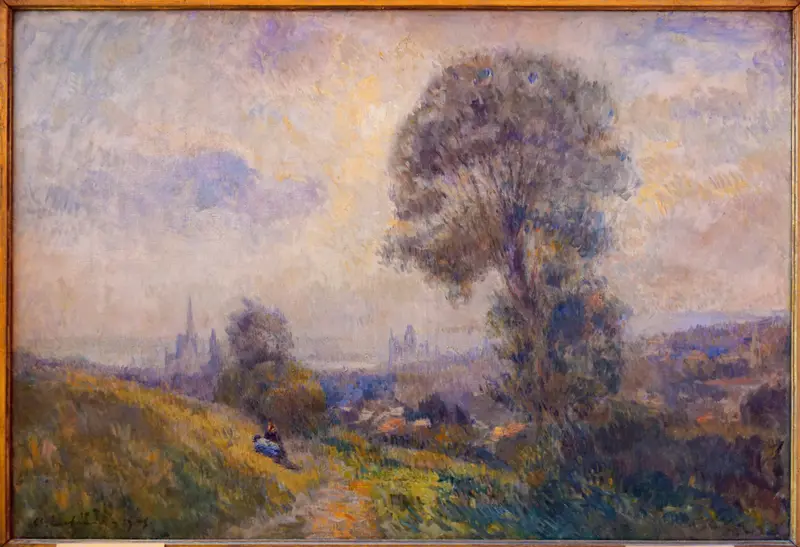
Camaret. The Harbor During a Thunderstorm
Albert Charles Lebourg
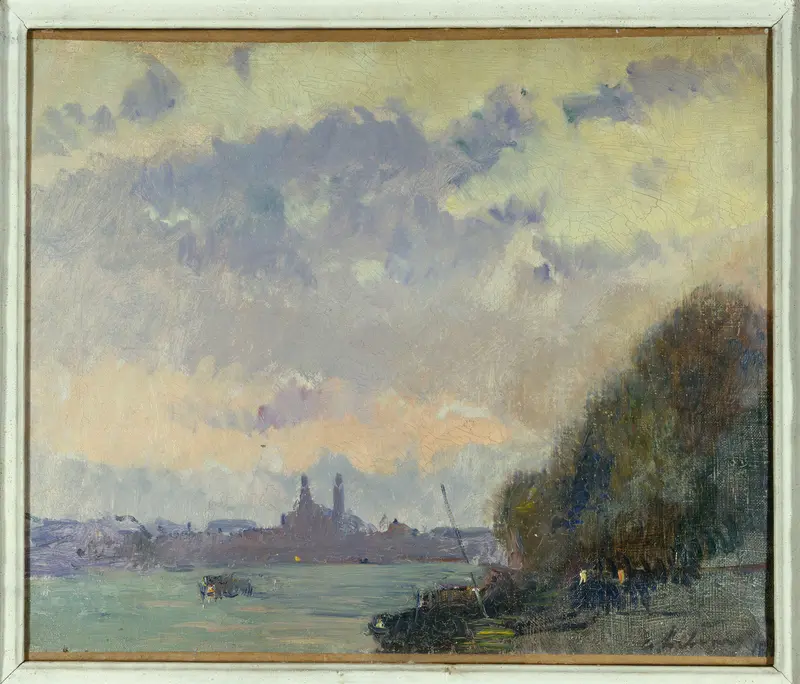
La Seine et l'ancien Trocadéro P2269 Musée Carnavalet
Albert Charles Lebourg
La Seine à Croisset, près de Rouen
Albert Charles Lebourg
More Landscape Art

The Starry Night
Vincent van Gogh

View of Delft
Johannes Vermeer

Water Lilies
Claude Monet

The Grand Canal, Venice, looking north-west from the Ca' Corner to the Ca' Contarini degli Scrigni, with the campanile of Santa Maria della Carità
Canaletto

Windsor Castle
Canaletto

The Grand Canal looking North-East from the Palazzo Dolfin-Manin to the Rialto Bridge
Canaletto