
La Retenue À Trouville — History & Facts
Can beauty exist without sorrow? In La Retenue À Trouville, the soft embrace of twilight seems to whisper that both are intertwined, offering a moment of faith in the delicate balance of life. Look to the foreground, where the waves gently lap against the shore, their frothy edges reflecting hues of fleeting sunlight. The composition is anchored by figures strolling along the beach, their silhouettes softened by the encroaching dusk. Notice how the cool blues and warm oranges dance across the canvas, creating a harmonious yet evocative tension—each brushstroke a testament to the artist’s mastery in capturing both atmosphere and emotion. Hidden within this picturesque scene lies the interplay of solitude and connection.
The departing light hints at fleeting moments and unspoken farewells, while the figures, though physically close, seem enveloped in their own thoughts—each absorbed in a personal reverie. This juxtaposition invites the viewer to ponder the stories behind the faces, reflecting the broader human experience of joy intertwined with melancholy. In 1894, La Retenue À Trouville emerged from Boudin’s brush during a time when Impressionism was gaining momentum in France. Living in Normandy, he found inspiration in the changing skies and coastal vistas, marking a transition in his career as he increasingly embraced the outdoor settings that would define his work.
This painting encapsulates the artist’s life during a period of creative exploration, mirroring the evolving world of art around him.
More Artworks by Eugène Boudin
Browse all →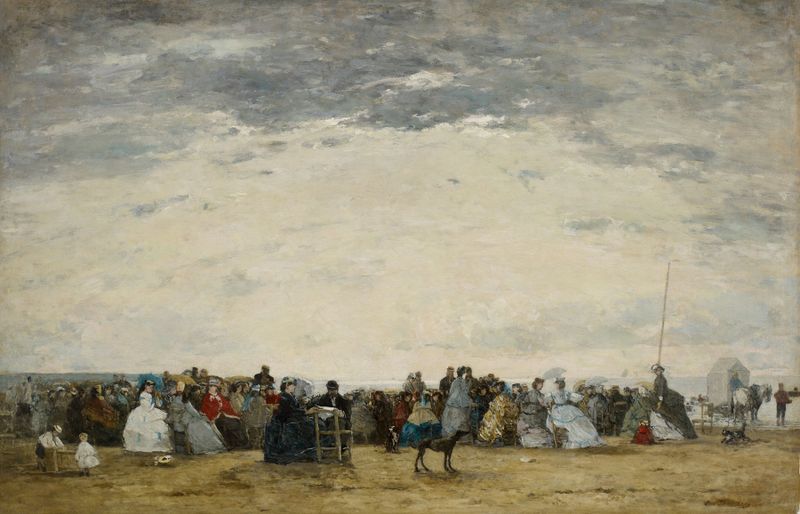
Vacationers on the Beach at Trouville
Eugène Boudin

Washerwoman near Trouville
Eugène Boudin
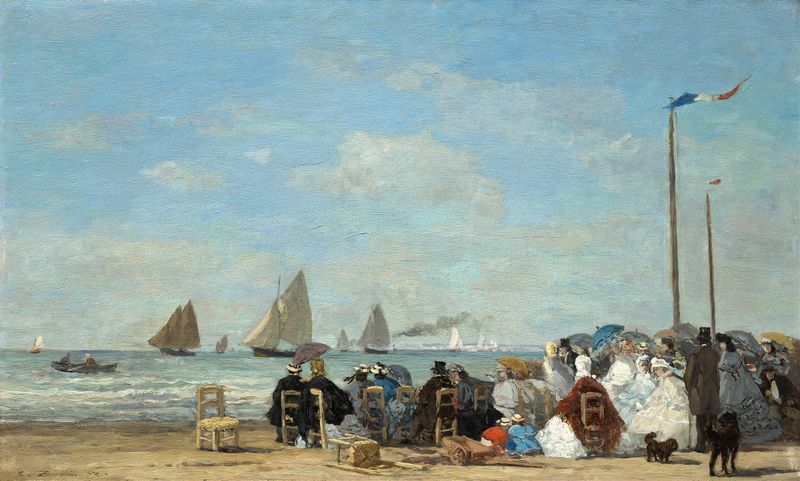
Beach Scene at Trouville
Eugène Boudin

Port aux environs d’Honfleur
Eugène Boudin

Le Faou, un coin du village
Eugène Boudin
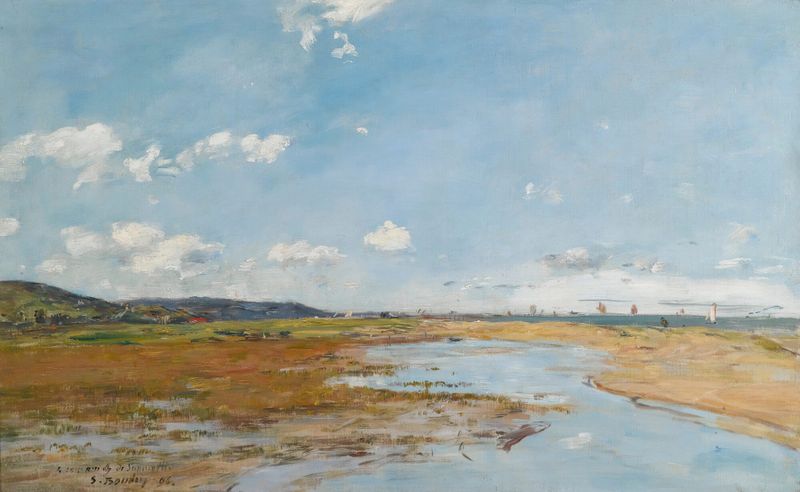
Deauville. Le Rivage
Eugène Boudin
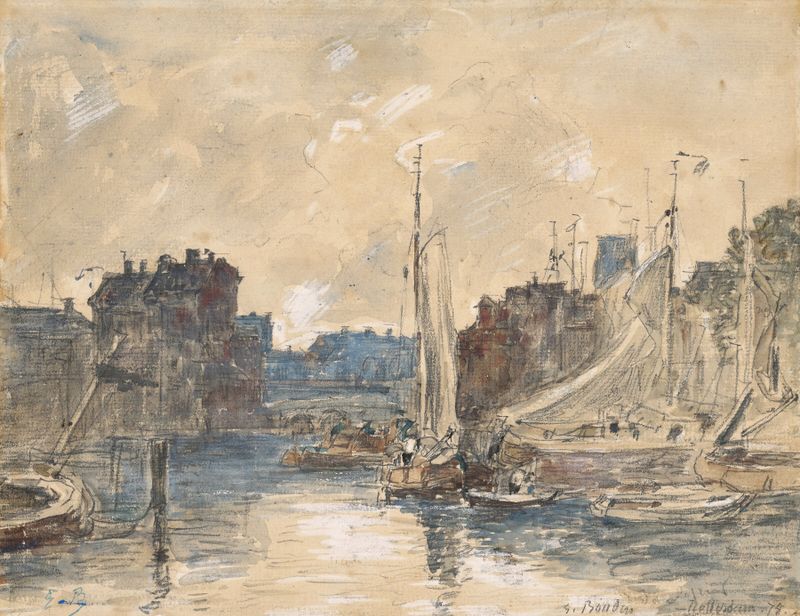
Port de Rotterdam
Eugène Boudin

View of Bordeaux, from the Quai des Chartrons
Eugène Boudin

Trouville, Scène De Plage
Eugène Boudin

Trouville, Le Port
Eugène Boudin





