
La rue Olivier de Serres, de la rue d’Alleray 1er tronçon Vaugirard — History & Facts
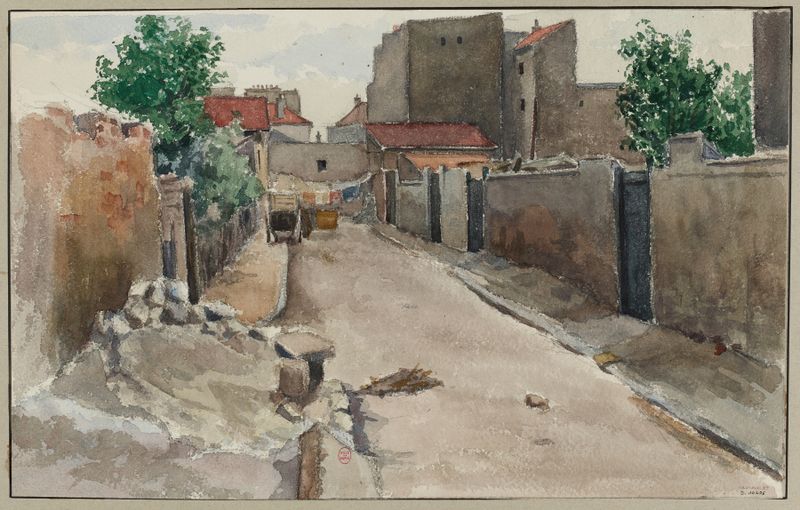
Who listens when art speaks of silence? In La rue Olivier de Serres, de la rue d’Alleray 1er tronçon Vaugirard, the stillness of the Parisian streets invites contemplation of life’s ephemeral nature and the inevitable passage of time. Look to the foreground, where the cobblestone path unfurls like a ribbon, guiding your gaze into a quiet urban landscape. Notice how the muted palette of gray and soft earth tones harmonizes with the gentle play of light, casting shadows that dance lightly across the buildings. The absence of human figures amplifies the haunting tranquility, allowing the viewer to immerse themselves in the stillness of the moment.
Each brushstroke echoes the artist's careful observation of this fleeting scene, drawing you deeper into the heart of the city. Yet, within this serene portrayal lies an undercurrent of mortality. The empty streets evoke a poignant sense of loss, suggesting stories untold and lives lived in the echo of each corner. The stark absence of movement juxtaposed with the vibrant architecture serves as a reminder that every space holds memories, and in silence, those memories linger.
This reflection on absence compels one to ponder how quickly time slips away, transforming bustling life into mere memory. F. Séguin created this work in 1896, during a period of significant change in Paris as the city modernized and expanded. This was a time marked by the rise of Impressionism and the exploration of urban themes in art.
Séguin, deeply influenced by the world around him, focused on capturing the poignant beauty of quiet life amidst the rapid transformations, reflecting both the spirit of his time and the universal themes of existence.
More Artworks by F. Séguin
Browse all →
Rue Brantôme. (anciennement rue des Petits Champs donnant rue Saint Martin et rue Beaubourg)
F. Séguin
La rue de Chambéry, prise de la rue de Nice la Frontière
F. Séguin
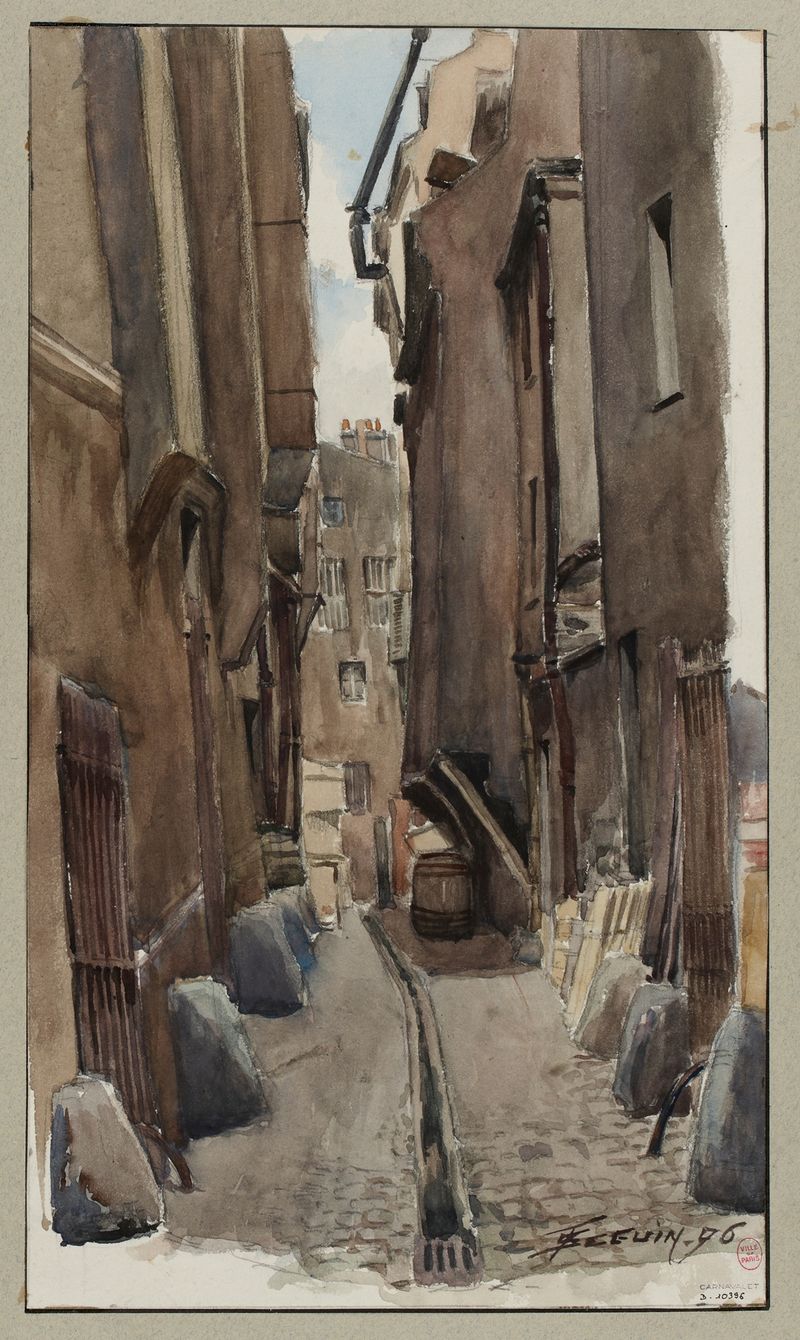
Le Cul de sac du Bœuf, (rue Saint Merri)
F. Séguin

Rue Descartes
F. Séguin
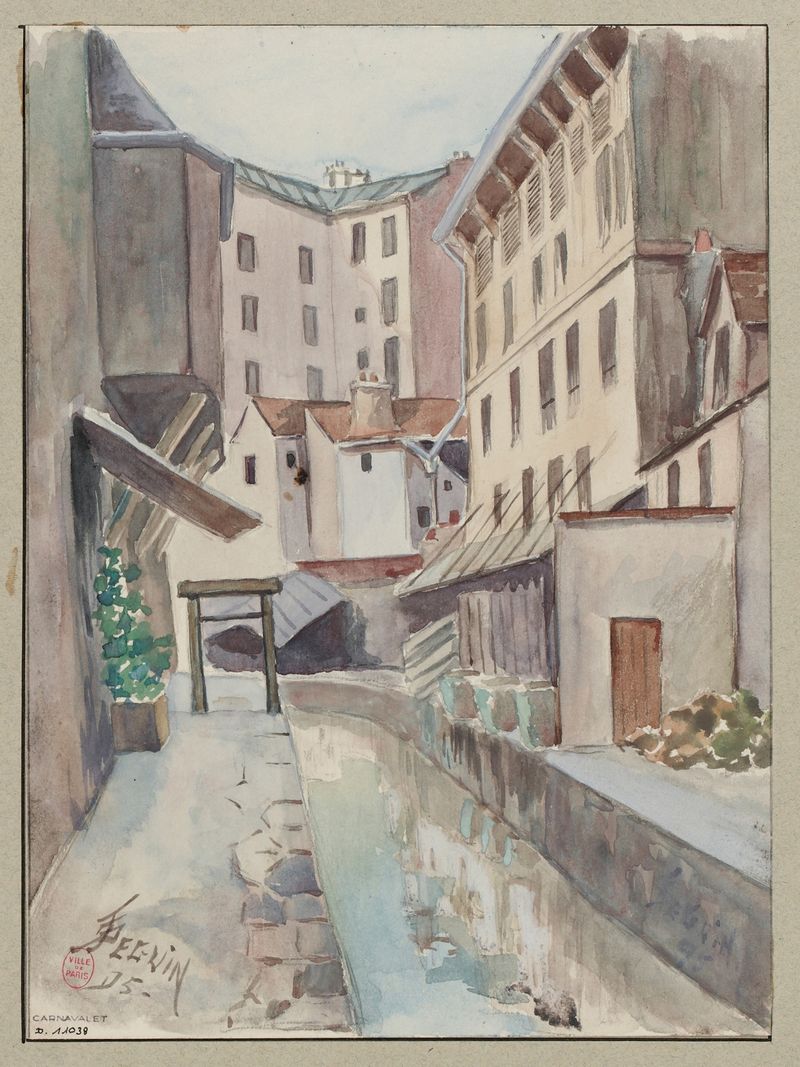
Le bord de la Bièvre à l’avenue des Gobelins
F. Séguin

Villa des Otages mur où furent fusillés les 52 derniers otages de la Commune, rue Haxo
F. Séguin
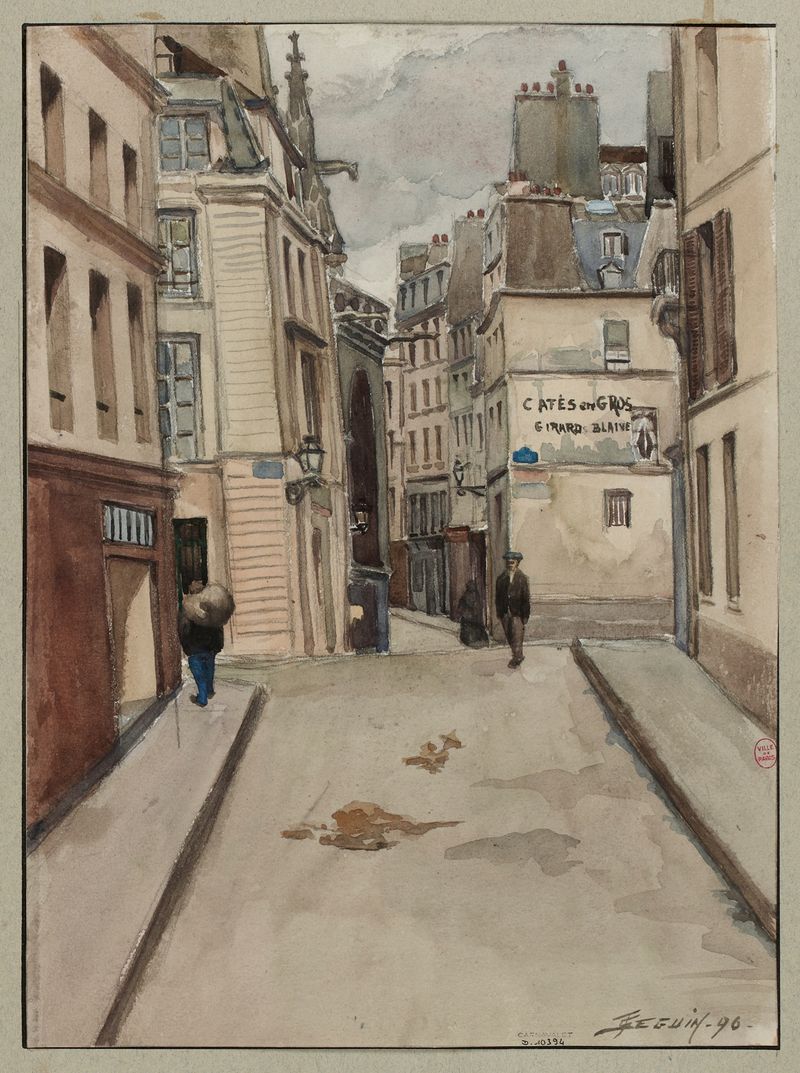
Rue du Cloître Saint Mérry, de la rue du Renard à la rue Saint Martin
F. Séguin
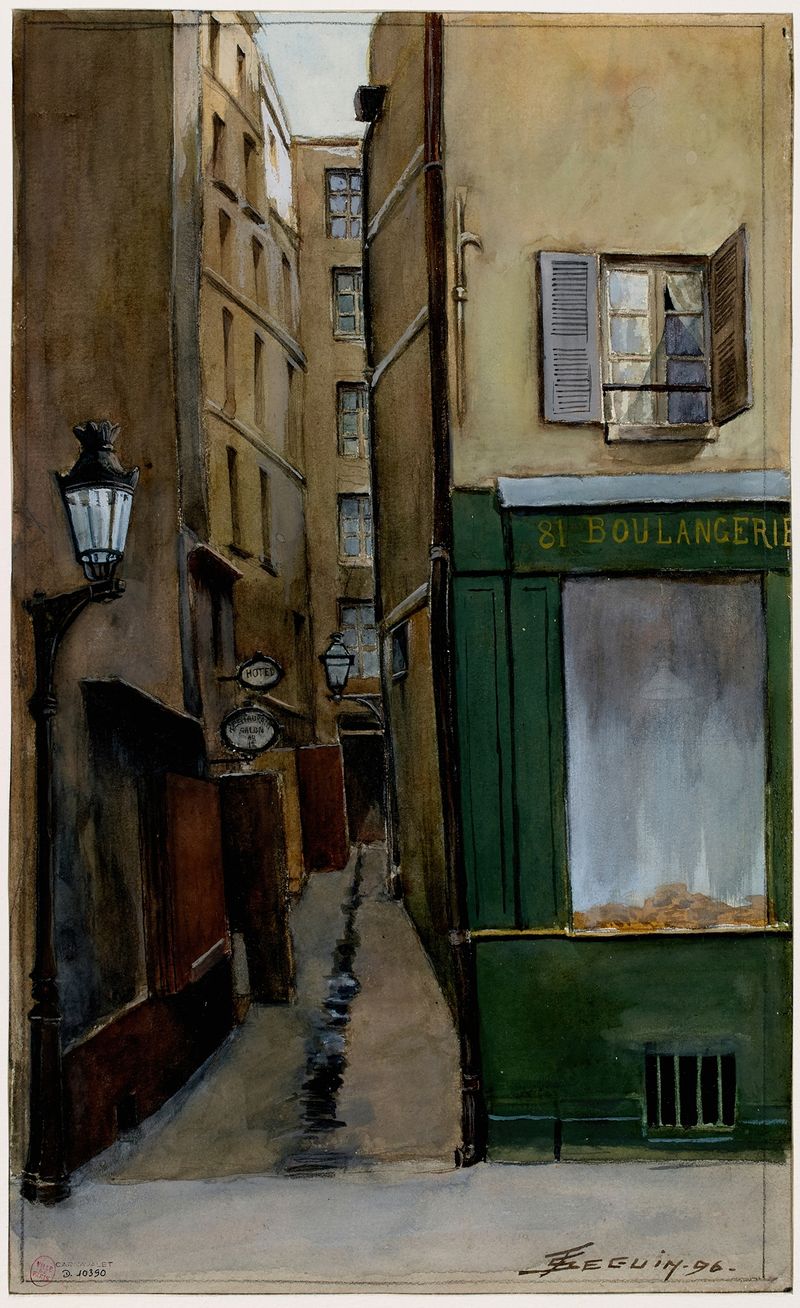
Cul de sac du Fiacre, 81 rue Saint Martin
F. Séguin
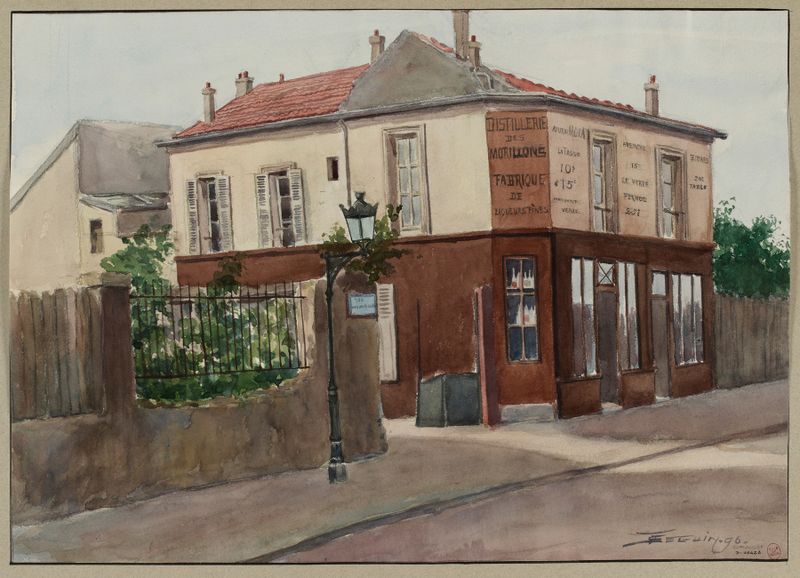
Angle de l’impasse Carlier et au 24 rue des Morillons, Vaugirard
F. Séguin
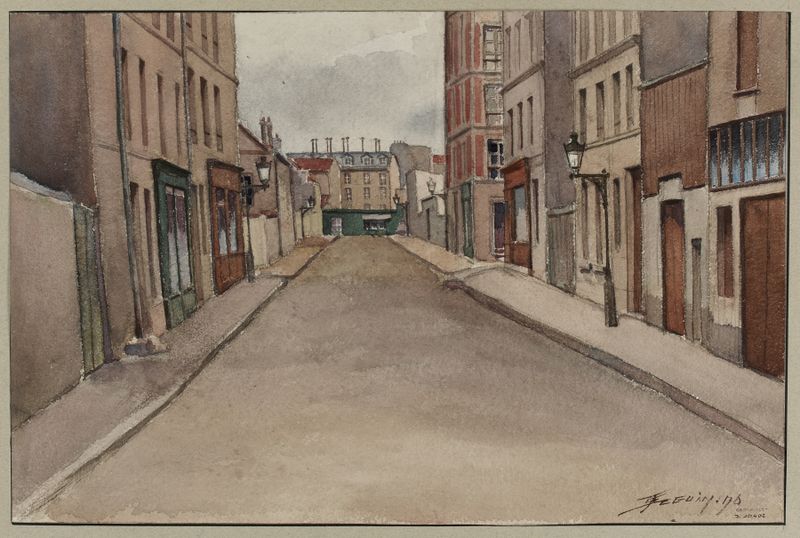
Rue Franquet
F. Séguin





