
Lagoon, flowering Bulrushes, Wanaka — History & Facts
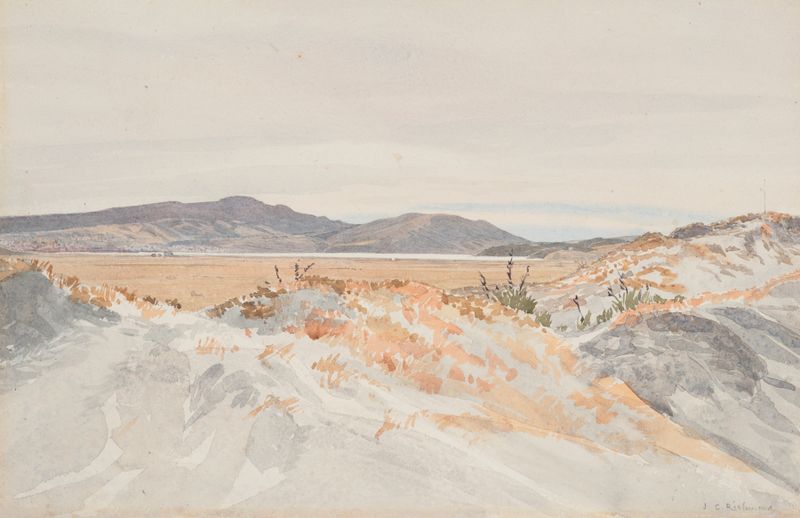
When did color learn to lie? This question haunts the viewer as they gaze upon nature's intricate tapestry, where vibrant hues mask deeper truths. In Lagoon, flowering Bulrushes, Wanaka, the lush colors beckon, inviting an exploration of both beauty and obsession. Look closely at the foreground, where soft greens and yellows intermingle with the striking presence of bulrushes. The delicate strokes create a sense of movement, as if the foliage is swaying gently in an unseen breeze.
Notice how the shimmering blues of the lagoon seamlessly blend with the bright reflections of the sky above, creating a harmonious composition that draws you in. The painter’s technique reveals not just the scene, but an emotional landscape filled with yearning. Yet, beneath this serene facade lies an undercurrent of tension. The vivid colors, while captivating, suggest a longing that cannot be fulfilled—perhaps a desire for connection with nature that is intrinsically unattainable.
The contrast between the lively flora and the stillness of the water evokes a sense of obsession, as if the viewer is entranced by the allure yet aware of the ephemeral nature of beauty. Each brushstroke captures not just the external, but also the internal struggles of desire and reality. In 1867, James Crowe Richmond painted this piece during a time of significant artistic exploration in New Zealand. As one of the country's early landscape artists, he was engaged in a dialogue about the representation of the natural world, a reflection of his own experiences and the changing perceptions of nature in an emerging colonial society.
This painting stands as a testament to his dedication to capturing the essence of his surroundings, while also revealing the inner complexities that accompany such an obsession.
More Artworks by James Crowe Richmond
Browse all →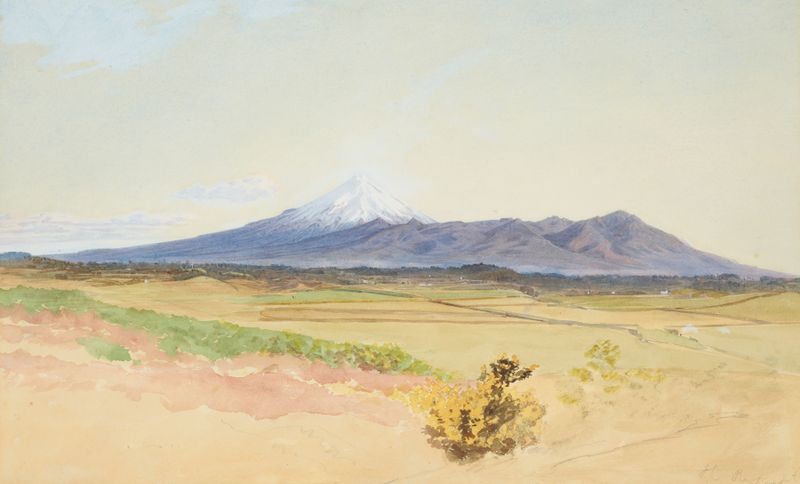
Mount Egmont and Pouakai, from New Plymouth
James Crowe Richmond
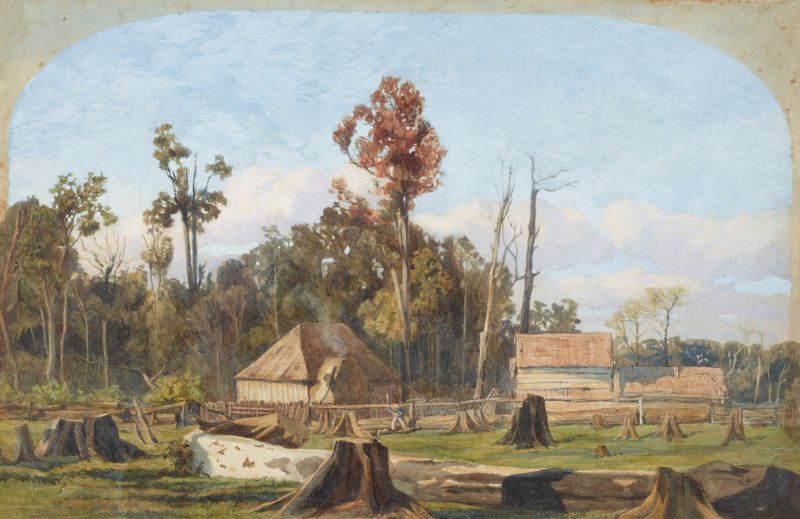
Settler’s home, Merton, near New Plymouth
James Crowe Richmond
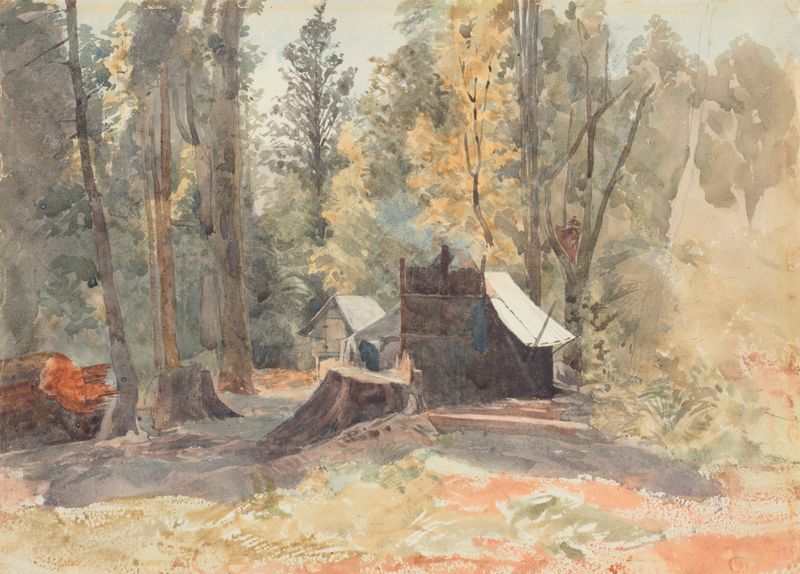
Hut of the ‘Italian party’, old diggings on Buller
James Crowe Richmond

Mosque at Tlemcen
James Crowe Richmond

Ngatapa, Te Kooti’s Pa
James Crowe Richmond

Dividing Range, Riwaka and Takaka
James Crowe Richmond
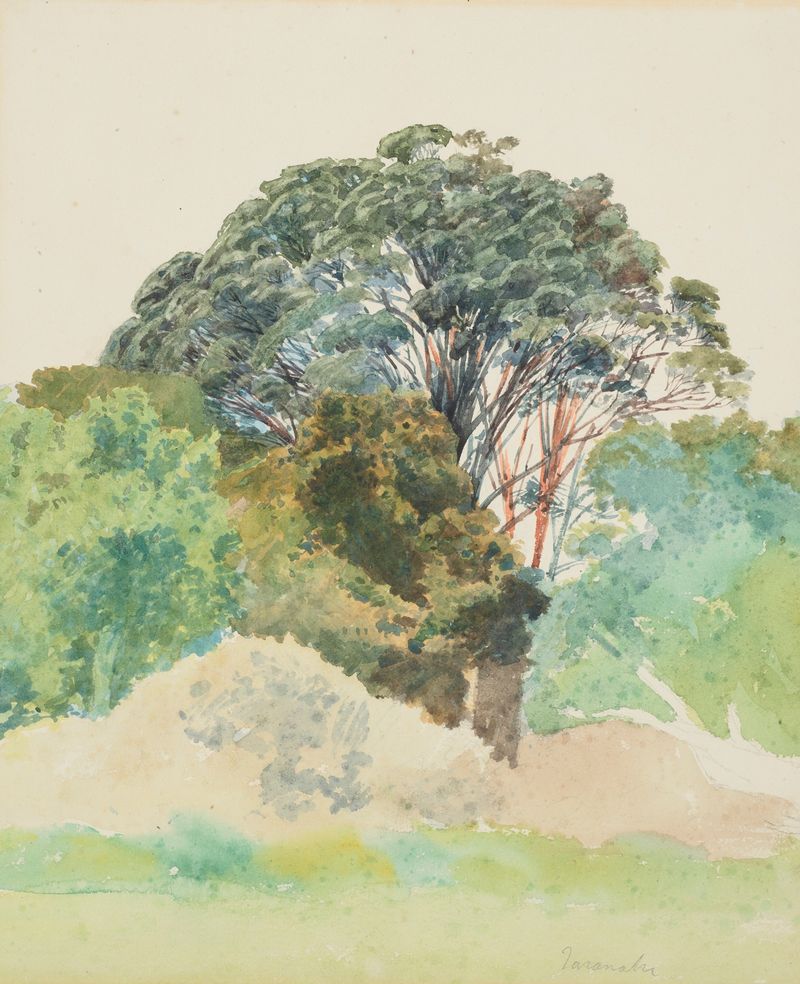
Rata, Taranaki
James Crowe Richmond

Grey River, on the beach
James Crowe Richmond
Dunedin from the Ocean Beach
James Crowe Richmond

On Collingwood Goldfields
James Crowe Richmond





