
Lake scene (Lake Te Wharau) — History & Facts
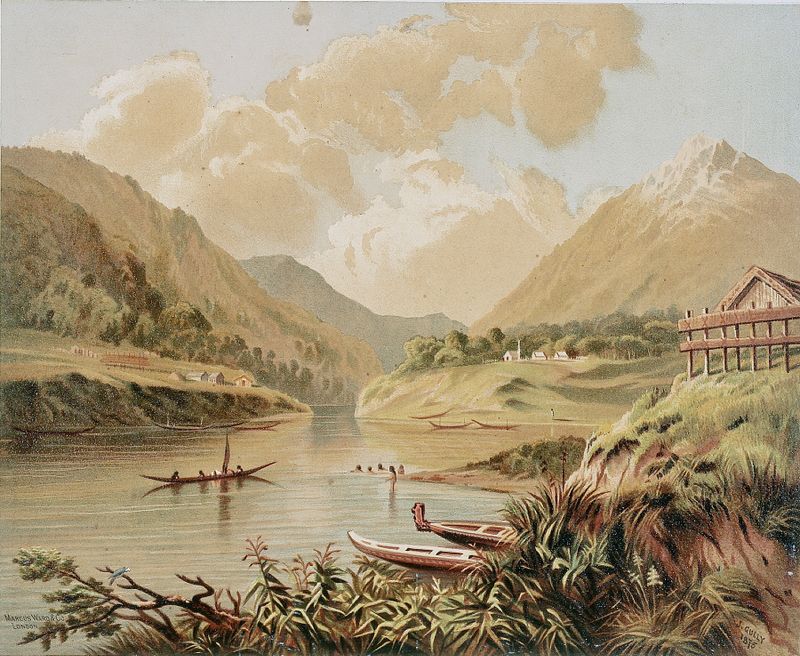
Is this a mirror — or a memory? John Gully’s Lake scene (Lake Te Wharau) invites us to ponder the delicate boundaries between reality and reflection, urging us to delve into the depths of our own consciousness. Look to the foreground where the lake stretches serenely, capturing the azure sky and the rugged silhouette of distant hills. Notice how the light dances on the water’s surface, creating a shimmering effect that blurs the line between solid and liquid. The soft brushwork evokes the gentle ripple of waves, while the muted greens and earthy browns of the landscape provide a grounding contrast, drawing the eye deeper into this tranquil yet profound setting. As you explore the painting, consider the interplay of light and shadow, which suggests fleeting moments suspended in time.
The quietness of the scene belies an underlying tension — a yearning for connection with nature, perhaps, or a contemplation of one’s place within it. Each stroke seems to whisper stories of solitude and reflection, allowing the viewer to unravel their own emotions amidst the stillness. In 1873, during a period of exploration and burgeoning appreciation for the natural world, Gully captured this scene in New Zealand. At a time when the art world was expanding its horizons, he sought to portray the beauty of his surroundings, influenced by the Romantic ideals of his time.
The work reflects not only his personal journey but also the broader movement towards landscape painting that sought to connect human experience with the grandeur of nature.
More Artworks by John Gully
Browse all →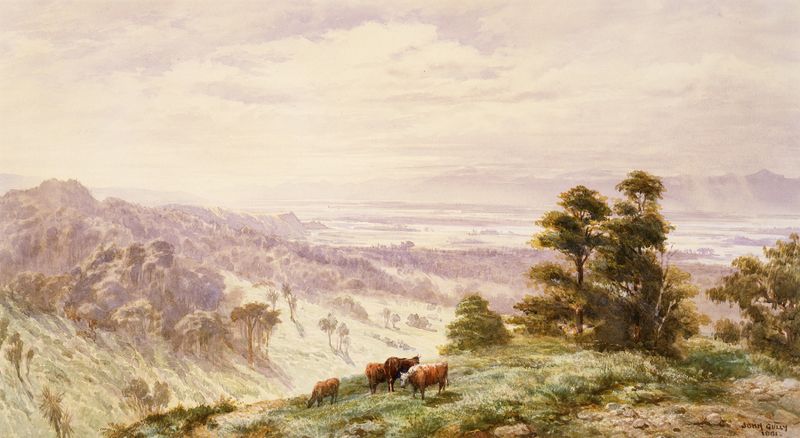
Landscape [Waimea Plains, Nelson]
John Gully
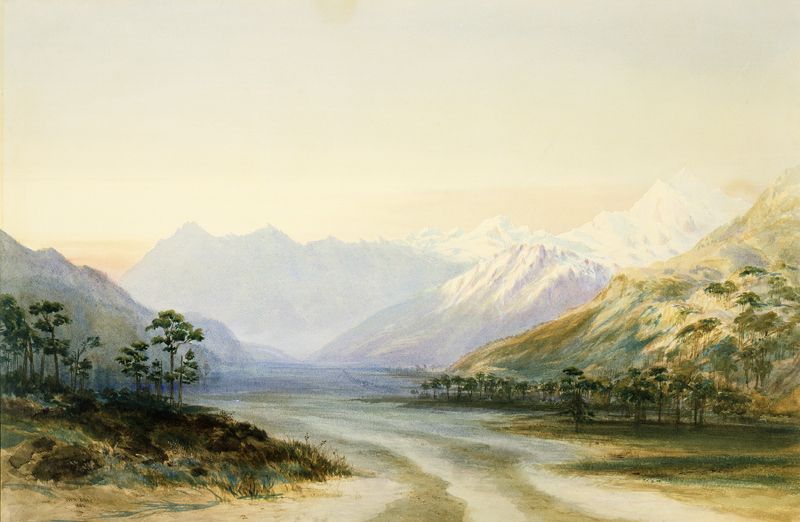
Mount Cook
John Gully
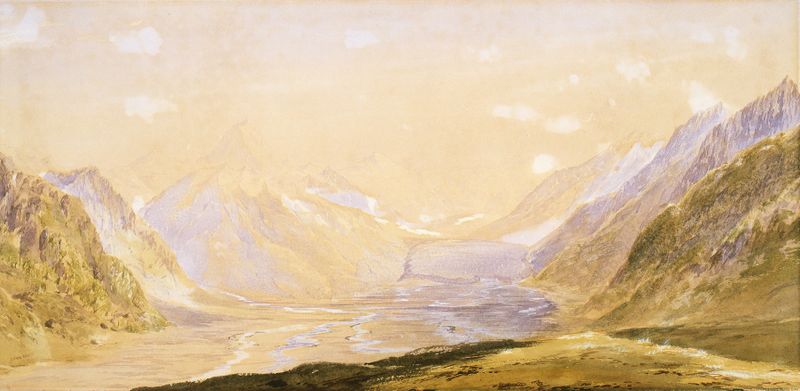
Mount Cook and the Tasman Glacier
John Gully
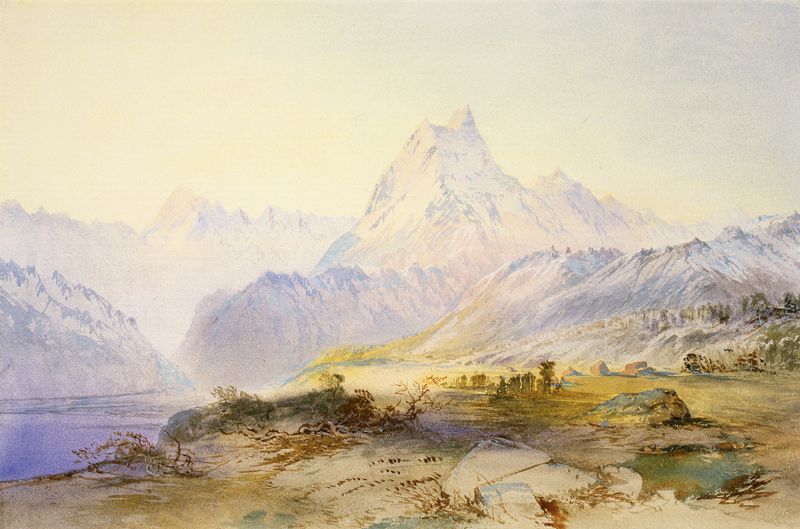
Mount Cook
John Gully

Tongariro, Ngauruhoe and Ruapehu, Central North Island
John Gully

Lake Wakatipu
John Gully

New Zealand bush scene
John Gully
Upriver scene, Wanganui
John Gully

Paekakariki
John Gully

Mts Ruapehu and Tongariro from Lake Taupo
John Gully





