
Paekakariki — History & Facts
When did color learn to lie? In the stillness of Paekakariki, silence speaks volumes, revealing more than mere form and hue. Look to the center, where the gentle undulation of hills meets the expansive sky, each brushstroke a whisper of serenity. The vibrant greens and blues blend seamlessly, evoking the lushness of the New Zealand landscape. Notice how the light dances across the water, shimmering with an ethereal quality that draws the eye and invites contemplation.
Gully’s delicate layering of paint creates a palpable texture, while the soft diffusion of colors enhances the sense of calm pervading the scene. Yet, beneath this tranquil surface, there are layers of complexity. The contrast between the serene foreground and the swirling clouds above hints at the turbulence of the natural world, suggesting that peace is often accompanied by unspoken chaos. The distant mountains, slightly obscured by mist, symbolize both hope and isolation, prompting the viewer to consider what lies beyond the visible horizon.
Each detail, from the gently swaying grass to the distant shore, carries a weight of untold stories yearning to be heard. In 1883, Gully painted Paekakariki during a period of personal and artistic exploration in New Zealand. As one of the leading figures in New Zealand landscape painting, he sought to capture the essence of his surroundings, reflecting a nation emerging on the global artistic stage. The late 19th century was marked by a growing appreciation for the sublime beauty of the New Zealand landscape, and Gully's work stands as a testament to this evolving artistic identity.
More Artworks by John Gully
Browse all →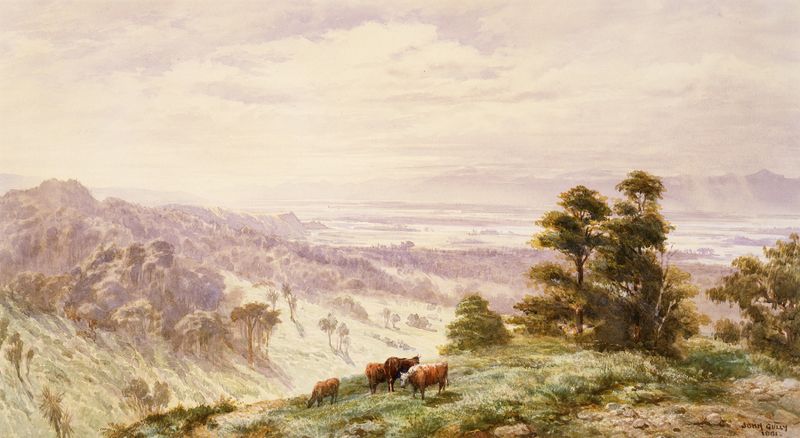
Landscape [Waimea Plains, Nelson]
John Gully
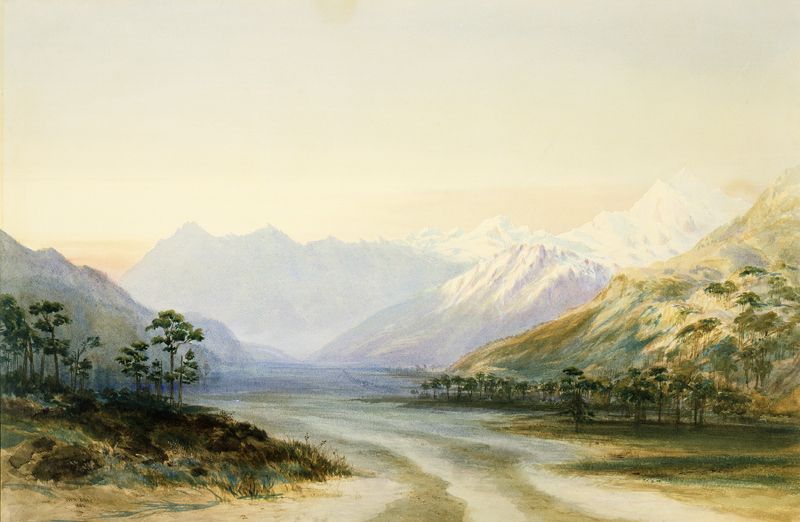
Mount Cook
John Gully
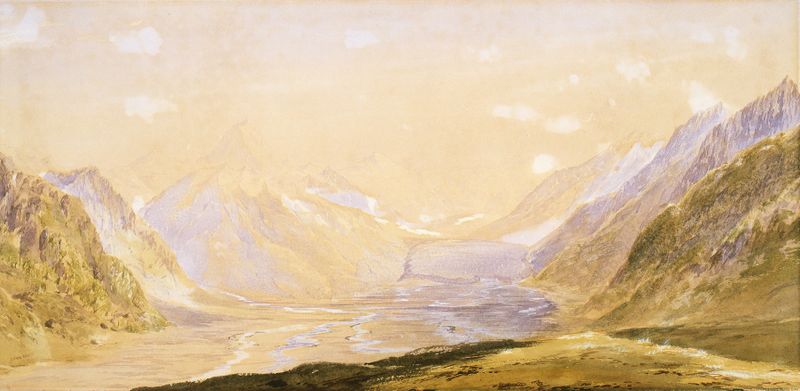
Mount Cook and the Tasman Glacier
John Gully
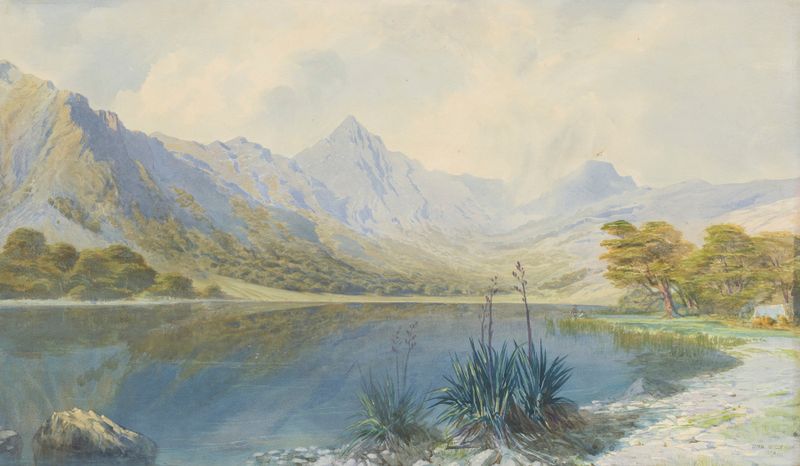
Lake scene (Lake Te Wharau)
John Gully
Mount Cook
John Gully

Tongariro, Ngauruhoe and Ruapehu, Central North Island
John Gully

Lake Wakatipu
John Gully

New Zealand bush scene
John Gully
Upriver scene, Wanganui
John Gully

Mts Ruapehu and Tongariro from Lake Taupo
John Gully





