
Upriver scene, Wanganui — History & Facts
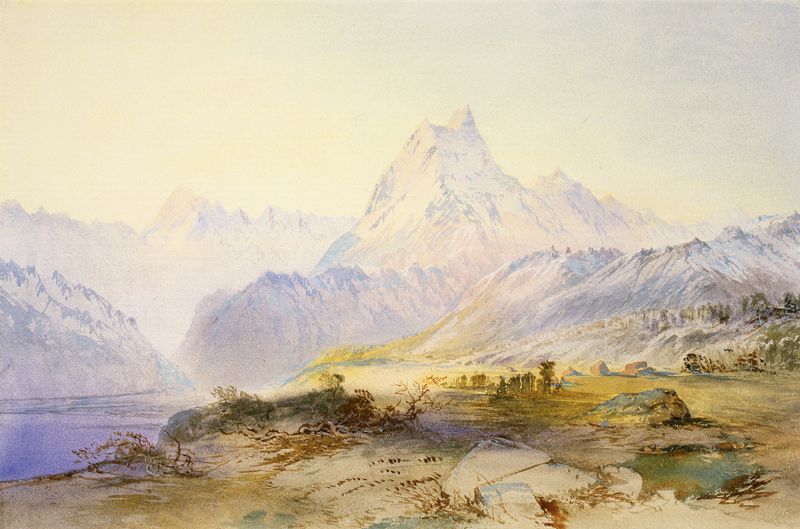
In the fleeting moments of life, art becomes a vessel for memory and creation, capturing the essence of beauty that so often eludes us. John Gully’s Upriver Scene, Wanganui invites us to pause and reflect on the vibrant interplay of nature and human existence, presenting a world that is both tranquil and alive. Look to the foreground, where the meandering river reflects dappled sunlight, its shimmering surface drawing the eye into the heart of the composition. Notice how the lush greenery frames the waterway, each brushstroke evoking the vitality of the foliage while the distant hills rise softly against the sky.
The earthy palette of greens and browns, punctuated by bursts of blue, creates a harmonious blend that radiates warmth and serenity, emphasizing the idyllic beauty of the landscape. Beneath the surface, there lies a narrative of coexistence — the river not only sustains life but also serves as a conduit through which the past and present intertwine. The calm waters symbolize continuity, while the boats, mere specks in the vast expanse, hint at human endeavor and exploration. There is a palpable tension between stillness and movement; nature thrives, yet it is punctuated by the delicate presence of humanity, reflecting the struggle for harmony in an ever-changing world. In 1875, John Gully painted this scene in New Zealand, at a time when the country was evolving rapidly.
Fresh from his own artistic journey, Gully was influenced by the Romantic movement, seeking to capture the raw beauty of his surroundings. As settlers established roots and struggled with the effects of colonization, this work stands as a tribute to both the landscape and the human spirit, a reminder of what it means to create amidst change.
More Artworks by John Gully
Browse all →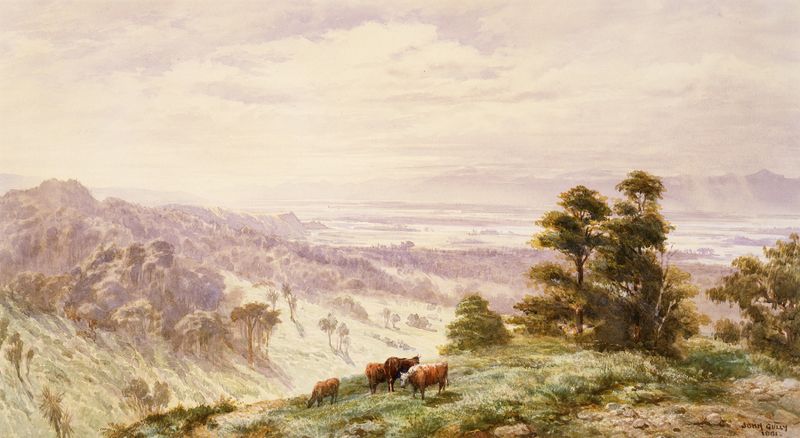
Landscape [Waimea Plains, Nelson]
John Gully
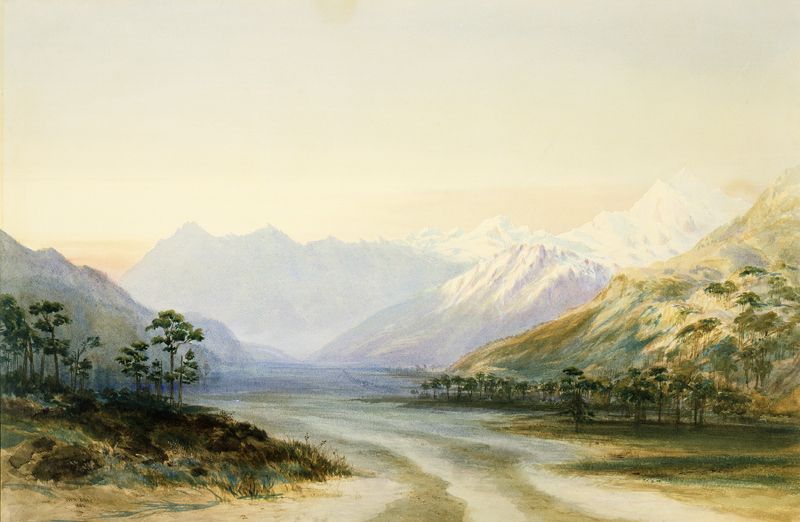
Mount Cook
John Gully
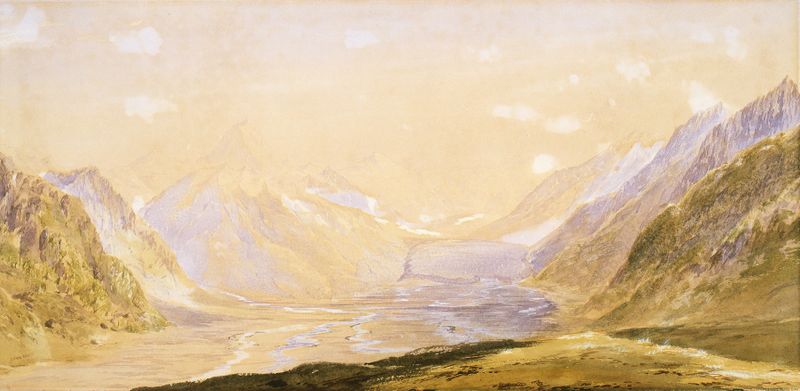
Mount Cook and the Tasman Glacier
John Gully
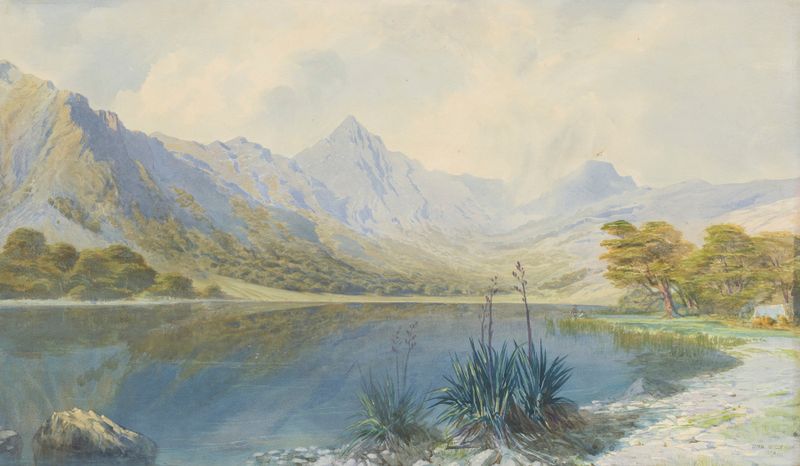
Lake scene (Lake Te Wharau)
John Gully
Mount Cook
John Gully

Tongariro, Ngauruhoe and Ruapehu, Central North Island
John Gully

Lake Wakatipu
John Gully

New Zealand bush scene
John Gully

Paekakariki
John Gully

Mts Ruapehu and Tongariro from Lake Taupo
John Gully





