
Mount Cook — History & Facts
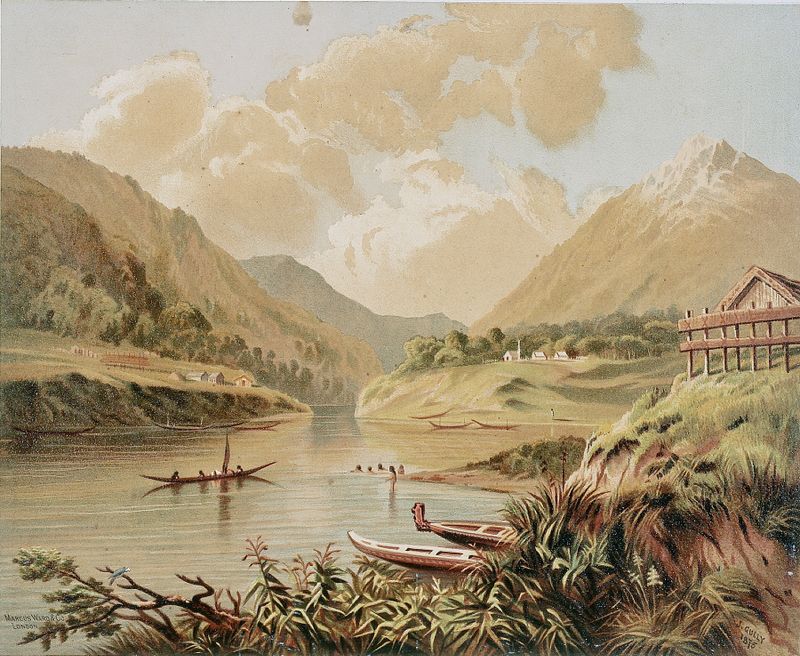
In the face of loss, the brush becomes a vessel for memory, capturing what the heart dares not let fade. Focus on the majestic peaks of Mount Cook, rising from the canvas with a formidable presence. The sharp, icy blue of the snow contrasts dramatically with the deep greens of the surrounding terrain, guiding your eyes to the summit that pierces the sky. Notice the way the light cascades over the mountains, illuminating the crevices, evoking a sense of both beauty and isolation.
Gully's meticulous attention to detail reveals an intimate relationship between nature and the observer, inviting a moment of stillness amidst the grandeur. Yet, there is an underlying tension in the painting that speaks to emotional depths. The looming mountains, both awe-inspiring and intimidating, mirror the weight of loss, standing sentinel over memories that remain just out of reach. The muted tones of the foreground suggest the passage of time, while the distant, untouched snow hints at the fragility of beauty that is often paired with sorrow.
The serene landscape belies an inner struggle, an eternal contest between remembrance and the inevitability of fading. In 1864, Gully found himself amidst a period of personal and artistic reflection. Living in New Zealand, he was deeply influenced by the sublime landscapes around him and the ongoing exploration of the natural world in art. As the Romantic movement began to evolve, his work sought to encapsulate both the splendor and the haunting remnants of nature, navigating the delicate interplay between beauty and loss in a rapidly changing environment.
More Artworks by John Gully
Browse all →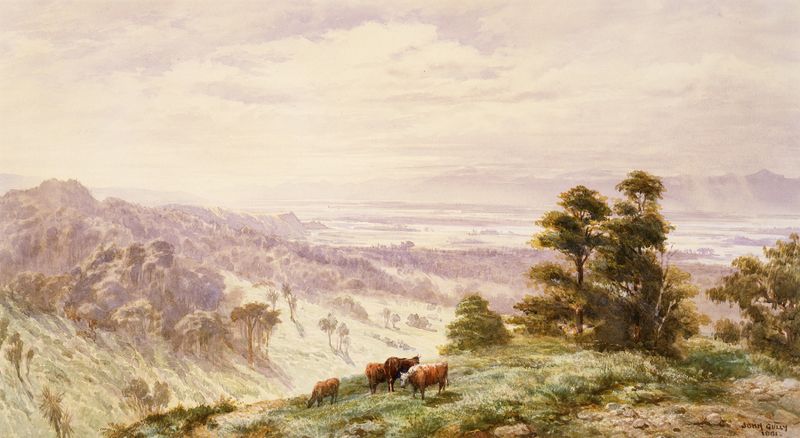
Landscape [Waimea Plains, Nelson]
John Gully
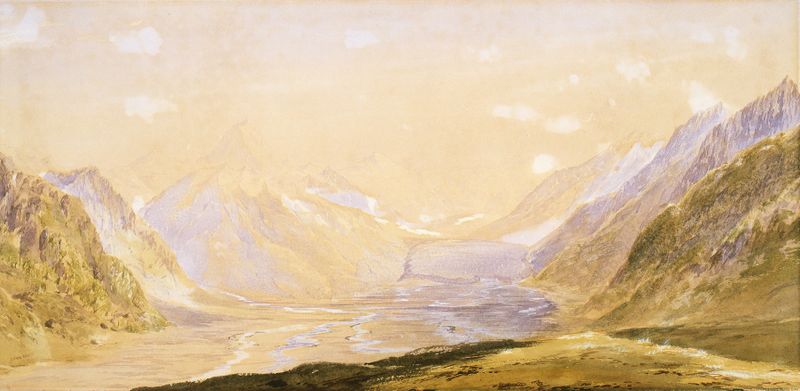
Mount Cook and the Tasman Glacier
John Gully
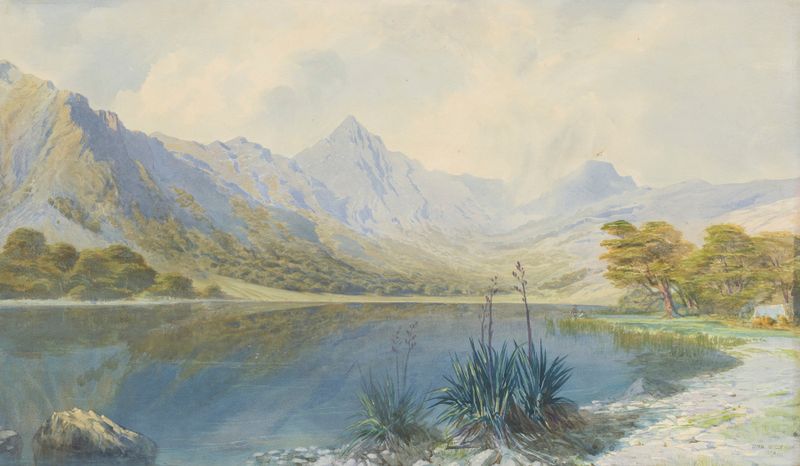
Lake scene (Lake Te Wharau)
John Gully
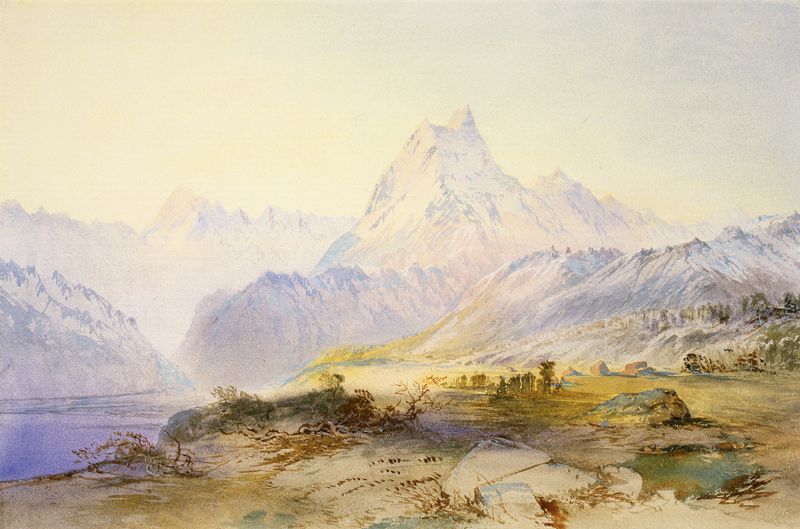
Mount Cook
John Gully

Tongariro, Ngauruhoe and Ruapehu, Central North Island
John Gully

Lake Wakatipu
John Gully

New Zealand bush scene
John Gully
Upriver scene, Wanganui
John Gully

Paekakariki
John Gully

Mts Ruapehu and Tongariro from Lake Taupo
John Gully





