L’Allegro — History & Facts
In a world where reflection intertwines with emotion, the act of creating art becomes a dialogue between the artist and their inner landscape. Look to the left of the canvas where light pierces through a canopy of verdant leaves, illuminating the figures below. The composition is a harmonious blend of nature and human experience, where lush greens and soft pastels breathe life into the scene. Notice how the gentle curve of the river guides your gaze toward the distant mountains, each soft brushstroke adding depth and inviting contemplation.
The interplay of light and shadow reveals not just the landscape, but also the soul of its creator. Beneath the surface, themes of joy and serenity resonate powerfully, contrasting with the looming shadows of uncertainty. The figures, dancing with abandon, embody a spirit of freedom, yet their positions suggest a fleeting moment of bliss, soon to be lost. This juxtaposition evokes the tension between transcendence and the ephemeral nature of happiness, inviting viewers to reflect on their own experiences of joy amidst life’s inherent impermanence. Created in 1845, this piece emerged from the mind of a pioneer in American landscape painting, who found himself at a crossroads in both his career and the artistic movement.
Living in Catskill, New York, he was influenced by the burgeoning Romanticism movement, which sought to celebrate nature's beauty and humanity's place within it. At this time, Cole was establishing his legacy, merging personal introspection with the scenic grandeur he witnessed, ultimately shaping the trajectory of American art.
More Artworks by Thomas Cole
Browse all →
View from Mount Holyoke, Northampton, Massachusetts, after a Thunderstorm—The Oxbow
Thomas Cole
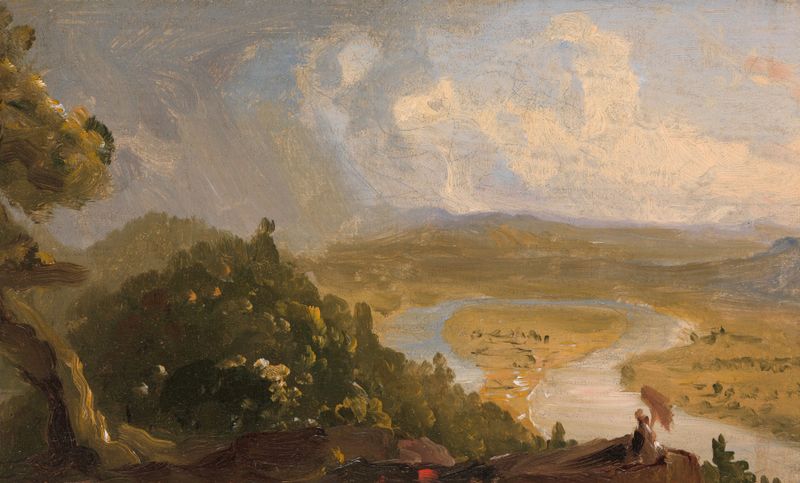
Sketch for View from Mount Holyoke, Northampton, Massachusetts, after a Thunderstorm (The Oxbow)
Thomas Cole
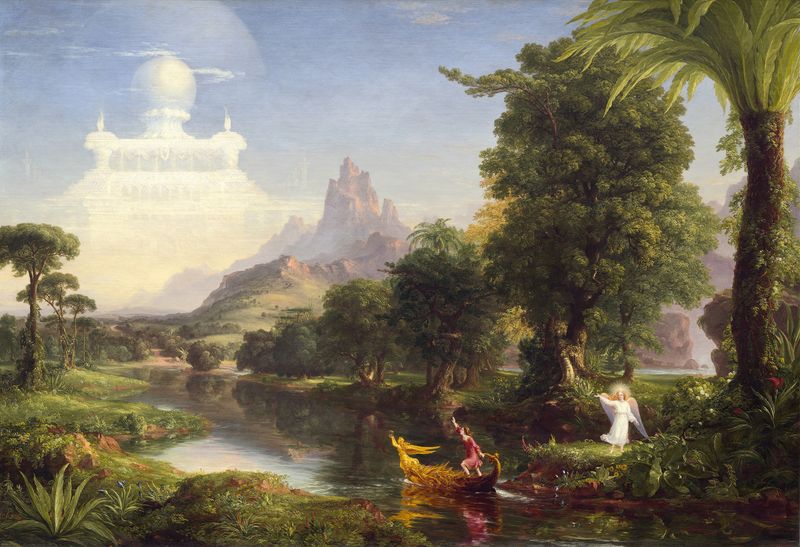
The Voyage of Life – Youth
Thomas Cole
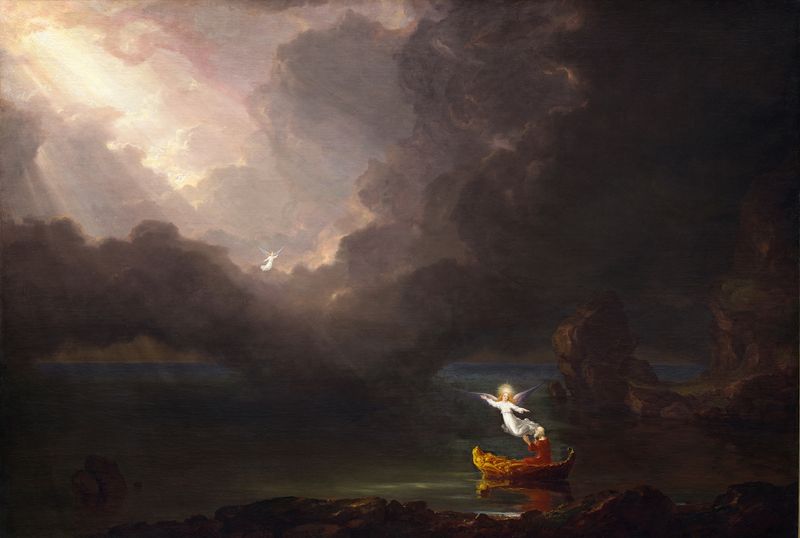
The Voyage of Life – Old Age
Thomas Cole
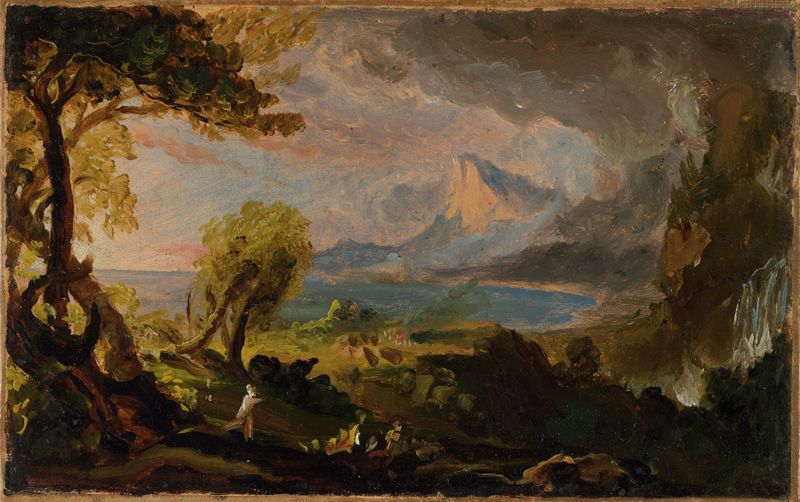
The Course of Empire–The Savage State
Thomas Cole

Landscape
Thomas Cole

New England Scenery
Thomas Cole

Sunrise in the Catskills
Thomas Cole
Tornado in an American Forest
Thomas Cole
The Voyage of Life – Childhood
Thomas Cole