
Landing in England — History & Facts
What if beauty was never meant to be finished? In the delicate interplay of light and shadow, a narrative unfolds, inviting us to explore the depths of emptiness and longing. Look to the left at the subtle silhouette of an arriving ship, its sails billowing gently against a soft horizon. The muted palette of blues and grays evokes a melancholic sky, while flecks of white foam dance upon the water’s surface, capturing the fleeting essence of movement. The intricate etching technique reveals Buhot's meticulous craftsmanship, with finely rendered details that draw the eye to the seamless merging of sea and sky, suggesting a world that blurs the boundaries between reality and dream. Against the backdrop of tranquility, there is a tension at play — the ship's journey echoes a sense of departure and arrival, embodying not just a physical transition but an emotional one.
The vast expanse of emptiness within the canvas resonates with the viewer’s own sense of longing, creating an intimate dialogue. Each wave and whisper of wind speaks to the uncharted territories of the heart, highlighting a contrast between the serene landscape and the unfulfilled desire for connection and belonging. In 1879, the artist was living in France, immersed in the transition of Impressionism and the rising popularity of printmaking. While the world around him was changing rapidly, Buhot's focus on capturing fleeting moments through his etchings allowed him to convey a deeper emotional resonance, reflecting both personal and societal yearnings within the art world of his time.
More Artworks by Félix Hilaire Buhot
Browse all →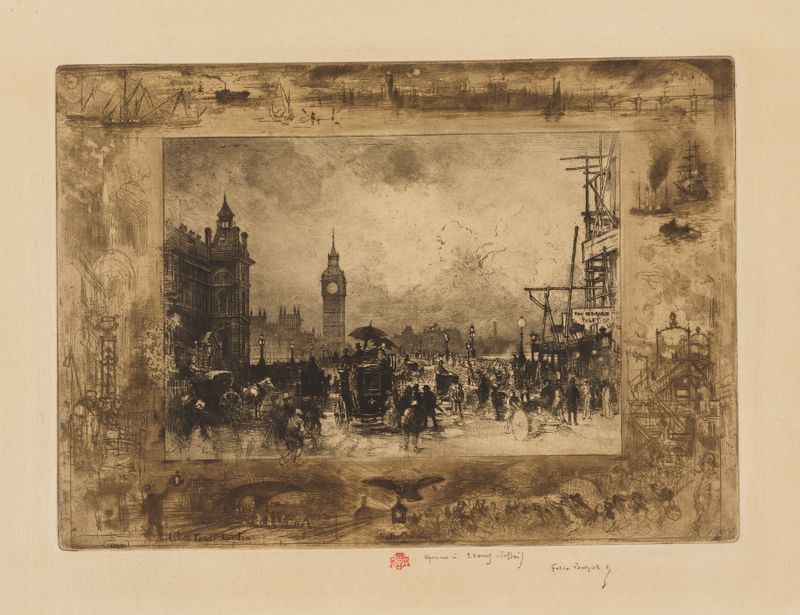
Westminster Bridge, or Westminster Clock Tower
Félix Hilaire Buhot
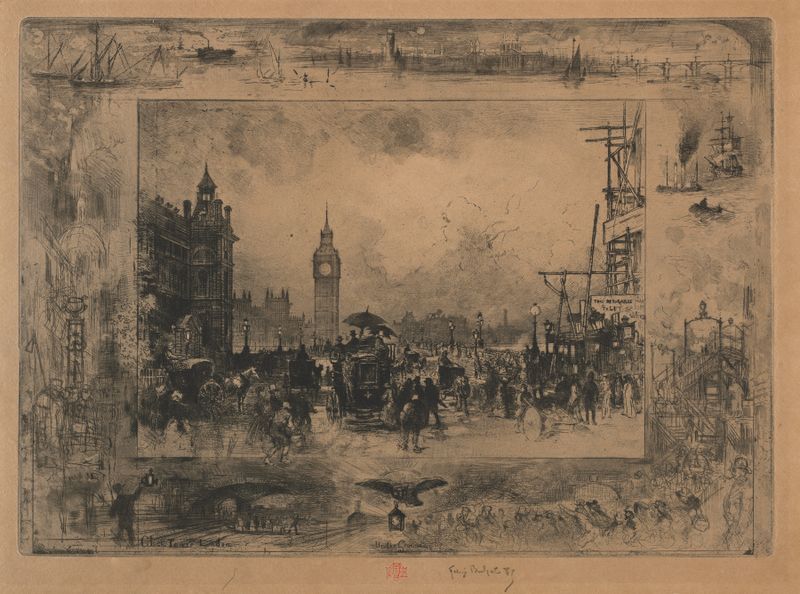
Westminster Bridge, or Westminster Tower
Félix Hilaire Buhot
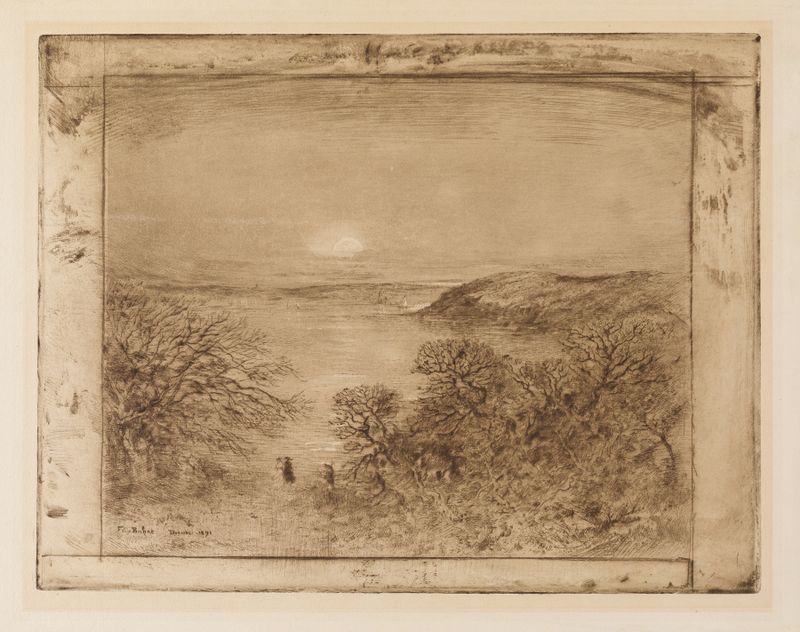
Moonrise at Dinard
Félix Hilaire Buhot
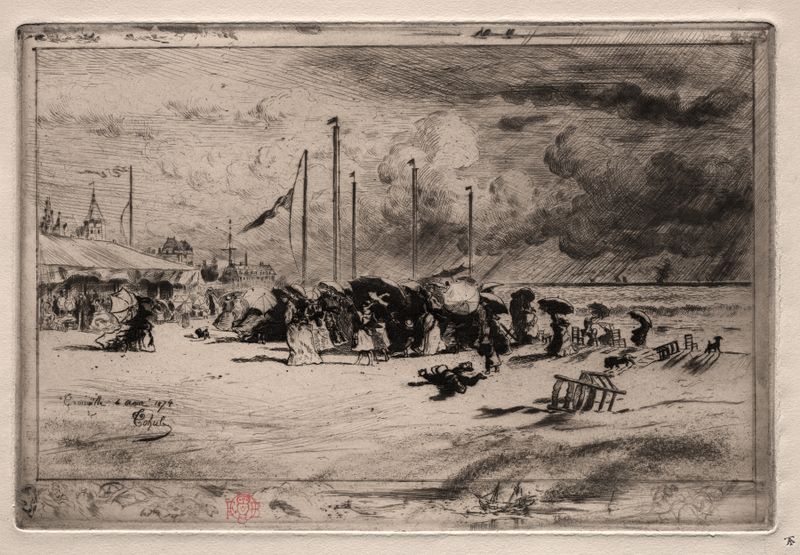
A Squall at Trouville
Félix Hilaire Buhot
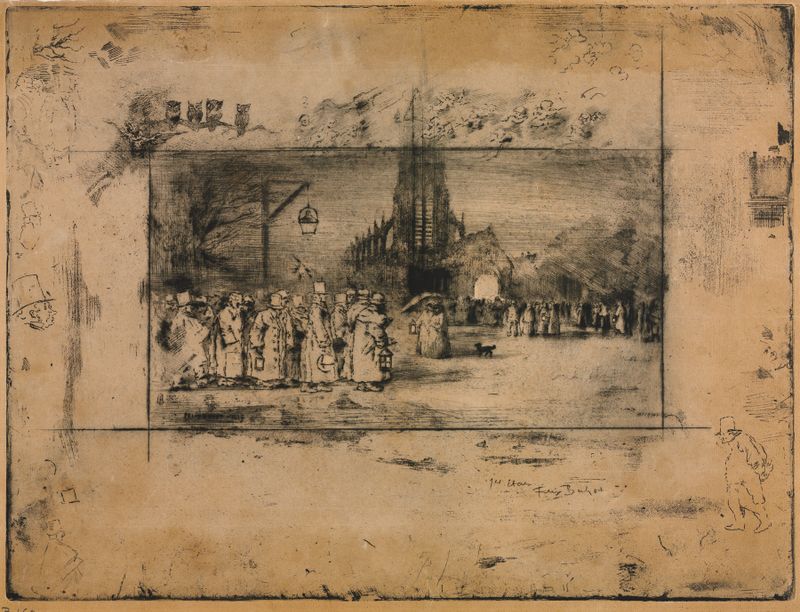
The Midnight Mass
Félix Hilaire Buhot
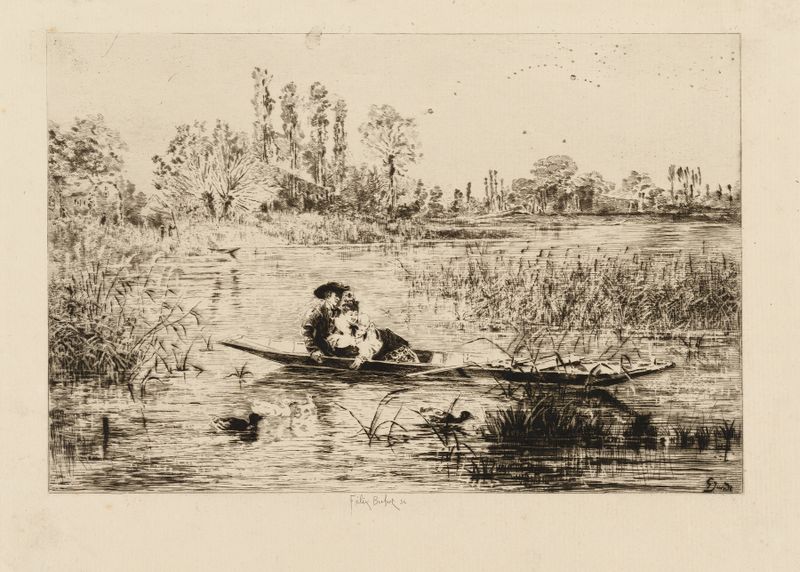
On the Thread of the Water
Félix Hilaire Buhot
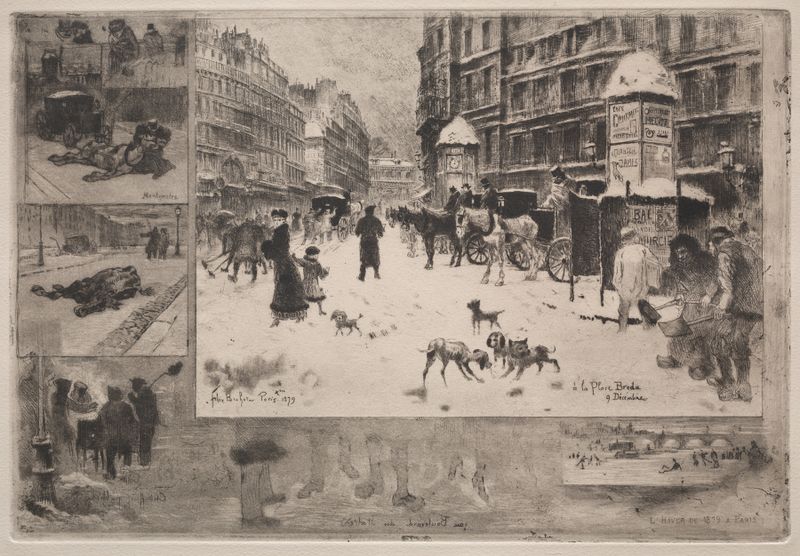
Winter in Paris
Félix Hilaire Buhot
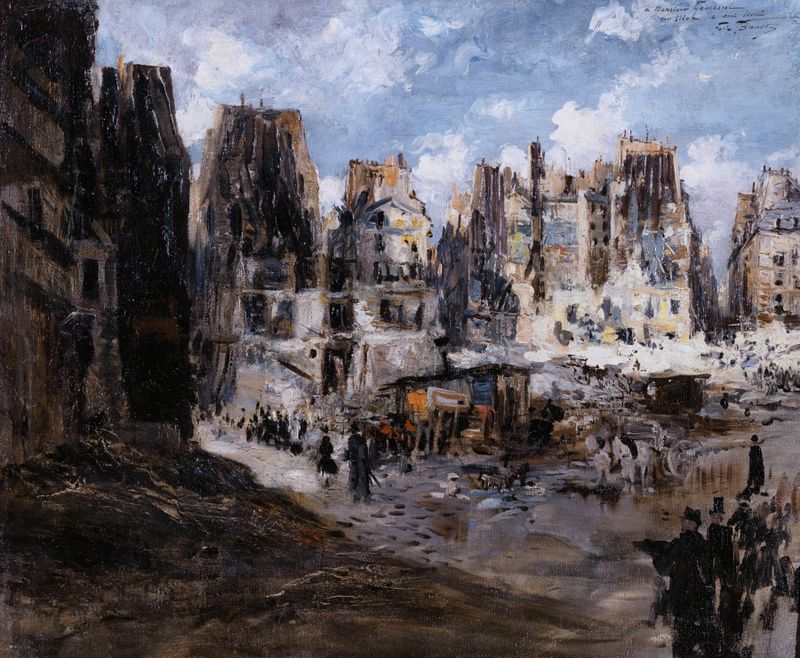
Le percement de l’avenue de l’Opéra.
Félix Hilaire Buhot
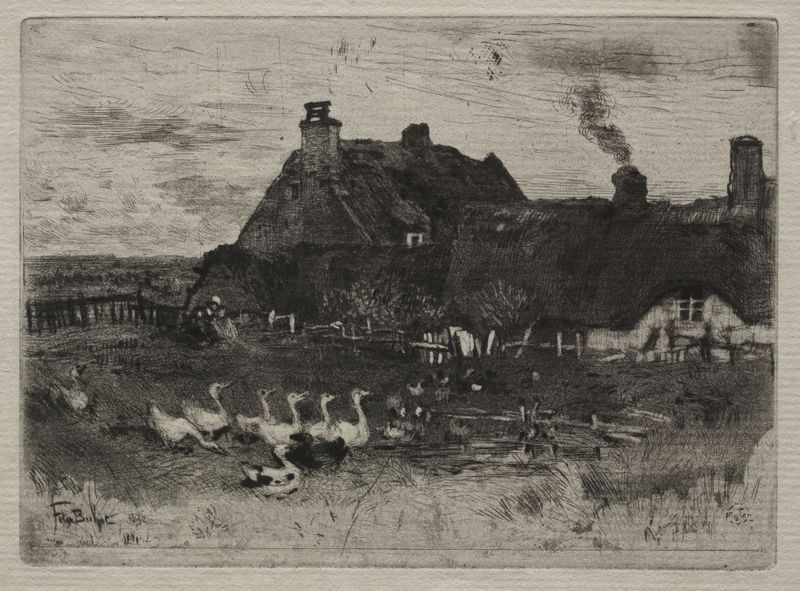
Thatched Cottages
Félix Hilaire Buhot
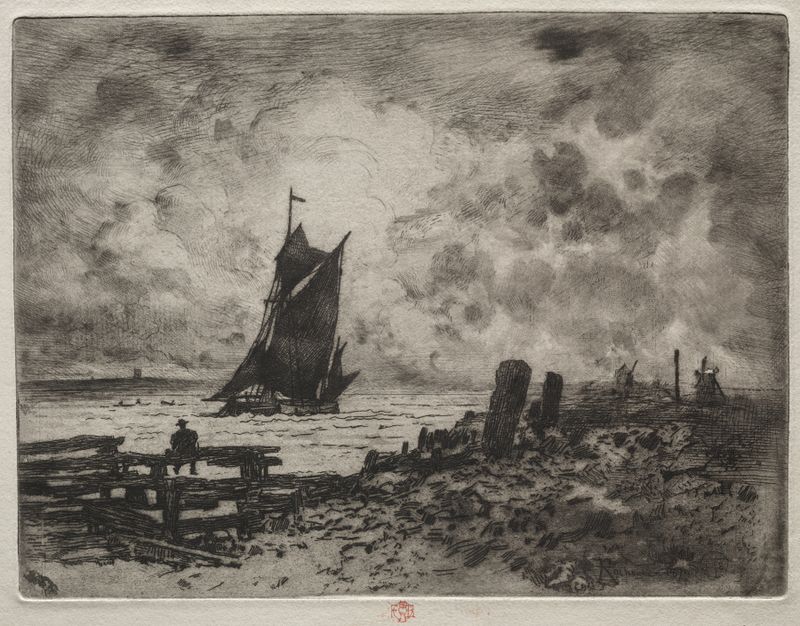
The Little Marine; Souvenir of Medway
Félix Hilaire Buhot





