
Landscape — History & Facts
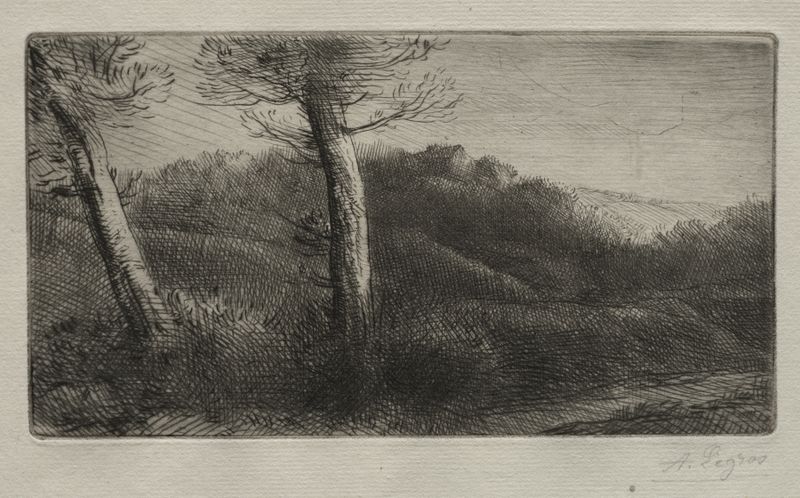
Where does light end, and longing begin? In Alphonse Legros's Landscape, a haunting interplay of shadows and illumination evokes a sense of fragile beauty, drawing us into a world poised between reality and reverie. Look to the left at the ethereal quality of the mist that drapes over the horizon, softening the harshness of the landscape. The browns and greens blend seamlessly, creating a patchwork that suggests life, yet hints at abandonment. Notice how the brushstrokes are both deliberate and loose, capturing the essence of nature while leaving it open to interpretation.
The light falls gently upon the foreground, illuminating the textures of the earth, inviting the viewer to step closer, yet always maintaining a distance. In this composition, the duality of hope and melancholy emerges. The vibrant light symbolizes the fleeting moments of joy and clarity, while the encroaching shadows bring forth a sense of inevitable decay and longing. The lone tree, standing resolutely amidst the fading landscape, embodies resilience and fragility, reminding us of nature’s transient beauty and our own impermanence.
Each element contributes to a quiet tension, bridging the gap between the viewer's heart and the scene itself. Legros painted Landscape during a transformative period in his career, around the late 19th century, while living in England after leaving France. This era was marked by a growing interest in plein air painting and the exploration of landscape as a subject separate from human presence. It was a time when artists sought to capture the emotional resonance of nature, reflecting both personal introspection and a broader movement away from romanticism towards impressionism.
More Artworks by Alphonse Legros
Browse all →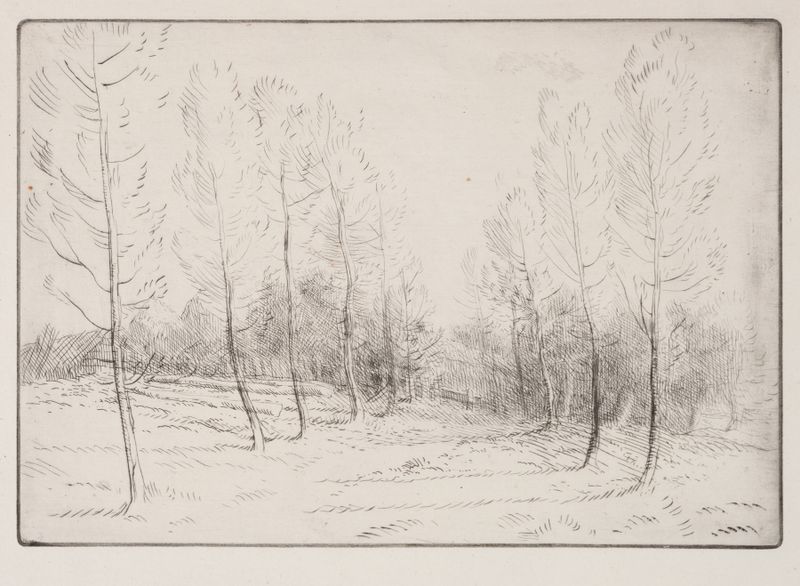
Avenue of Poplars
Alphonse Legros
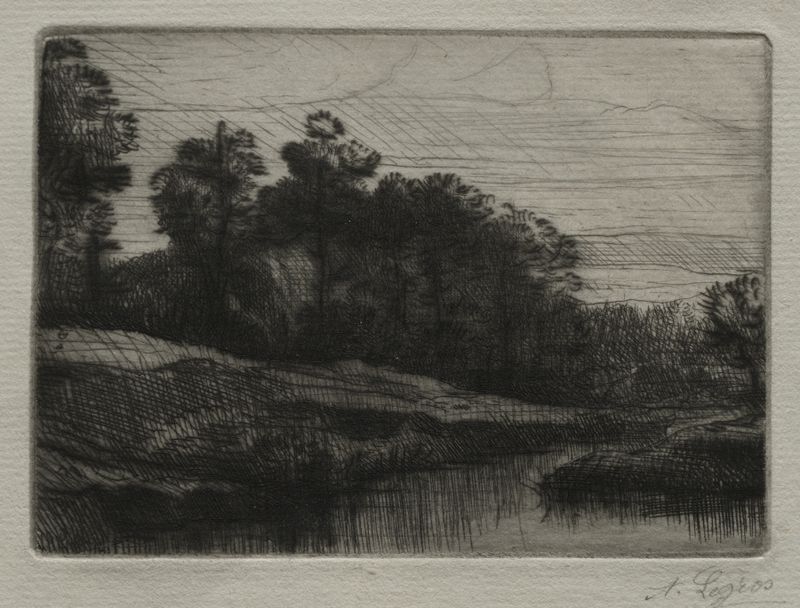
Evening
Alphonse Legros

The Fish in the Hoop Net
Alphonse Legros

The Little Beggar
Alphonse Legros
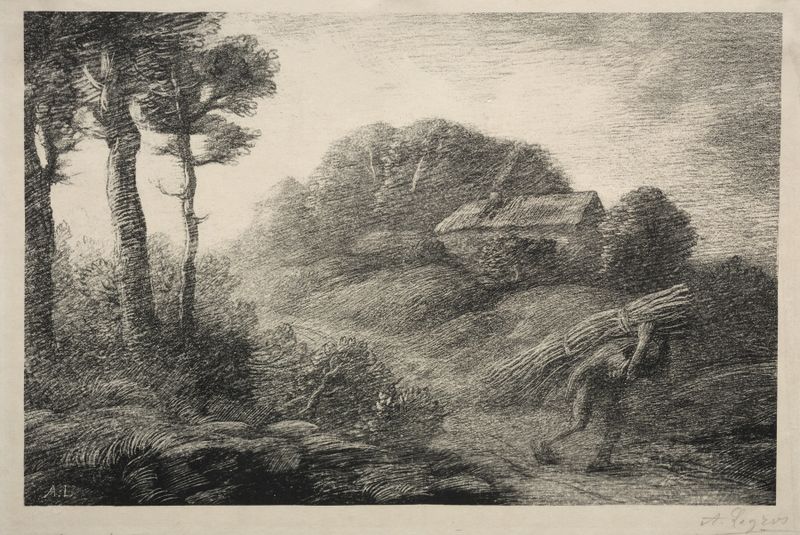
The Return of the Fagot Gatherer
Alphonse Legros

Storm
Alphonse Legros
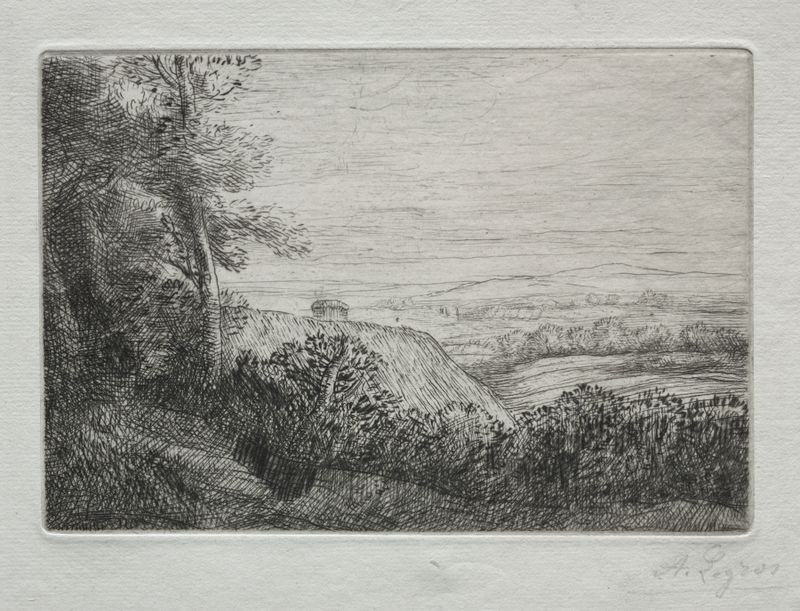
Les dernière Rayons de Soleil
Alphonse Legros
The Traveler Stretched out on the Grass
Alphonse Legros
Guard House
Alphonse Legros

Death of a Vagabond
Alphonse Legros





