
Landscape at Bouleaux — History & Facts
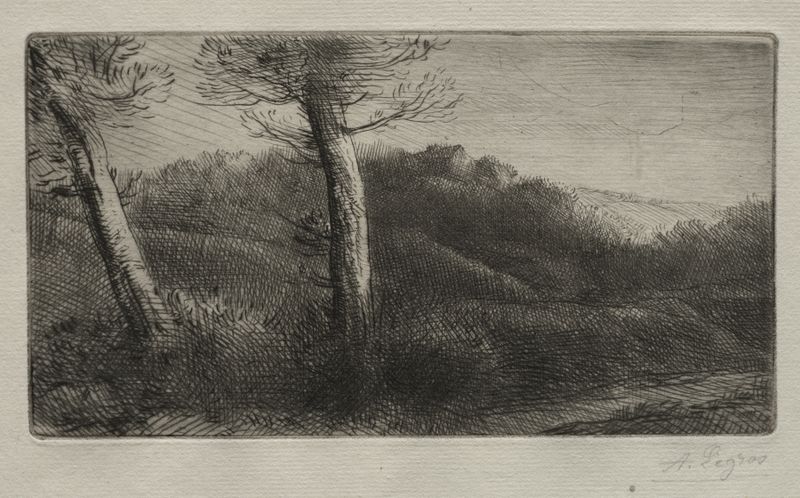
Who listens when art speaks of silence? In the stillness of the landscape, an underlying fear whispers between the lines of brushwork and muted tones. Look to the left at the tall, bare trees, their skeletal forms standing sentinel against a soft, hazy sky. The earth is painted in deep greens and browns, reflecting a somber serenity that contrasts with the starkness of the branches above. Notice how the light diffuses, casting gentle shadows that enhance the feeling of isolation and contemplative solitude.
The composition draws your eye toward the horizon, where a distant, indistinct figure seems to merge with the landscape, embodying the fragile connection between humanity and nature. The painting encapsulates a duality of existence—the beauty of nature interlaced with an undeniable sense of desolation. The sparse landscape evokes a quiet dread; the absence of human activity hints at a world stripped of life and vibrancy. Each element, from the bare trees to the muted palette, echoes a longing for connection yet simultaneously reinforces the isolation we often feel in our surroundings.
This tension between the serene beauty and the underlying fear invites viewers to reflect on their own encounters with solitude. Created during his time in England between 1857 and 1911, the artist captured this piece amid significant artistic and societal shifts. Legros, influenced by the Barbizon school and the emerging Impressionist movement, sought to explore the emotional weight of landscapes. As western art grappled with forms of expression that transcended realism, he carved out a unique space, blending meticulous detail with evocative, atmospheric quality, ultimately enriching the dialogue between viewer and painting.
More Artworks by Alphonse Legros
Browse all →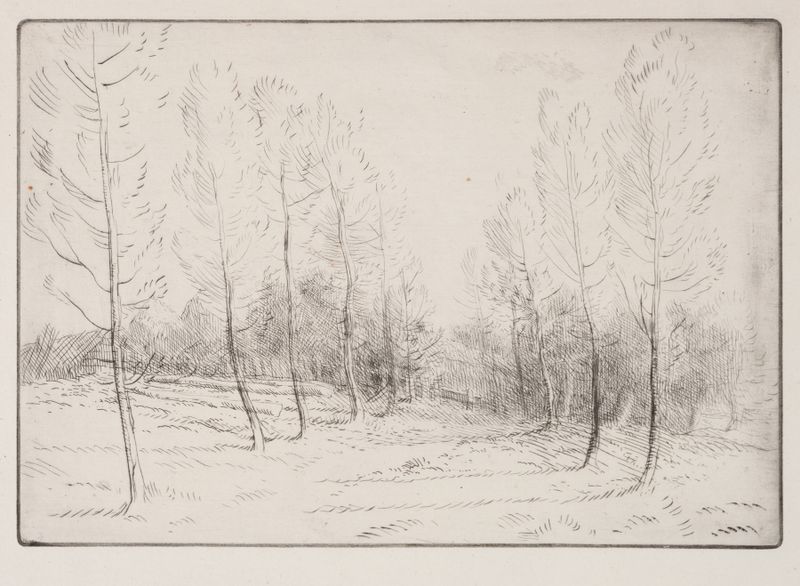
Avenue of Poplars
Alphonse Legros
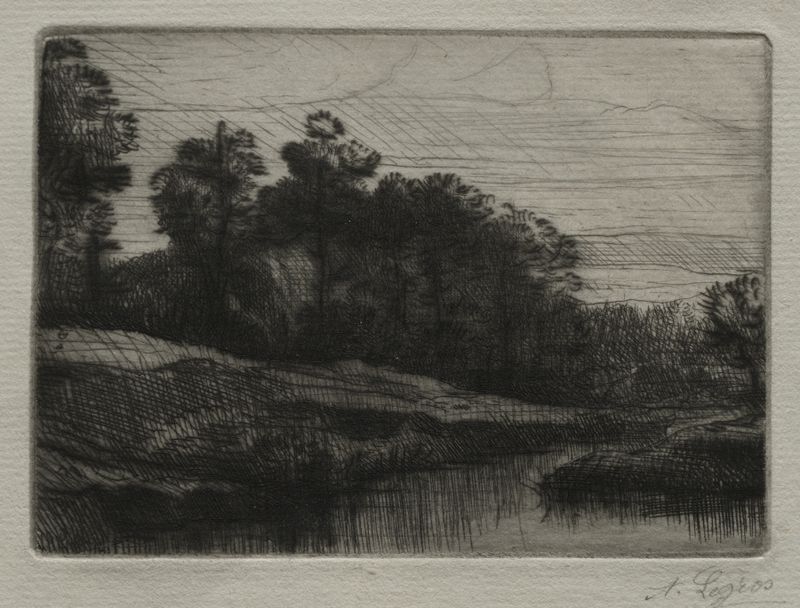
Evening
Alphonse Legros

The Fish in the Hoop Net
Alphonse Legros

The Little Beggar
Alphonse Legros
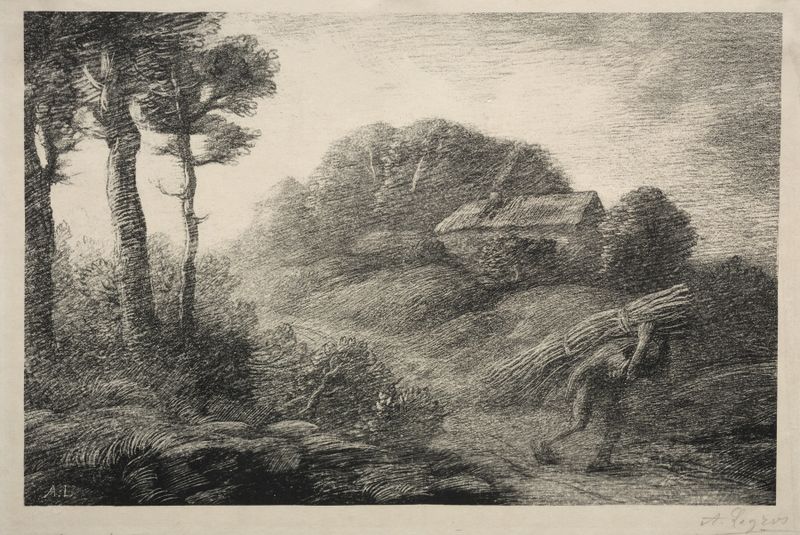
The Return of the Fagot Gatherer
Alphonse Legros

Storm
Alphonse Legros
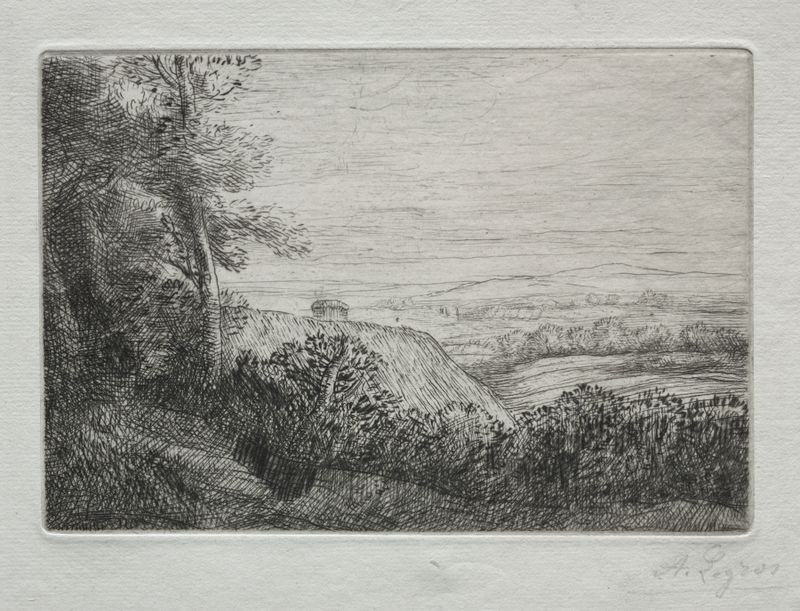
Les dernière Rayons de Soleil
Alphonse Legros
The Traveler Stretched out on the Grass
Alphonse Legros
Guard House
Alphonse Legros

Death of a Vagabond
Alphonse Legros





