
Landscape in early spring — History & Facts
In the stillness of transition, nature stands on the cusp of awakening, the world pregnant with possibility and change. It is a moment that embodies the essence of revolution, where past and future coexist in a delicate balance. Look to the center, where vibrant greens intermingle with soft blues, evoking the first whispers of spring. The brushstrokes dance across the canvas, creating a textured landscape that feels alive, allowing the viewer to wander through a realm of budding life.
Notice how the light breaks through the clouds, illuminating patches of earth, while shadows linger, hinting at the remnants of winter’s grasp. This juxtaposition of color and tone not only captures the essence of the season but also serves as a metaphor for renewal. Hidden within the vibrancy lies a tension between hope and decay. The lingering shadows symbolize the weight of the past, while the bright greens represent an inevitable march toward growth and rebirth.
As blossoms begin to unfurl, they challenge the viewer to embrace change, even when the past is still palpable. The sweeping horizon mirrors the emotional landscape of life itself—a continuum of struggle and triumph, where every brushstroke whispers secrets of transformation. In 1922, Lovis Corinth painted this landscape during a time of personal and artistic renewal. Having weathered the turmoil of World War I, he sought solace in nature and the beauty of rebirth, reflecting a movement in art that focused on expression and vitality.
This period marked not only a resurgence of his health but also a time when artists began exploring the depths of their emotional landscapes, creating work that spoke to the resilience of the human spirit.
More Artworks by Lovis Corinth
Browse all →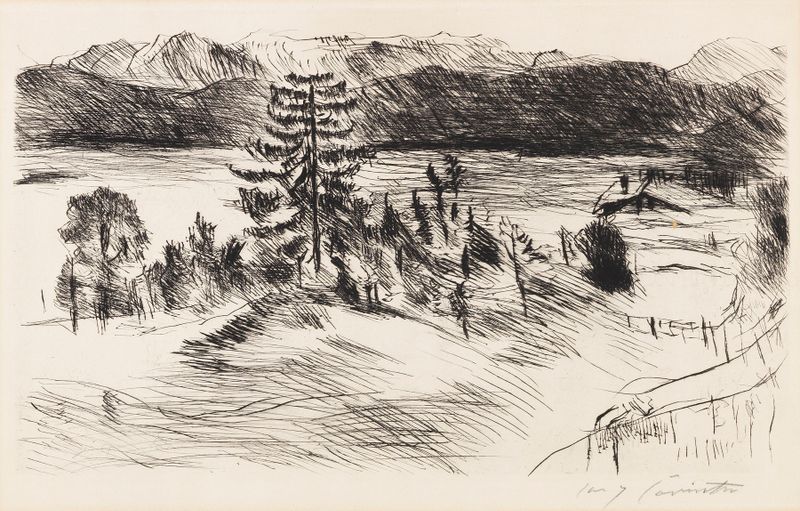
Große Walchenseelandschaft
Lovis Corinth

Walchensee im Nebel
Lovis Corinth

Große Walchenseelandschaft.
Lovis Corinth
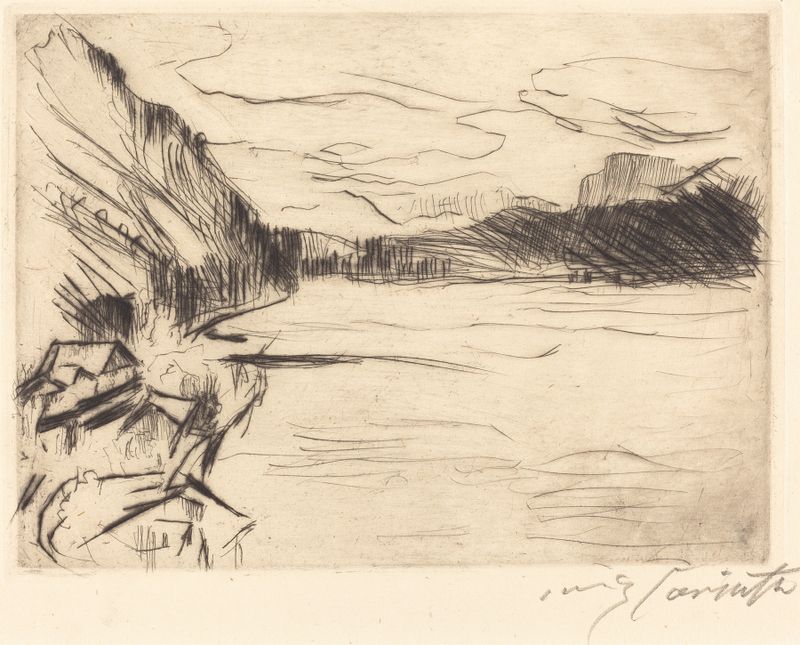
On Walchen Lake (Am Walchensee)
Lovis Corinth

Walchensee
Lovis Corinth

Gebirgsee (Walchensee im Winter)
Lovis Corinth

On the Walchen Sea (Am Walchensee)
Lovis Corinth

Bathing Place (Badeanstalt)
Lovis Corinth

Walchensee, aufgehender Mond
Lovis Corinth

Walchensee Landschaft
Lovis Corinth





