
Landscape with Ancient Ruins and a Column — History & Facts
In the realm of art, reflections reveal not only the surface but the depths of the human experience intertwined with nature's elegance. Look to the foreground of the painting where a weathered column rises defiantly against the backdrop of crumbling ruins. The artist’s careful brushwork captures the textured stone, every crack and crevice telling a story of time. Notice how the verdant greenery envelops the ruins, a lush embrace that highlights the juxtaposition of decay and vitality.
The muted earth tones harmonize with dappled sunlight, drawing the viewer's gaze toward the serene sky that stretches above, suggesting both peace and melancholy. Upon closer inspection, one might perceive the layers of history embedded within the scene. The column, a relic of grandeur, stands as a testament to human ambition, while the surrounding ruins evoke the transience of civilization. The interplay of light and shadow creates a dance of contrasts—illuminated fragments of the past against the encroaching wilderness, a subtle reminder of nature’s reclaiming power.
This duality breeds tension, as beauty and loss converge in a singular moment of reflection. In 1756, Christian Georg Schütz the elder created this evocative piece during a phase of artistic exploration in Germany, where the Rococo style was beginning to yield to neoclassicism. Living in a time marked by the Enlightenment's quest for knowledge and the appreciation of antiquity, Schütz sought to convey both the allure and the fragility of human achievement, echoing a broader cultural introspection about the passage of time and the legacy of history.
More Artworks by Christian Georg Schütz the elder
Browse all →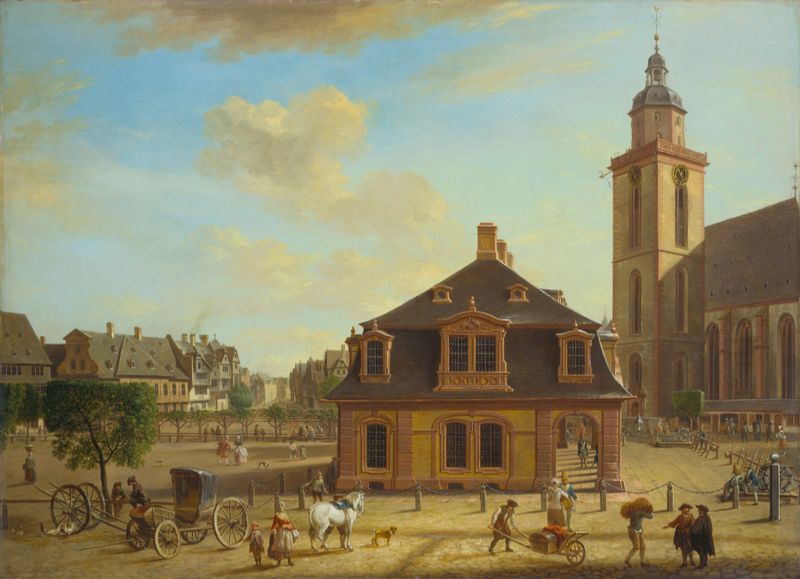
The Rossmarkt in Frankfurt
Christian Georg Schütz the elder
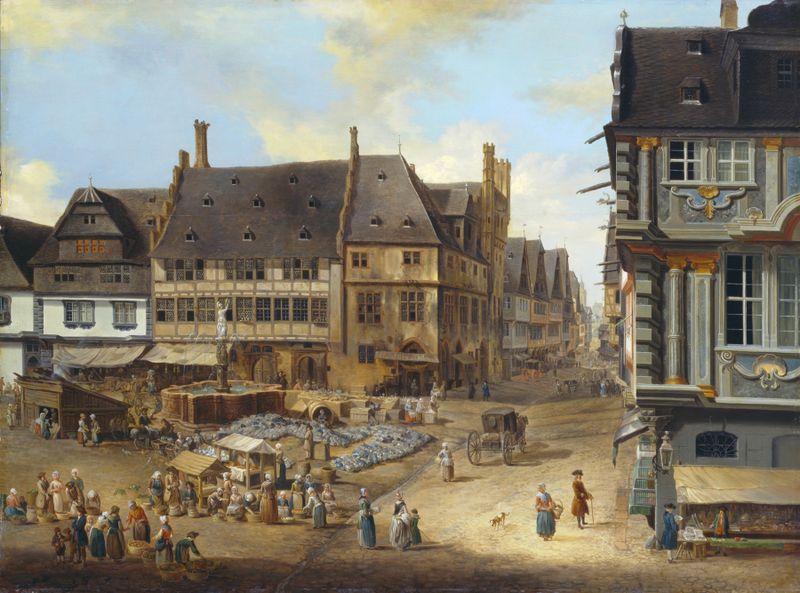
The Liebfrauenberg in Frankfurt
Christian Georg Schütz the elder
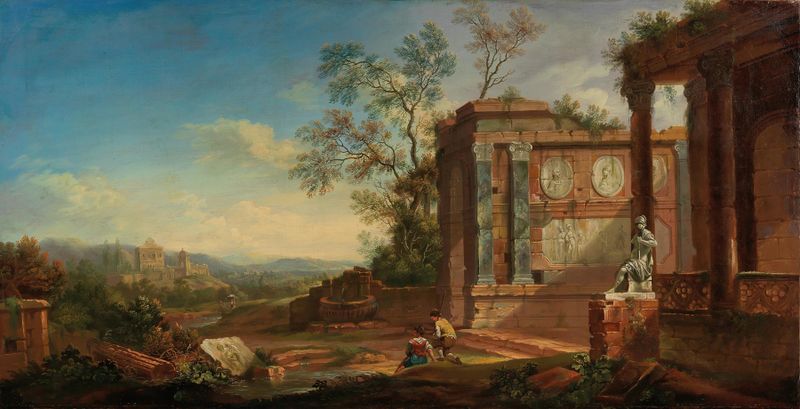
Gebirgige Flusslandschaft
Christian Georg Schütz the elder
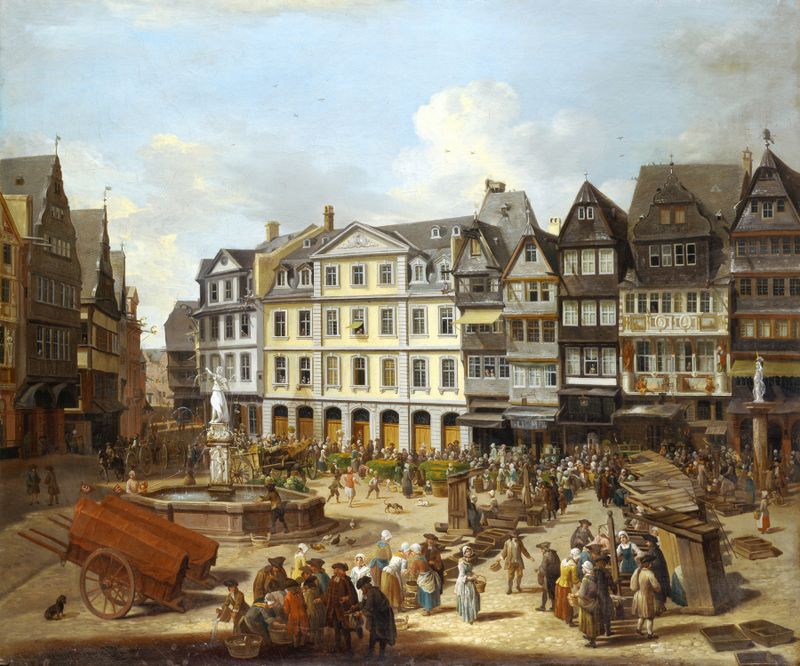
A Market on the Römerberg in Frankfurt
Christian Georg Schütz the elder
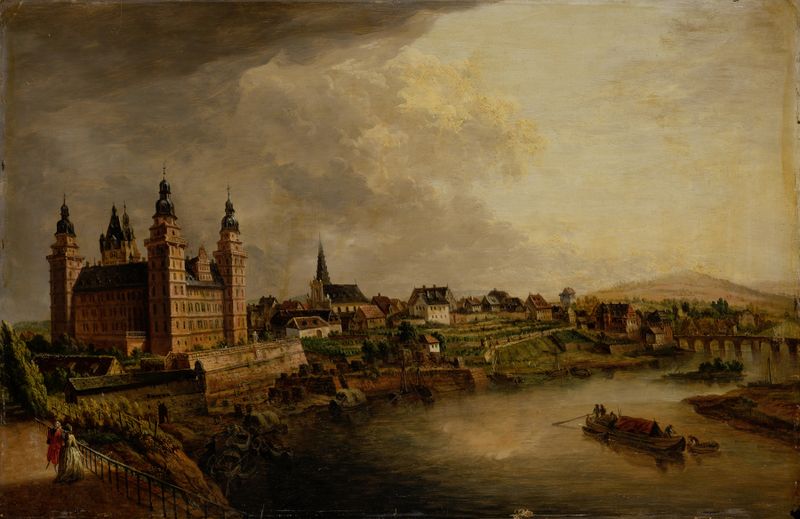
View of Aschaffenburg
Christian Georg Schütz the elder

Landscape with River.
Christian Georg Schütz the elder

River Landscape in the Morning Light
Christian Georg Schütz the elder

A Rhine landscape with a ferry, near Bonn with the Rolandsbogen, Drachenfels and the island of Nonnenwerth beyond
Christian Georg Schütz the elder
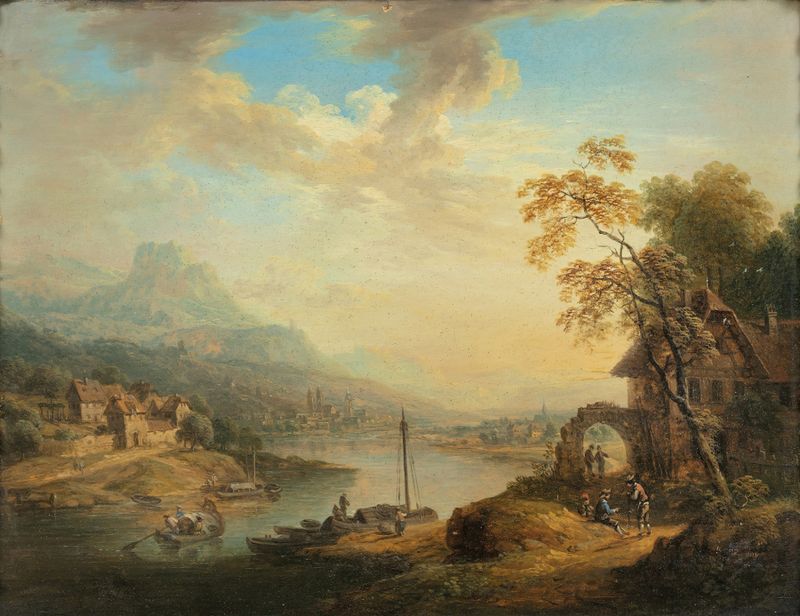
River Landscape
Christian Georg Schütz the elder

Flooded Woodlands near Oberrad
Christian Georg Schütz the elder





