
Landscape (with buildings) — History & Facts
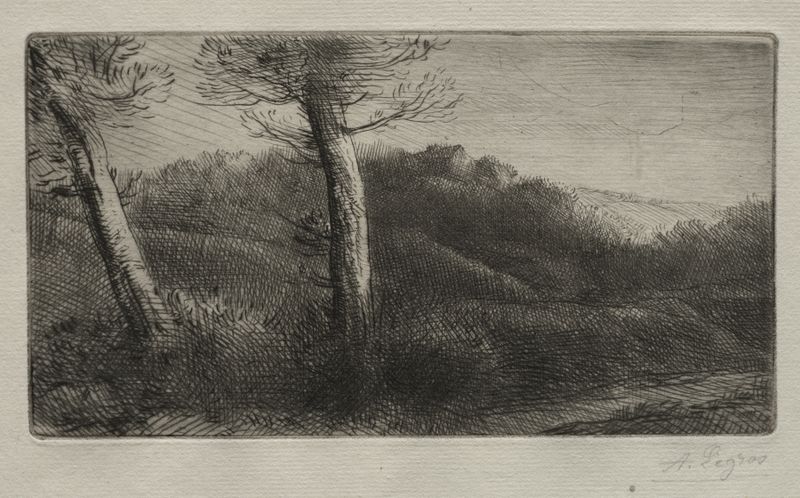
In the vast expanse of nature, does faith emerge in the unseen connection between humanity and the landscape? Look to the center, where a tranquil village nestles against the backdrop of rolling hills. The subtle play of light dances across the rooftops, creating an inviting warmth that whispers of life within. Soft hues of green and gold capture the eye, while the muted tones of the sky seem to cradle the world beneath, evoking a sense of harmony and solace. Yet, beneath this serene surface lies a tension between man and nature.
The buildings, though quaint, stand as a testament to human ambition, their structures contrasting with the organic forms of the landscape. Notice how the darker shadows loom, hinting at the struggle against the elements, a reminder of impermanence and the delicate balance we walk every day. The viewer cannot help but feel that this moment is fleeting, a snapshot of a greater narrative where faith in the enduring beauty of life prevails. During the years around 1857 to 1911, Alphonse Legros worked in England, having relocated from France amidst a turbulent cultural landscape.
It was a time when the art world was grappling with the rise of modernism, yet Legros found solace in the pastoral themes of the past, melding his influences from the Barbizon School with his own unique sensibility. This painting reflects not only his personal journey but also the broader quest for meaning in a changing world.
More Artworks by Alphonse Legros
Browse all →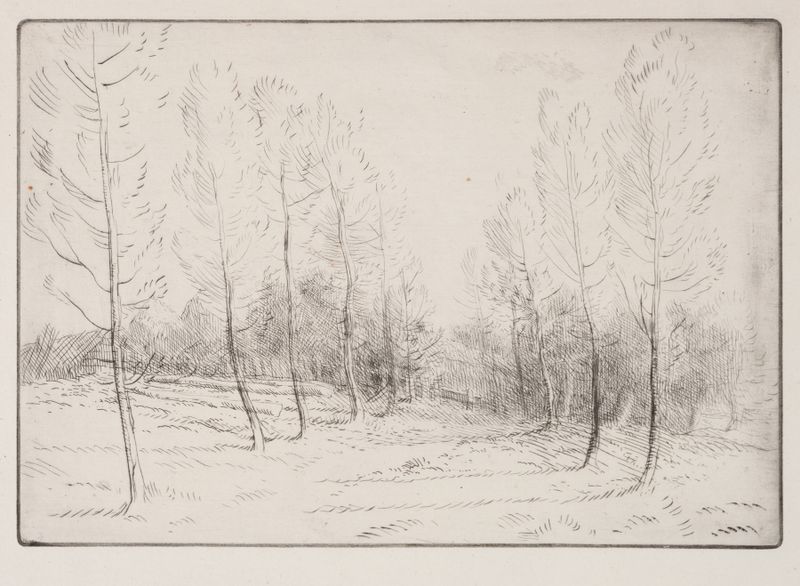
Avenue of Poplars
Alphonse Legros
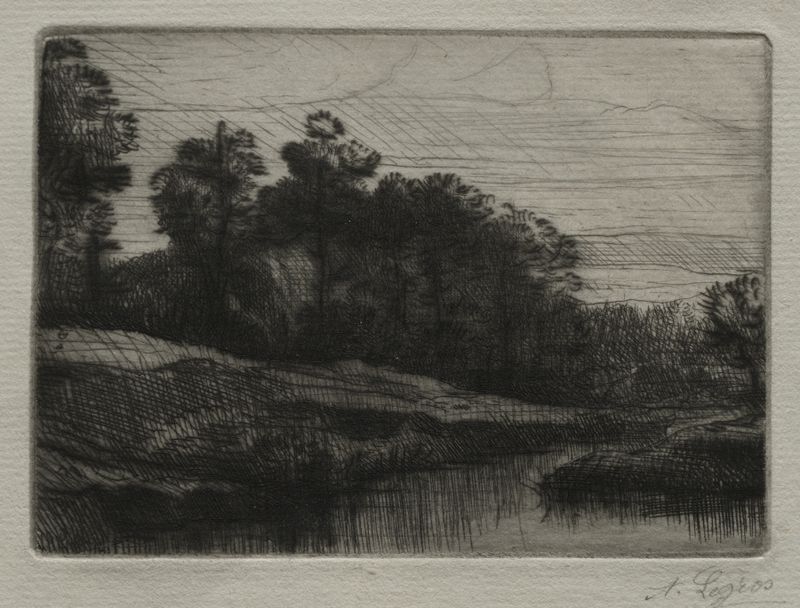
Evening
Alphonse Legros

The Fish in the Hoop Net
Alphonse Legros

The Little Beggar
Alphonse Legros
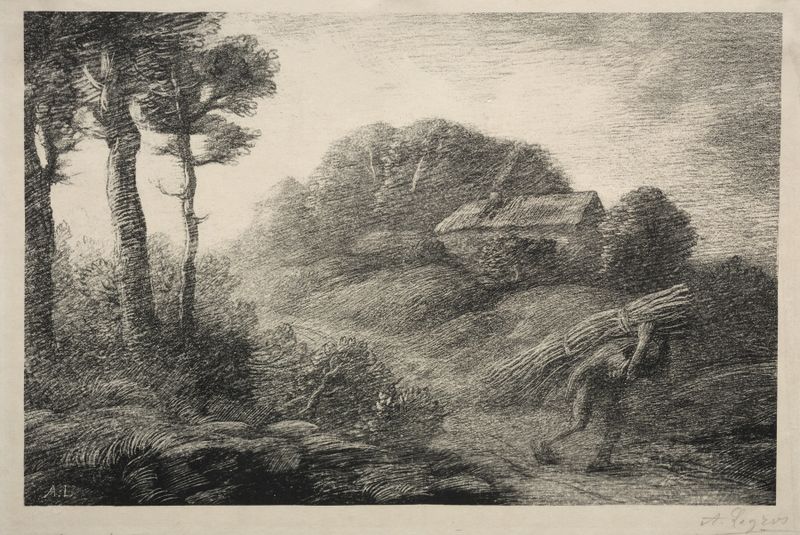
The Return of the Fagot Gatherer
Alphonse Legros

Storm
Alphonse Legros
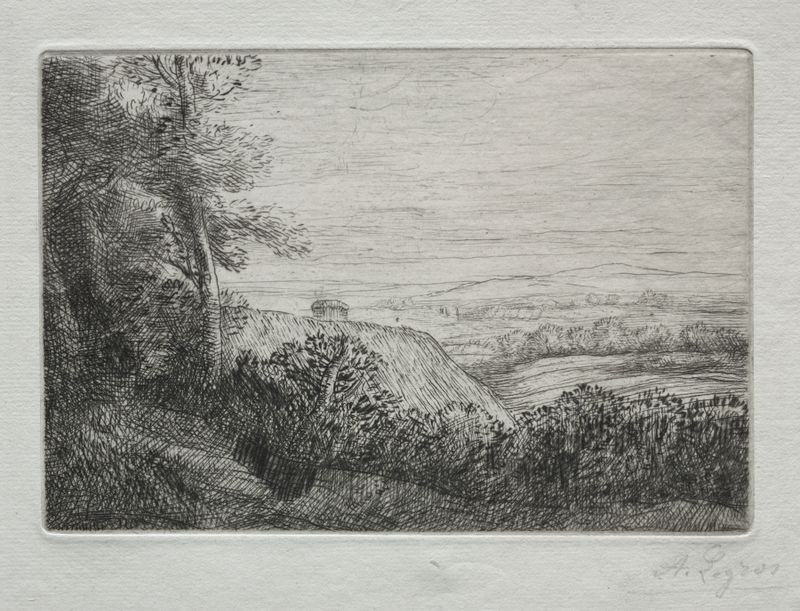
Les dernière Rayons de Soleil
Alphonse Legros
The Traveler Stretched out on the Grass
Alphonse Legros
Guard House
Alphonse Legros

Death of a Vagabond
Alphonse Legros





