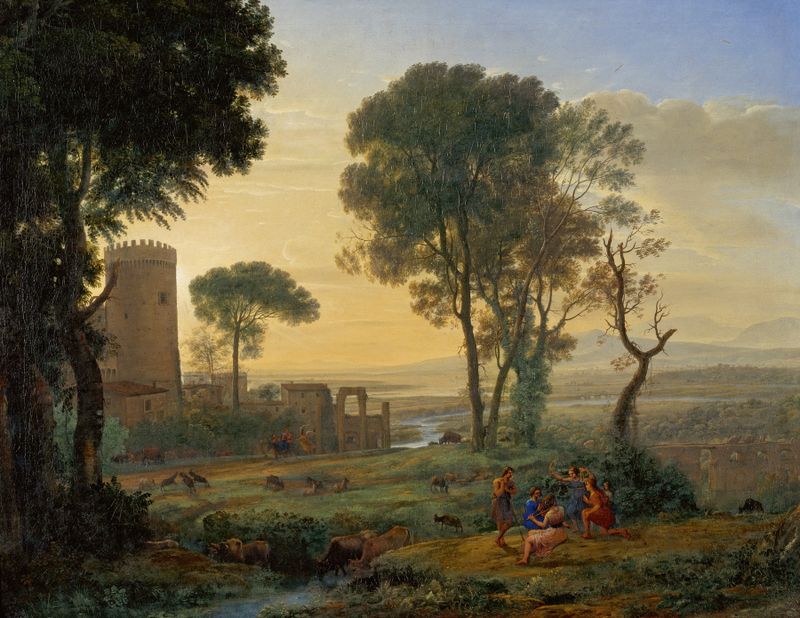
Landscape with Dancing Satyrs and Nymphs — History & Facts
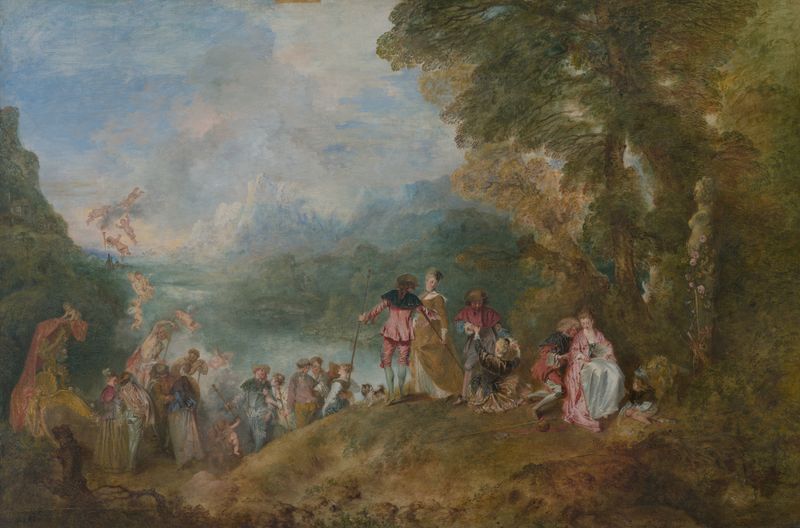
Could a single brushstroke hold eternity? In Landscape with Dancing Satyrs and Nymphs, the ephemeral movement of figures amidst a vast, yet eerily vacant landscape speaks to an underlying solitude that haunts the beauty of the scene. Look to the left at the playful satyrs, their forms entwined with nymphs in an exuberant dance. Notice how the golden hues of the setting sun touch their bodies, casting elongated shadows that emphasize their dynamic poses. The towering trees frame the horizon, guiding the eye toward a distant, tranquil body of water that mirrors the soft pastels of the sky.
This delicate interplay of light and shadow not only enhances the vibrancy of the figures but also creates a contemplative space, inviting a sense of introspection. Yet beneath the joyous facade lies a profound loneliness. The exuberance of the dancers contrasts starkly with the silence of their surroundings, suggesting that even in moments of celebration, the echoes of solitude persist. The lifelike details of the figures juxtaposed against the expansive emptiness of the landscape provoke a tension between connection and isolation.
Each brushstroke resonates with the yearning for communion, underscoring the bittersweet nature of existence. Painted at an uncertain time in his career, Claude Lorrain found himself navigating the evolving landscape of 17th-century European art. His work reflects an era captivated by the balance between nature and humanity, a theme that resonated deeply in his life as he sought both personal fulfillment and artistic legacy. The serene beauty and complex emotional undercurrents of this piece exemplify his mastery in capturing the dance of light and life across the canvas, evoking both joy and melancholy.
More Artworks by Claude Lorrain
Browse all →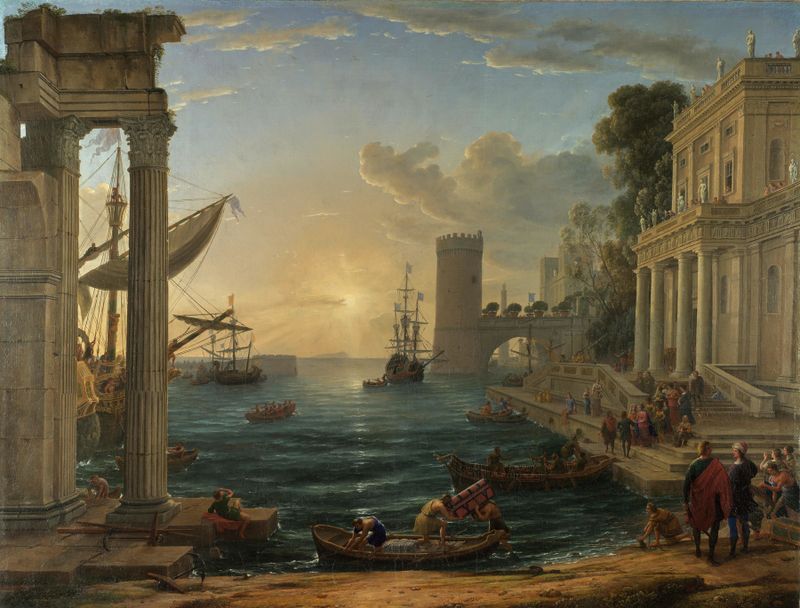
The Embarkation of the Queen of Sheba
Claude Lorrain
Landscape with the Flight into Egypt
Claude Lorrain
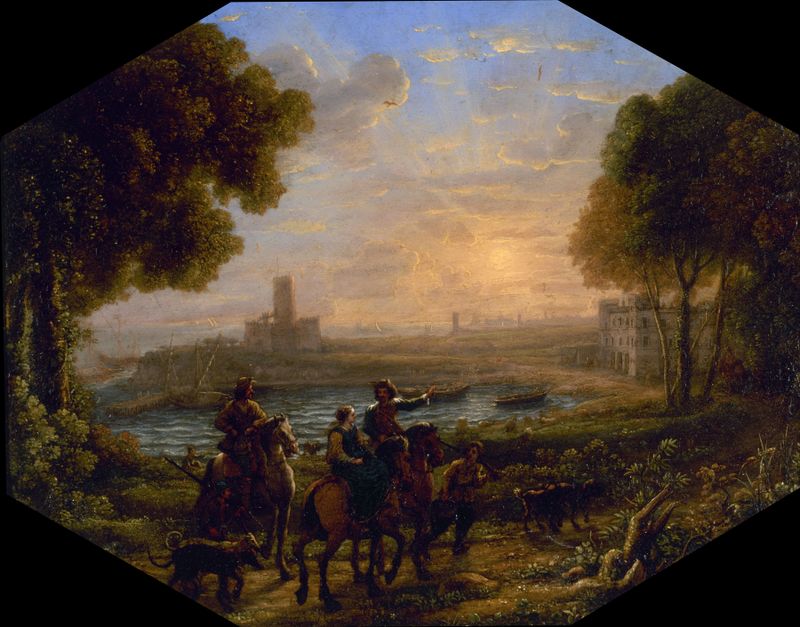
Paysage avec le port de Santa Marinella
Claude Lorrain
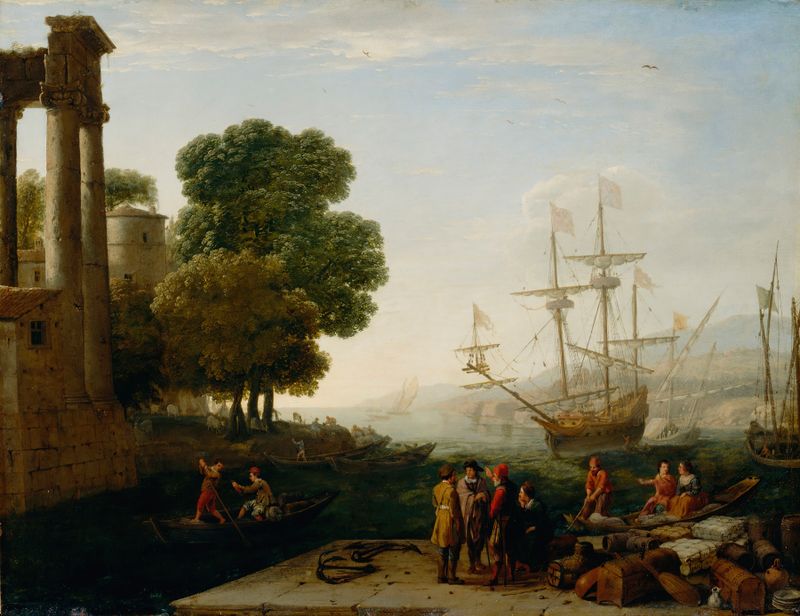
A Seaport at Sunset
Claude Lorrain
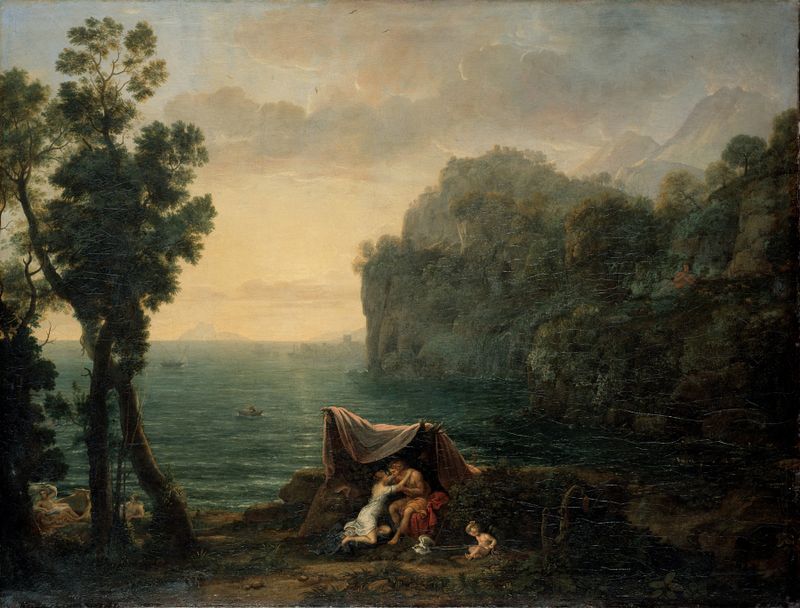
Landscape with Acis and Galatea
Claude Lorrain
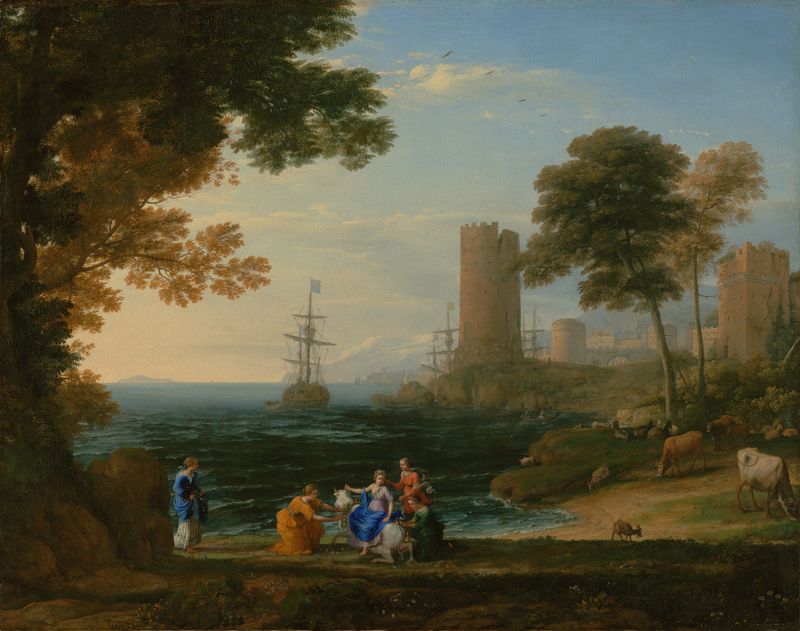
Coast View with the Abduction of Europa
Claude Lorrain
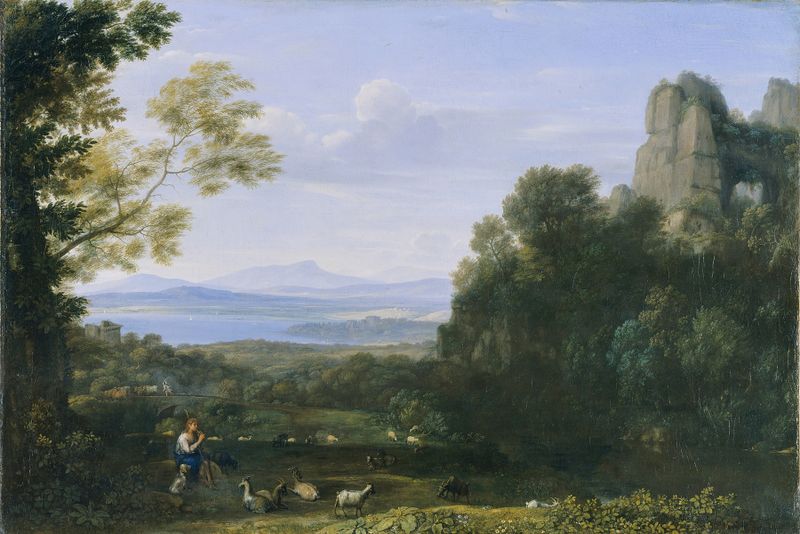
Landscape with Apollo and Mercury
Claude Lorrain
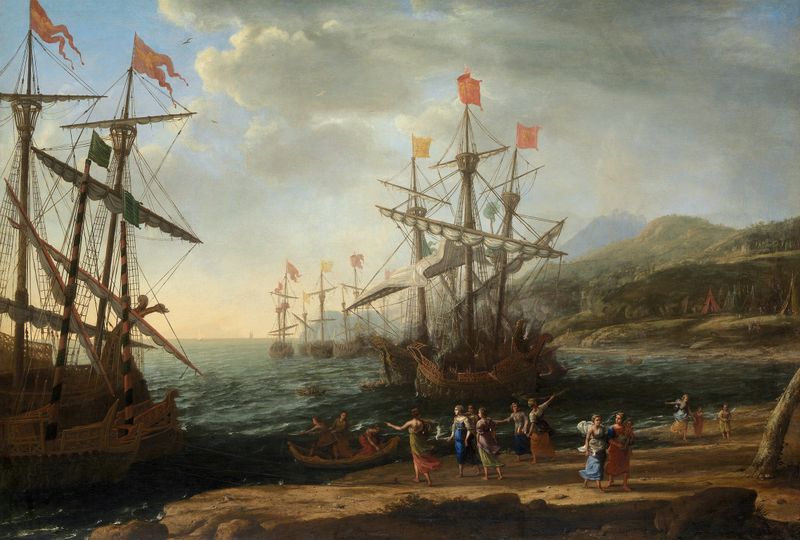
The Trojan Women Setting Fire to Their Fleet
Claude Lorrain
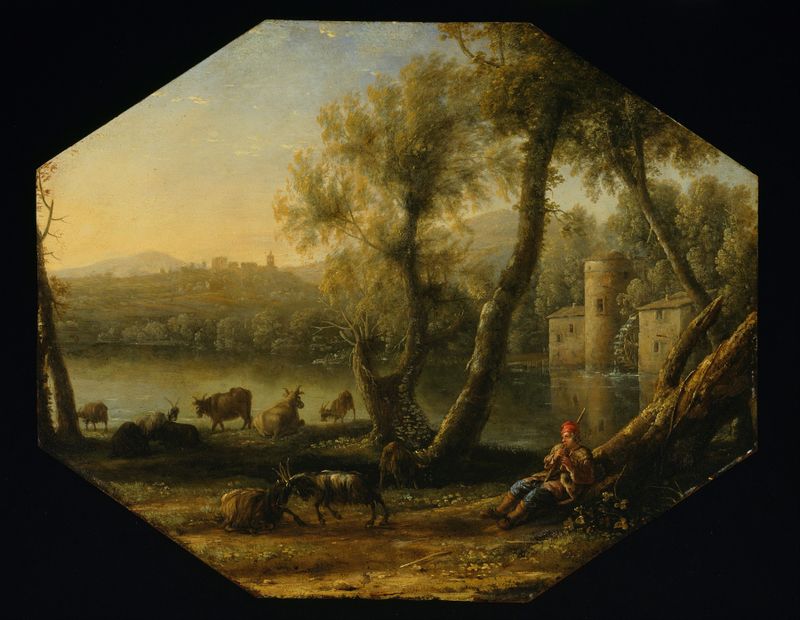
Pastoral landscape
Claude Lorrain
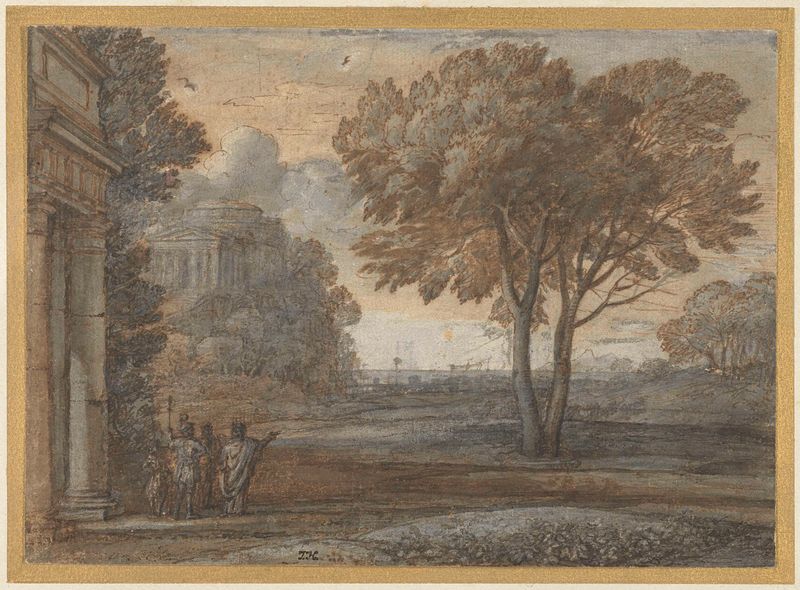
Aeneas op Delos
Claude Lorrain