
Landschaft bei Civitella — History & Facts
Could a single brushstroke hold eternity? In the realm of art, landscapes can encapsulate the turbulence of revolution while simultaneously offering a serene escape. Look to the left at the gentle curve of the hills, where layers of verdant greens meet the soft blue of the sky. Notice how Schirmer manipulates light to weave shadows into the undulating terrain, creating depth that invites the viewer into this tranquil yet charged scene. The subtle transitions of color showcase his mastery of the oil medium, each stroke a dialogue between nature and the artist's perception of it. A closer look reveals a tension beneath the surface: the idyllic countryside is a paradox, a place of beauty overshadowed by the specter of change.
The lonely path winding through the landscape suggests journeys yet to be taken, while the muted tones echo a sense of melancholy or anticipation. It is a moment frozen in time, whispering of the forces stirring in the world beyond the canvas, hinting at both tranquility and unrest. In 1839, Schirmer created this work during a period marked by political upheaval across Europe. Working in Germany, he sought to capture the essence of nature amid the growing calls for revolution and reform.
This painting reflects not only his artistic vision but also the societal shifts that beckoned change, embodying a delicate balance of beauty and the inevitable march of history.
More Artworks by Johann Wilhelm Schirmer
Browse all →
Waldlandschaft mit Blick auf Olevano und den Monte Cavo
Johann Wilhelm Schirmer
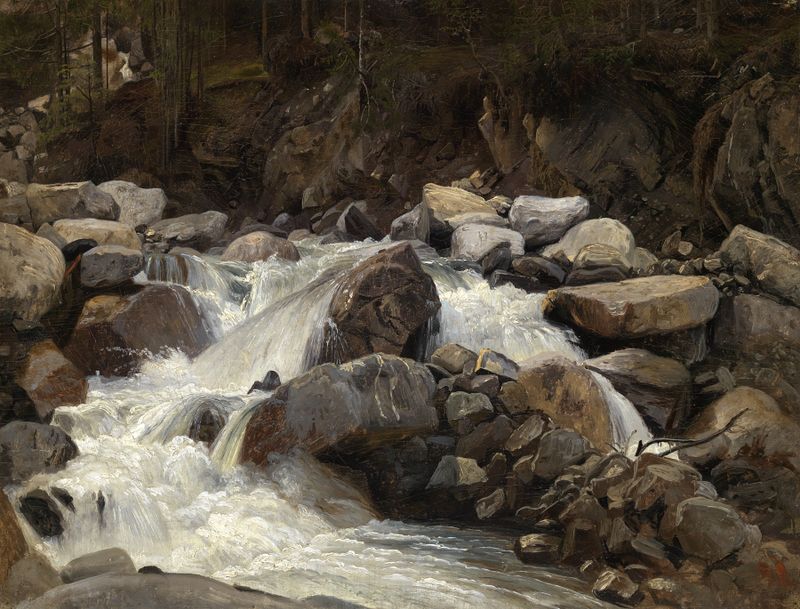
Schweizer Gebirgsbach
Johann Wilhelm Schirmer
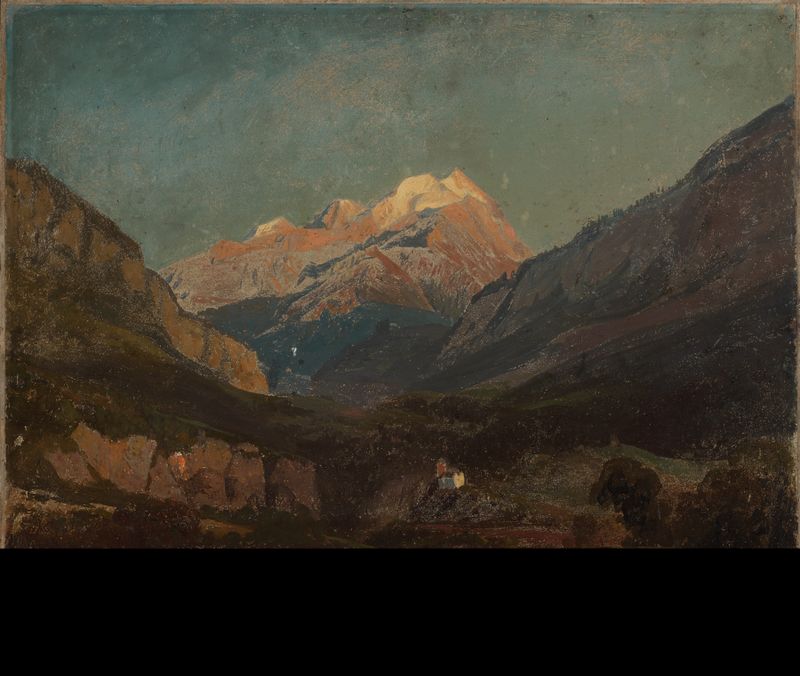
Schweizer Gebirgslandschaft mit Kapelle und fernem Schneegipfel
Johann Wilhelm Schirmer

Schweizer Gebirgslandschaft mit dem Piz Beverin im Hintergrund
Johann Wilhelm Schirmer

Waldinneres mit Hirschen am Wasser
Johann Wilhelm Schirmer

The Wetterhorn
Johann Wilhelm Schirmer

Partie aus der Römischen Campagna
Johann Wilhelm Schirmer

Felsabhang in der Schweiz
Johann Wilhelm Schirmer
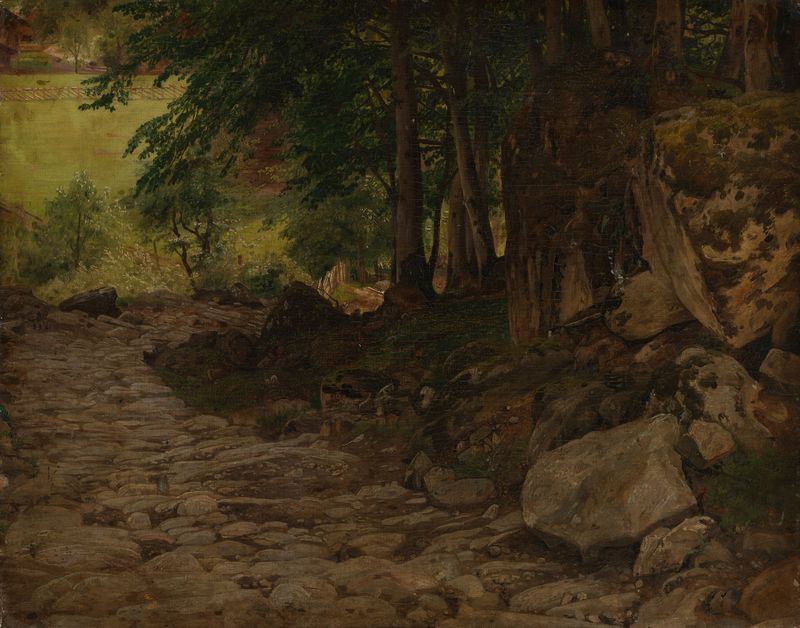
Felsweg in der Schweiz
Johann Wilhelm Schirmer
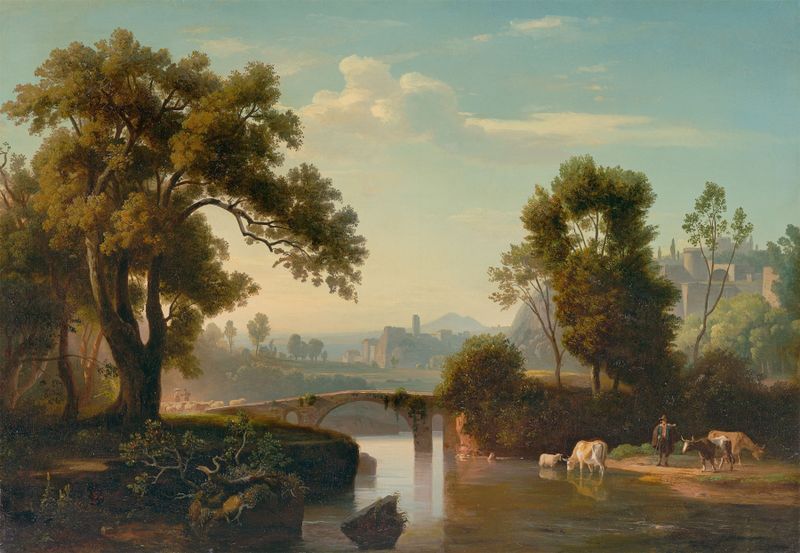
Italienische Landschaft mit Hirten
Johann Wilhelm Schirmer





