
Landschaft mit figürlicher Staffage — History & Facts
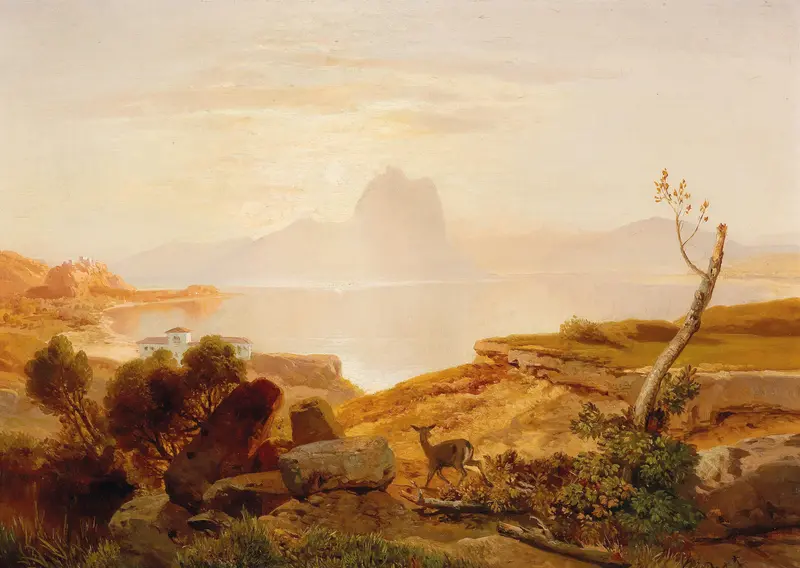
A path winds gently through sunlit grasses and wild shrubs, drawing the viewer’s gaze toward a solitary figure in blue, crowned by a bright red kerchief. The real drama unfolds in the meeting of sky and land: pale mountains, softened by distance, rise against a sky brushed with clouds, while the trees arch protectively over the path, their shadows dappling the earth. The painter’s careful attention to the play of light—golden on the field, cool and blue in the distant peaks—suggests a moment suspended between movement and stillness.
The figure, small but purposeful, hints at a quiet narrative of daily life, her presence anchoring the vastness of the landscape. Painted by Albert August Zimmermann by 1888, this work belongs to a tradition of late nineteenth-century landscape painting that celebrated the natural world not as a backdrop for grand events, but as a subject worthy of close observation and quiet wonder. Such paintings were often sought by a rising middle class eager to bring the tranquility of nature into their homes, at a time when industrialization was reshaping both city and countryside. The painting’s journey has brought it to the Dorotheum collection, but history has kept few traces of its early life.
Let your eye return to the path and the distant figure—each detail rewards a second look, inviting you to imagine the world just beyond the frame.
More Artworks by Albert August Zimmermann
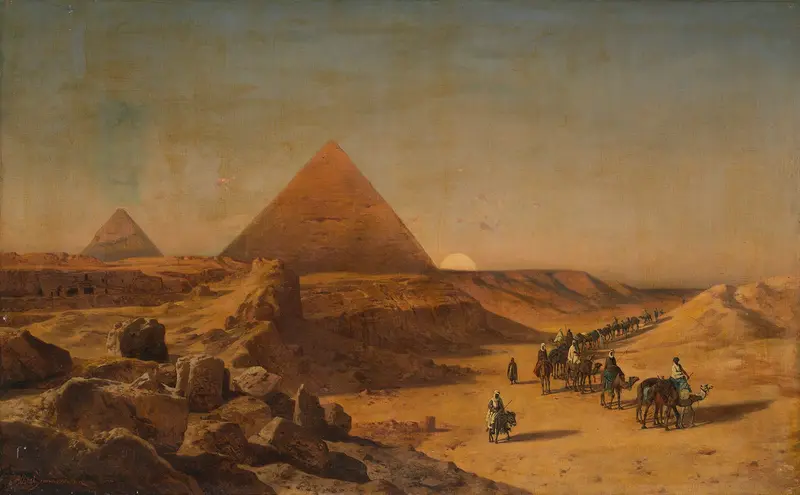
Pyramids
Albert August Zimmermann

Schwäbische Alb
Albert August Zimmermann
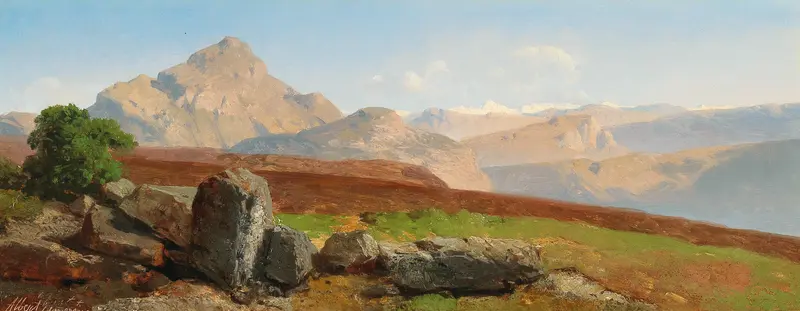
Mountain Landscape
Albert August Zimmermann
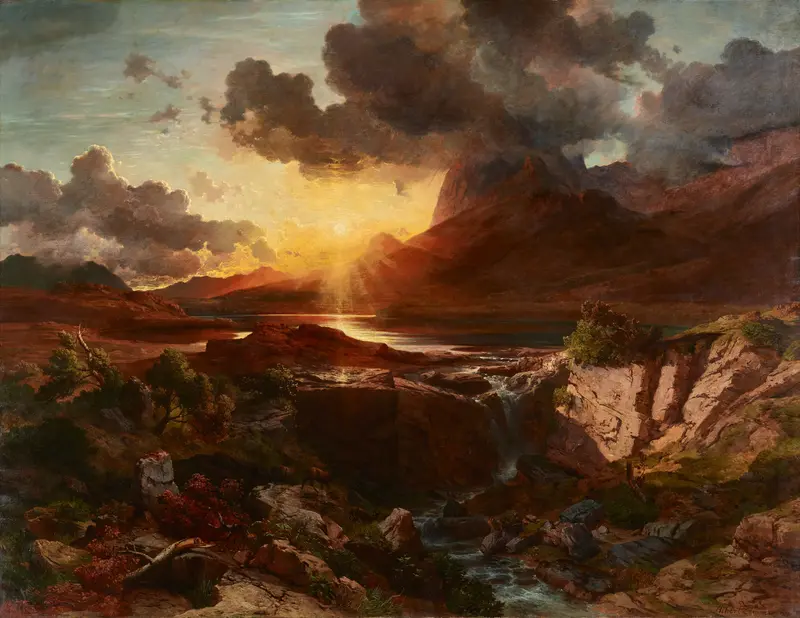
Sonnenuntergang am Hintersee in Berchtesgaden 13 Österreichische Galerie Belvedere
Albert August Zimmermann
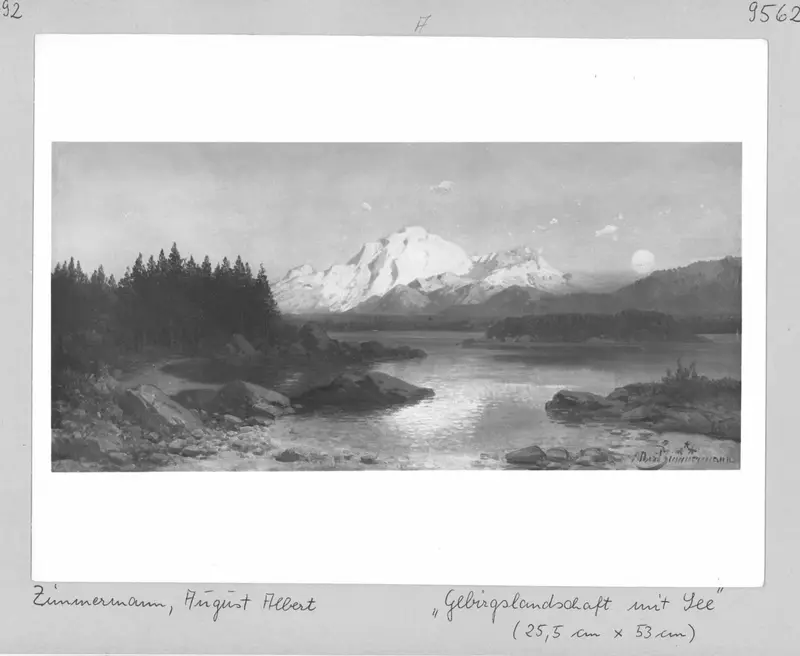
Mountain-landscape with lake
Albert August Zimmermann
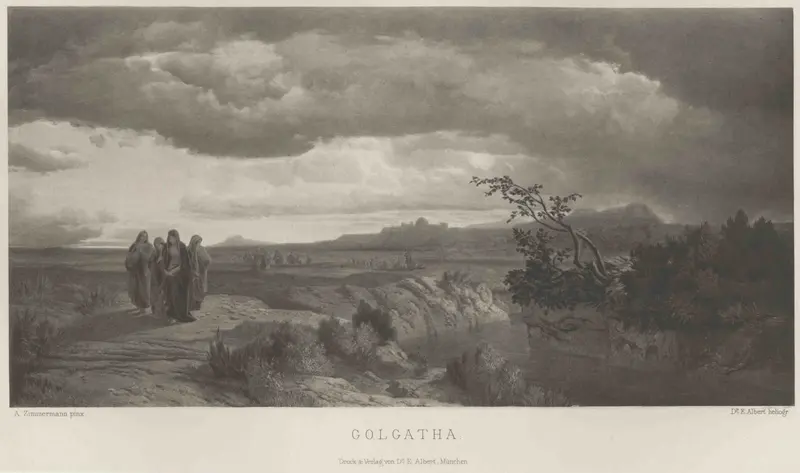
Golgatha
Albert August Zimmermann
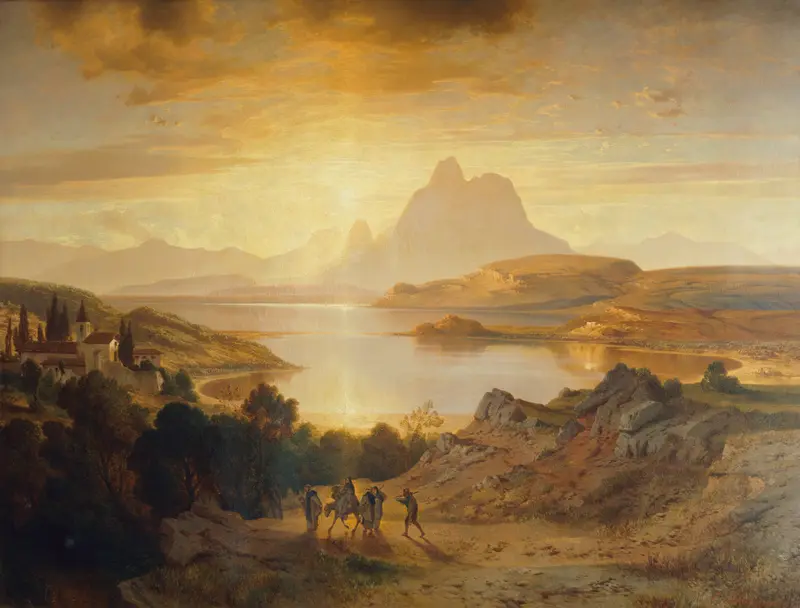
Lago di Lugano 65 Österreichische Galerie Belvedere
Albert August Zimmermann
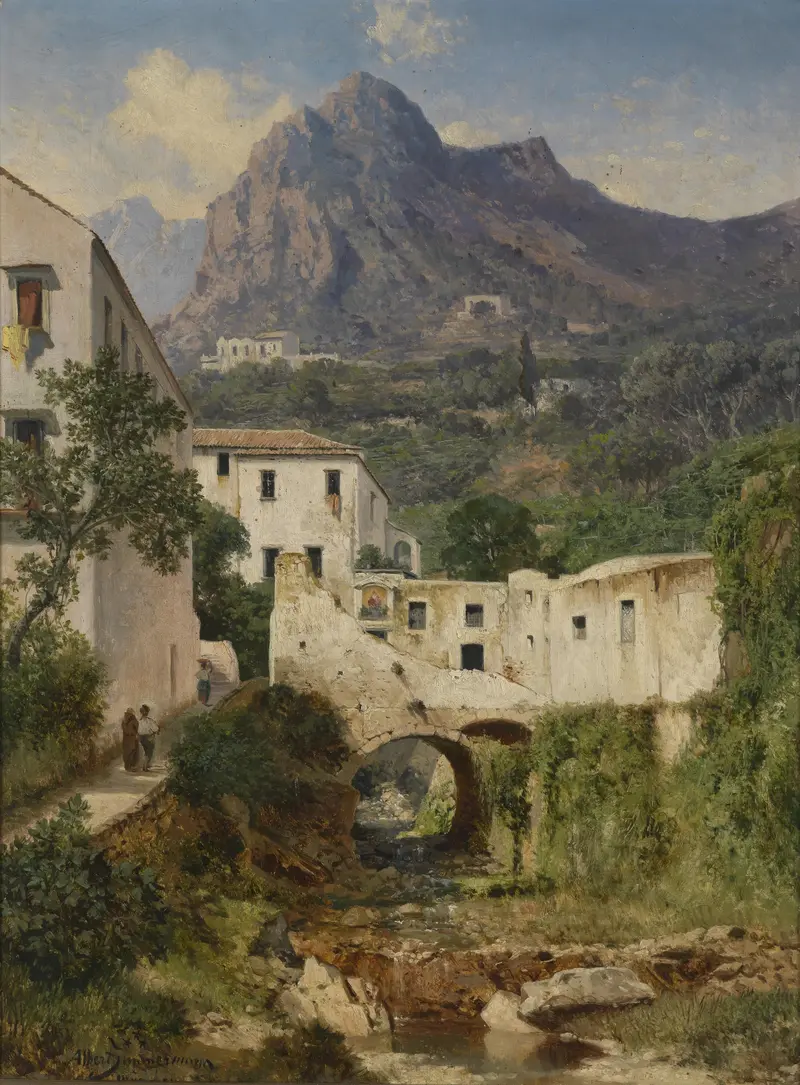
Mühltal bei Amalfi
Albert August Zimmermann
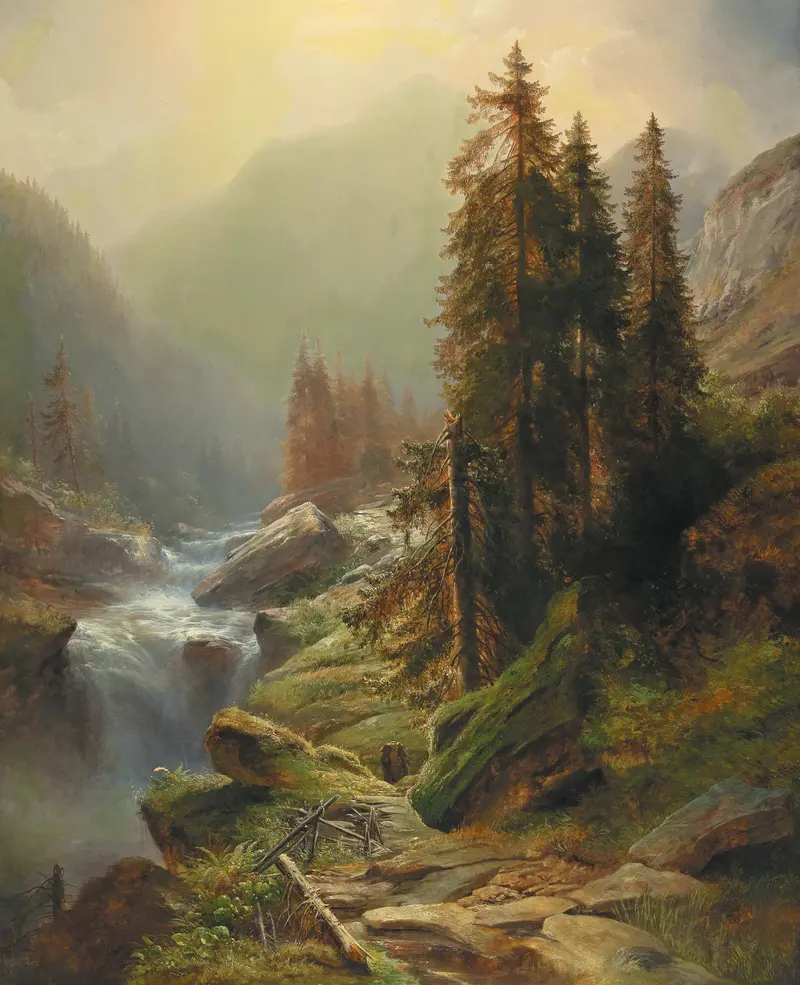
Large Mountain Landscape
Albert August Zimmermann
Partie am Como See
Albert August Zimmermann
More Landscape Art

The Starry Night
Vincent van Gogh

View of Delft
Johannes Vermeer

Water Lilies
Claude Monet

The Grand Canal, Venice, looking north-west from the Ca' Corner to the Ca' Contarini degli Scrigni, with the campanile of Santa Maria della Carità
Canaletto

Windsor Castle
Canaletto

The Grand Canal looking North-East from the Palazzo Dolfin-Manin to the Rialto Bridge
Canaletto