
Landschap met ruïnes — History & Facts
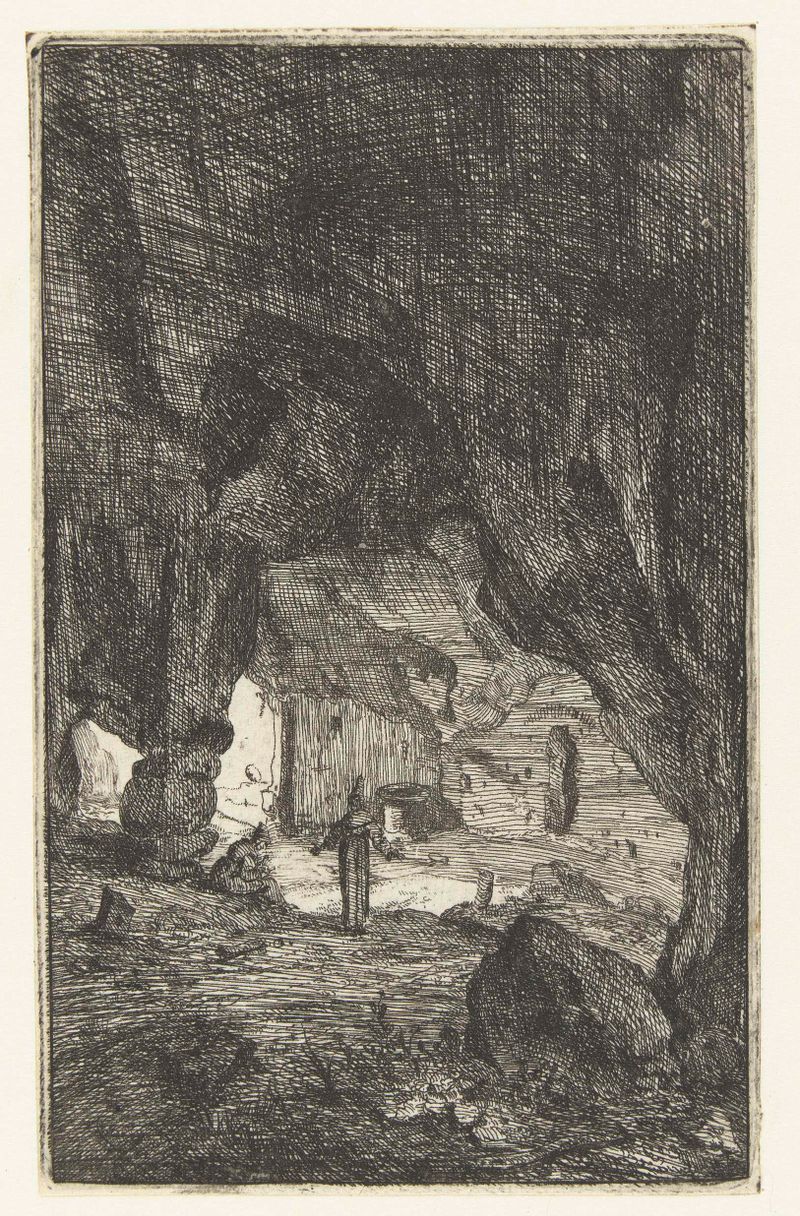
What if silence could speak through light? In Landschap met ruïnes, a haunting landscape whispers the stories of time, echoing the past through the remnants of once-mighty structures. Look to the center of the canvas, where towering ruins stretch upward, their crumbling forms softened by a golden glow. The artist employs a delicate interplay of light and shadow, illuminating the decay while casting the surrounding landscape into a serene twilight. The lush greenery encroaches upon the ruins, offering a stark contrast of life against the remnants of civilization, pulling the viewer’s eye in a dance between what was and what remains. Here, the juxtaposition of the bright sky and the darker, dilapidated architecture speaks to the passage of time — a reminder that beauty and beauty’s decay coexist.
Notice the small figures in the foreground, seemingly insignificant against the grand scale of the ruins, yet their presence speaks volumes about humanity's relationship with history. The gentle curves of the hills cradle the scene, suggesting eternity, while the ruins themselves are fragile, evoking a poignant tension between permanence and transience. In 1639, Bartholomeus Breenbergh painted this work in the Netherlands, a time when the art world was shifting towards more naturalistic landscapes. The artist was influenced by the Dutch Golden Age, a period marked by a focus on realism and the exploration of light.
As Europe grappled with profound changes, both socially and artistically, Breenbergh captured not only a scene but a meditation on the effects of time and the inevitable passage that we all must face.
More Artworks by Bartholomeus Breenbergh
Browse all →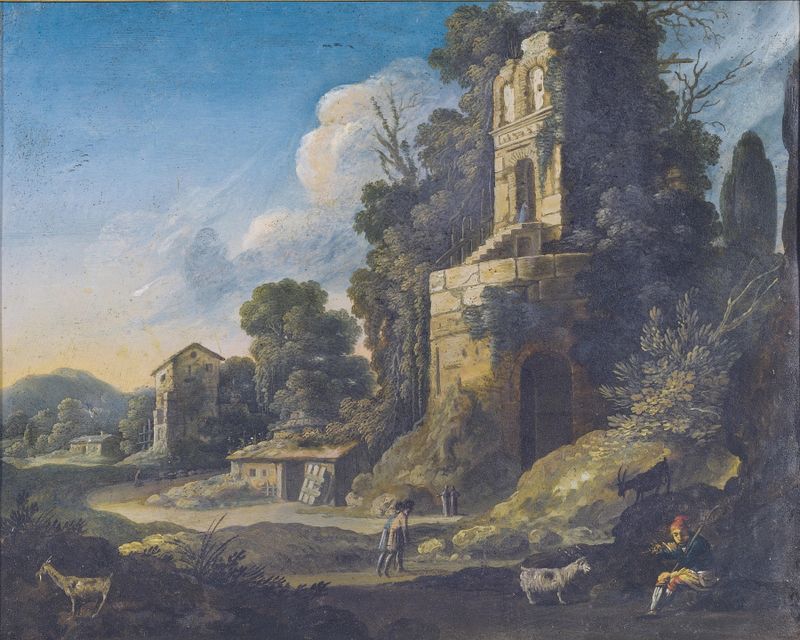
Italianate landscape with buildings and a herdsman playing pipes
Bartholomeus Breenbergh

Arcadian Landscape
Bartholomeus Breenbergh

Ruïnes van keizerlijk paleis te Rome
Bartholomeus Breenbergh

Ruïne van het Colosseum
Bartholomeus Breenbergh
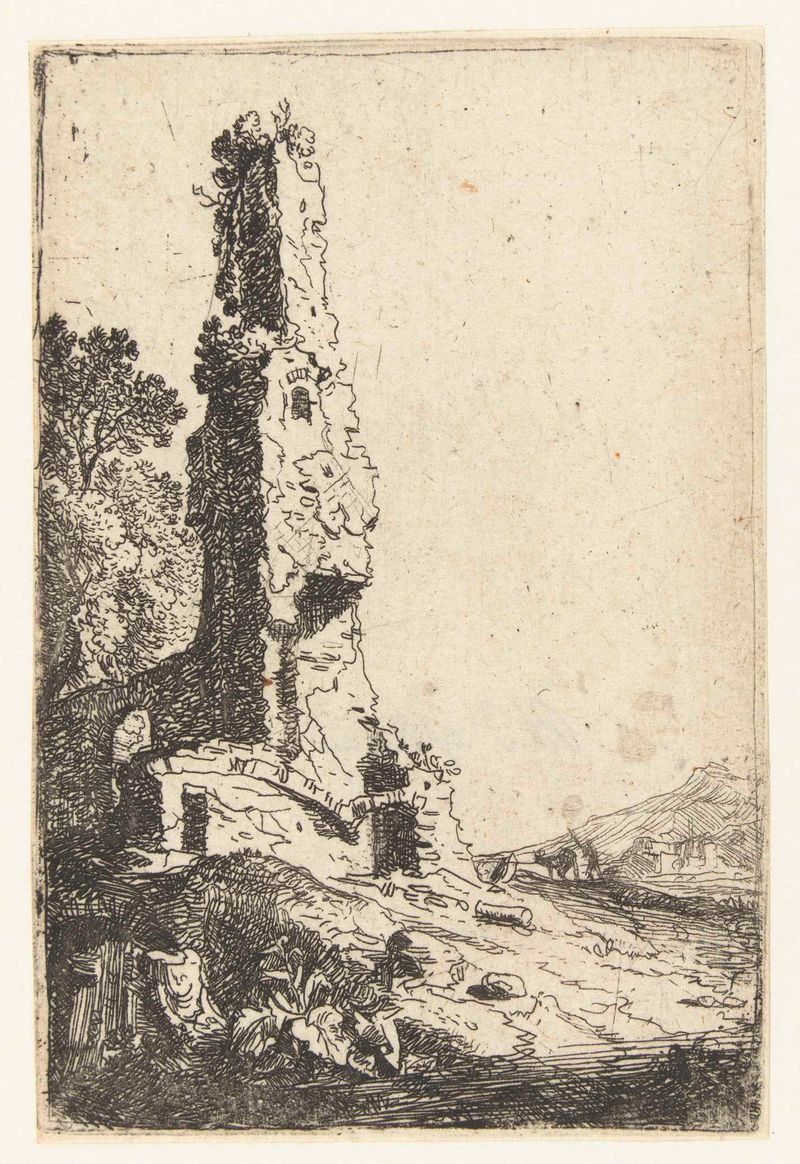
Ruïnes van de stadsmuren van Rome
Bartholomeus Breenbergh
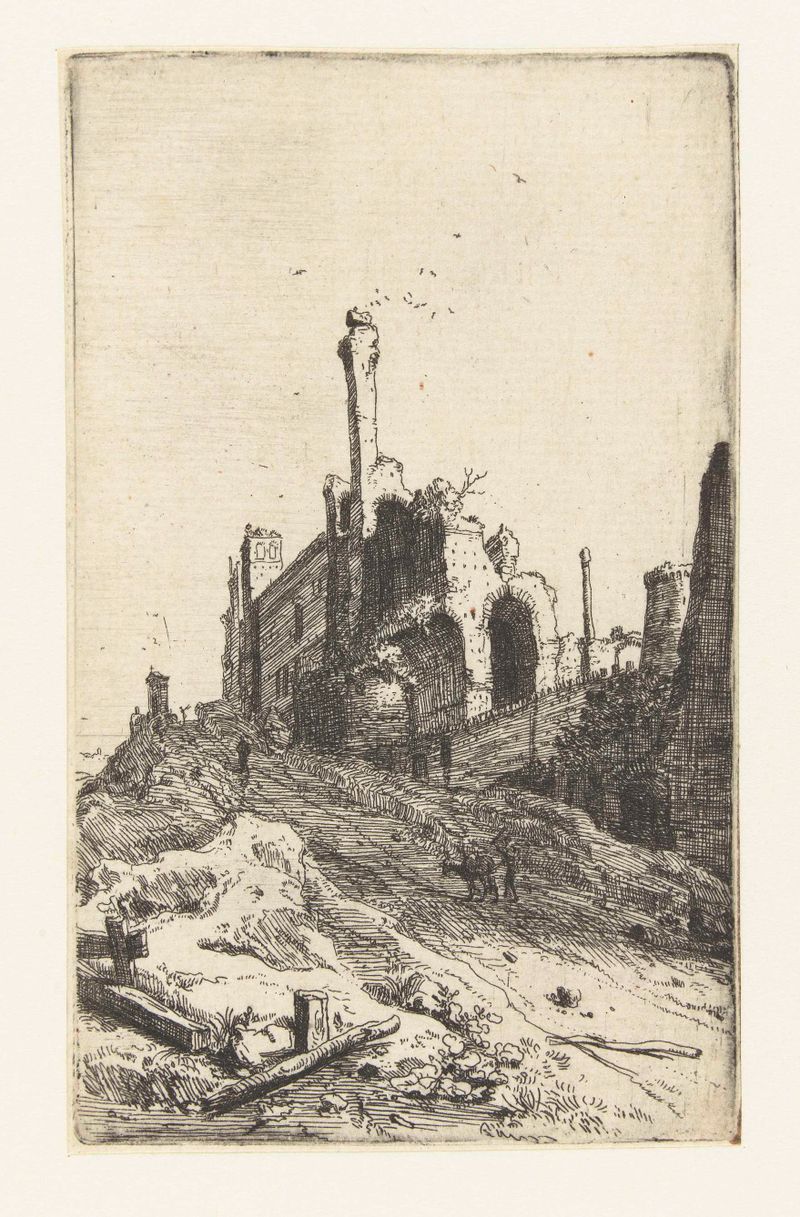
Ruïnes van een paleis te Tivoli
Bartholomeus Breenbergh

Figures Among Ruins By The Tiber
Bartholomeus Breenbergh

Italian Landscape with the Aurelian Wall
Bartholomeus Breenbergh
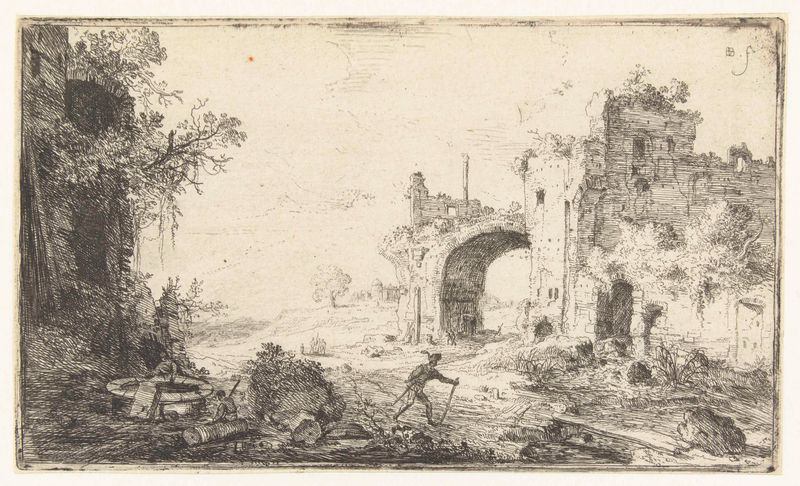
Ruïnes van de thermen van Caracalla
Bartholomeus Breenbergh
Interieur van een grot
Bartholomeus Breenbergh





