L’arbre aux trois troncs — History & Facts
Who listens when art speaks of silence? In L’arbre aux trois troncs, destiny whispers through the intertwined branches, inviting the viewer into a world suspended between choice and inevitability. Look to the center of the canvas, where the three trunks rise like silent sentinels, each diverging in a different direction. The artist's meticulous brushstrokes create a textured bark, alive with detail while the dappled light filters through the foliage above. A palette of earthy greens and soft browns grounds the composition, contrasting with the ethereal quality of the surrounding sky, hinting at the fleeting nature of time and decision. Each trunk represents a different path, a choice laden with unspoken consequences.
Notice how the shadows play along the ground, echoing the uncertainty of what lies ahead. The way the branches entwine and separate reminds us of the complexities of life—how our destinies are shaped by the decisions we make and the moments we cannot foresee. Beneath the apparent simplicity of nature lies a profound contemplation of existence and the quiet weight of choice. Paul-Camille Guigou painted this work in the late 19th century, during a time when the art world was shifting toward Impressionism.
Living in France amidst the influences of both Romanticism and the burgeoning modern movement, he sought to capture the essence of landscapes that transcended mere representation. This painting reflects not only his technical skill but also his philosophical engagement with nature and the inherent narratives found within it.
More Artworks by Paul-Camille Guigou
Browse all →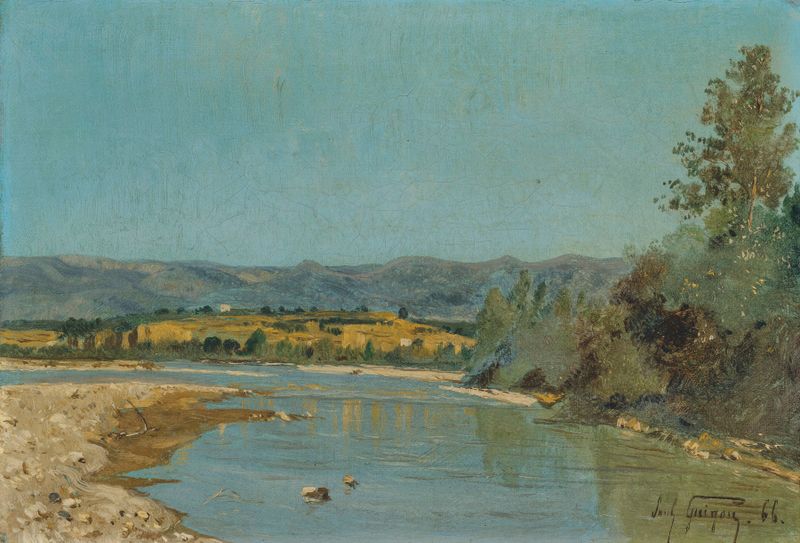
Les Bords de la Durance à Puyvert
Paul-Camille Guigou
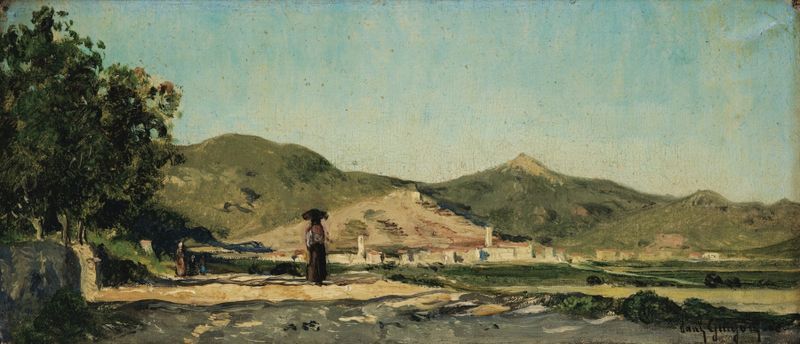
Paysanne sur un chemin en Provence
Paul-Camille Guigou
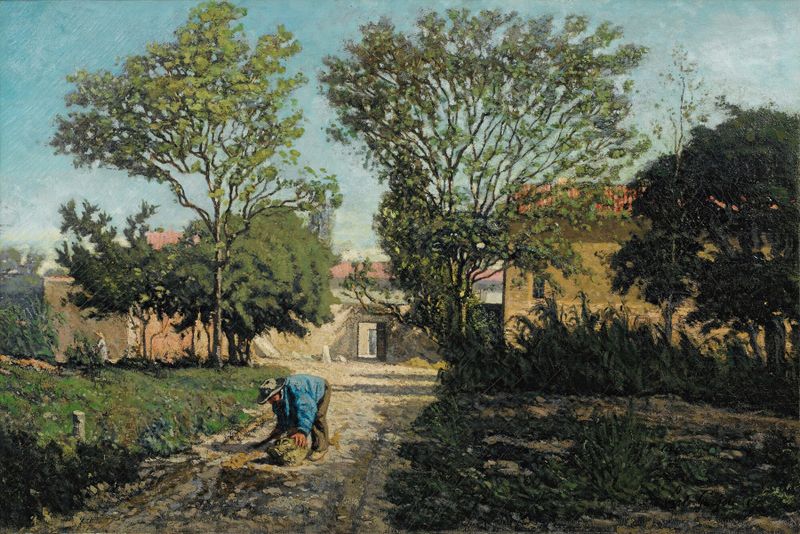
Ferme Aux Environs De Marseille
Paul-Camille Guigou

Hut by the sea shore (Cabane au bord de la mer)
Paul-Camille Guigou
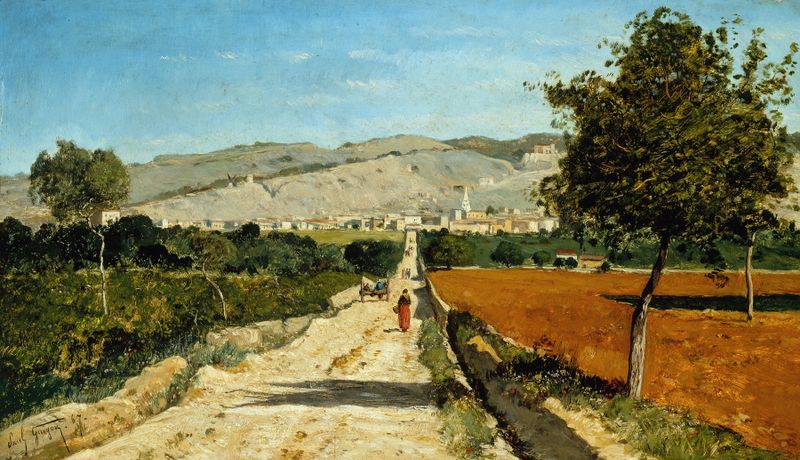
Paysage de Provence. Vue de Saint-Saturnin-les-Apt.
Paul-Camille Guigou

Barques sur la Durance
Paul-Camille Guigou
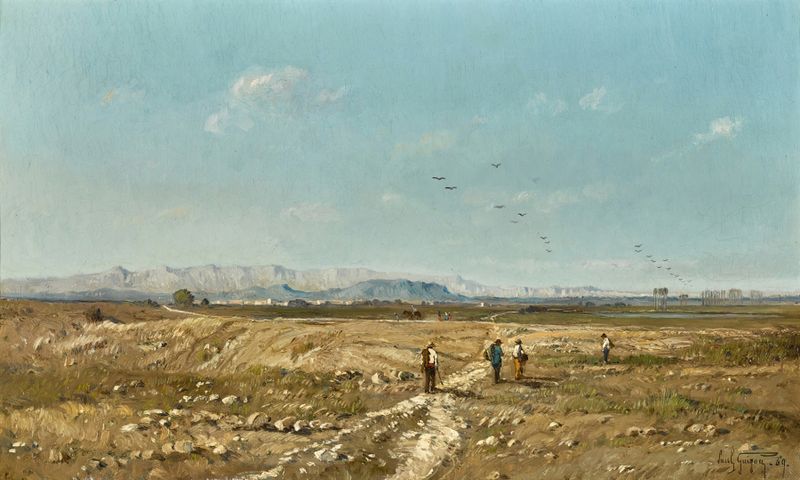
Souvenir de la Crau, Provence
Paul-Camille Guigou
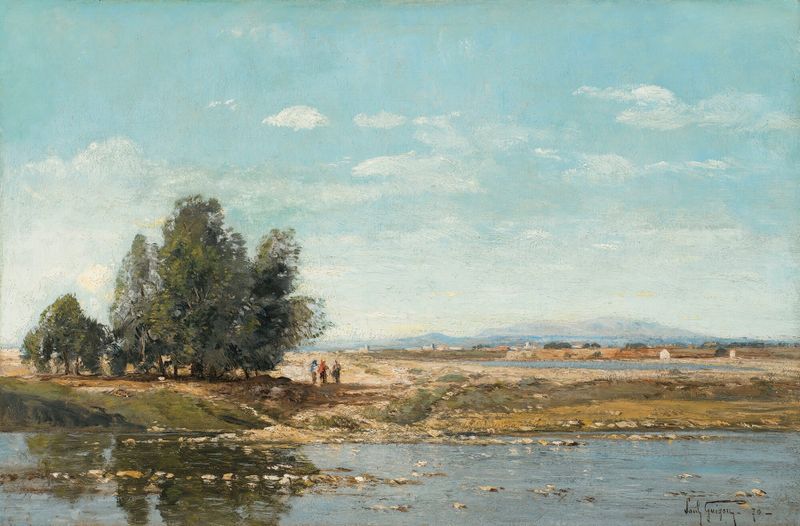
Bords De Durance
Paul-Camille Guigou

Am Ufer der Durance
Paul-Camille Guigou
Rue À Lourmarin (Vaucluse)
Paul-Camille Guigou