
Le Cabaret du Coq de Bruyère au Bois de Meudon — History & Facts
A canopy of dappled leaves draws the eye first, scattering light across a lively garden scene where the pleasures of leisure and company unfold. Beneath the sheltering branches, figures in hats and summer dresses lean into conversation or recline with casual ease, their gestures animated by drink and laughter. The artist, Auguste Lepère, uses sharp contrasts of light and shadow to guide us through the bustle—notice the waiter striding forward, his crisp apron catching the sun, while a woman on a swing soars high above the crowd, her exhilaration mirrored in the faces below.
Every detail is a clue: the scattered glasses, the hats tossed aside, the open-air tables all speak of a Parisian escape to the countryside, where time slows and the senses sharpen. Created in 1888, this work belongs to a moment when outdoor cafés and suburban cabarets became a favorite subject for artists chronicling modern life. The late nineteenth century saw the rise of the weekend excursion, as trains and trams carried city dwellers to leafy retreats on the city’s edge. Artists like Lepère—and his contemporaries in Impressionism—captured this new freedom, celebrating the mingling of classes and the fleeting joys of sunlight, music, and shared laughter.
Though little is recorded about the specific journey of Le Cabaret du Coq de Bruyère au Bois de Meudon, its presence in the National Gallery of Art’s collection today invites us to linger in its shade, listening for echoes of voices lost to time.
More Artworks by Auguste Lepère

Le Pont-Neuf (Paris)
Auguste Lepère
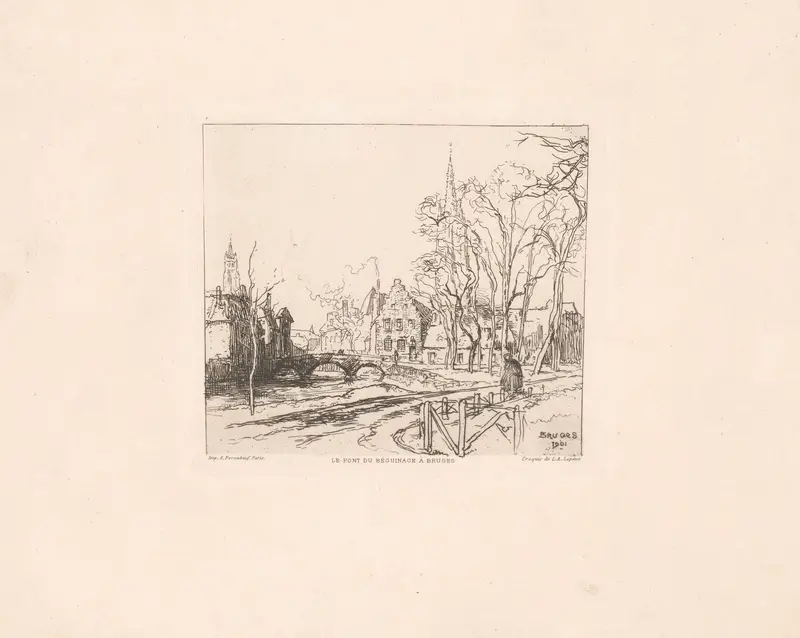
Le pont du Beguinage à Bruges
Auguste Lepère
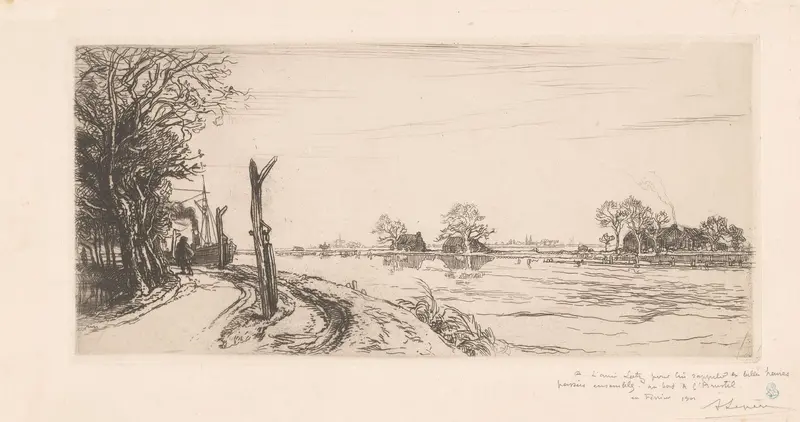
Au bord de l’Amstel
Auguste Lepère
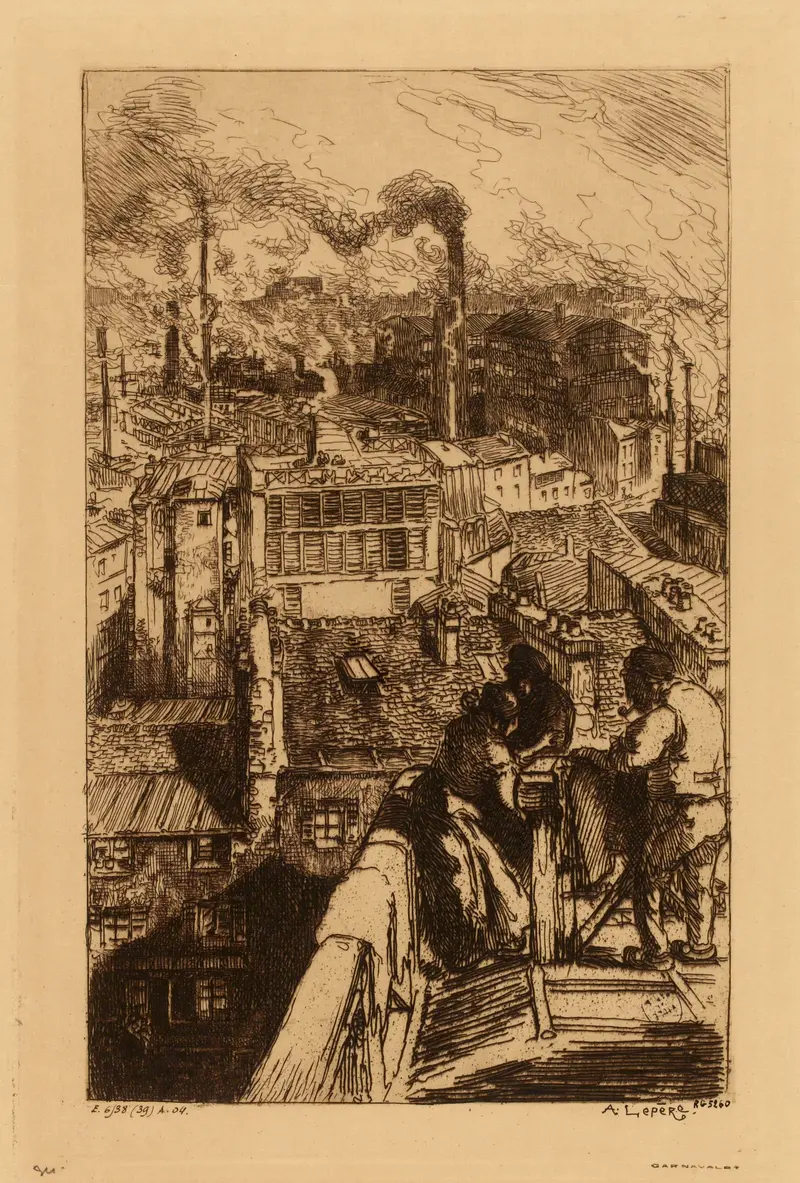
Le quartier des Gobelins
Auguste Lepère
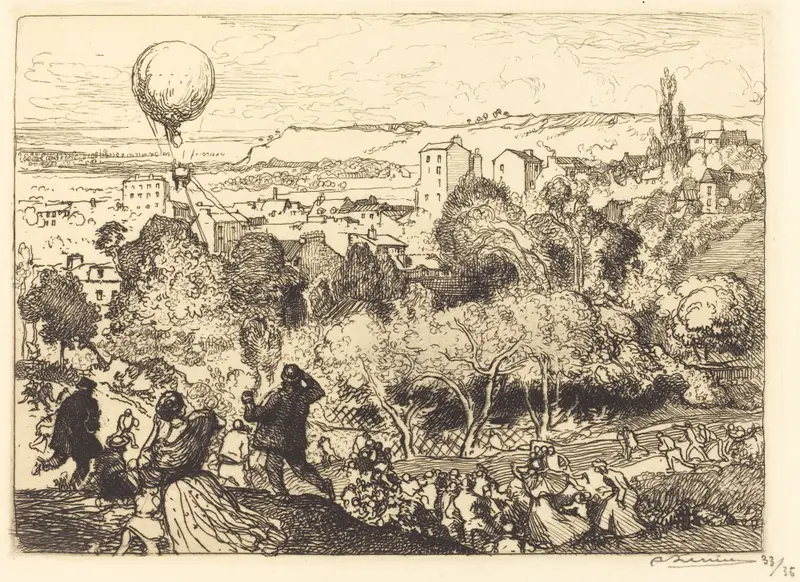
The Falling Balloon, in Pre-Saint-Gervais (Lebaloon qui tombe, au Pre-Saint-Gervais)
Auguste Lepère
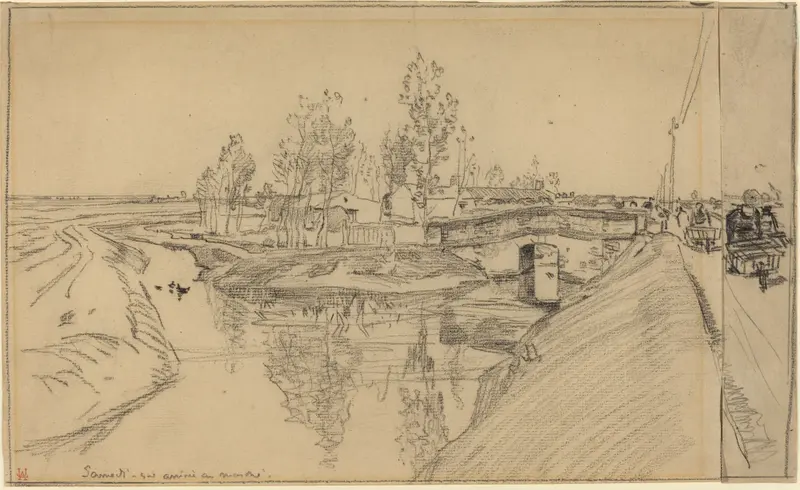
Arrivee au Marche
Auguste Lepère
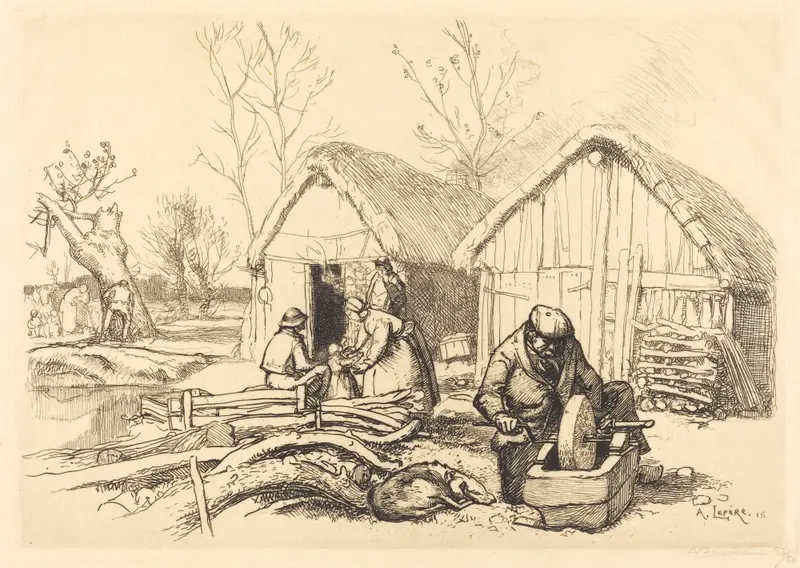
The House of the Woodcutter, Vendee (La maison du bucheron, Vendee)
Auguste Lepère
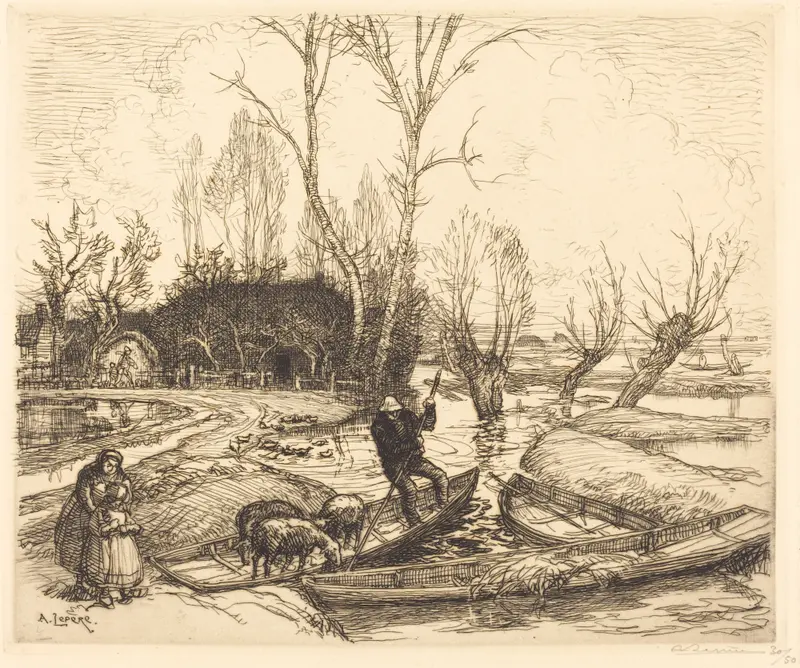
In the Deluged Marsh - The Shepherd (Au marais inonde - Le berger)
Auguste Lepère
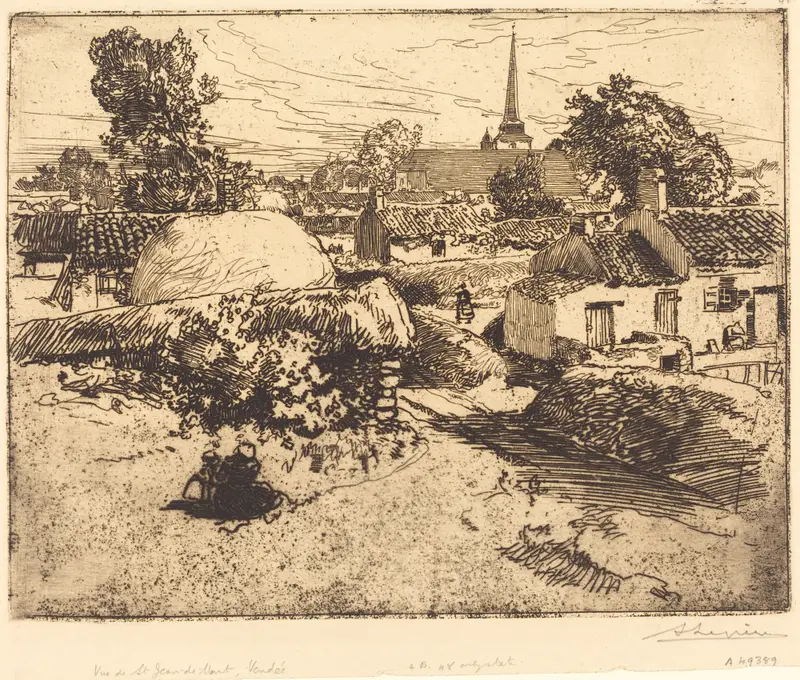
View of St.-Jean-de-Mont, Vendee (Vue de St.-Jean-de-Mont, Vendee)
Auguste Lepère
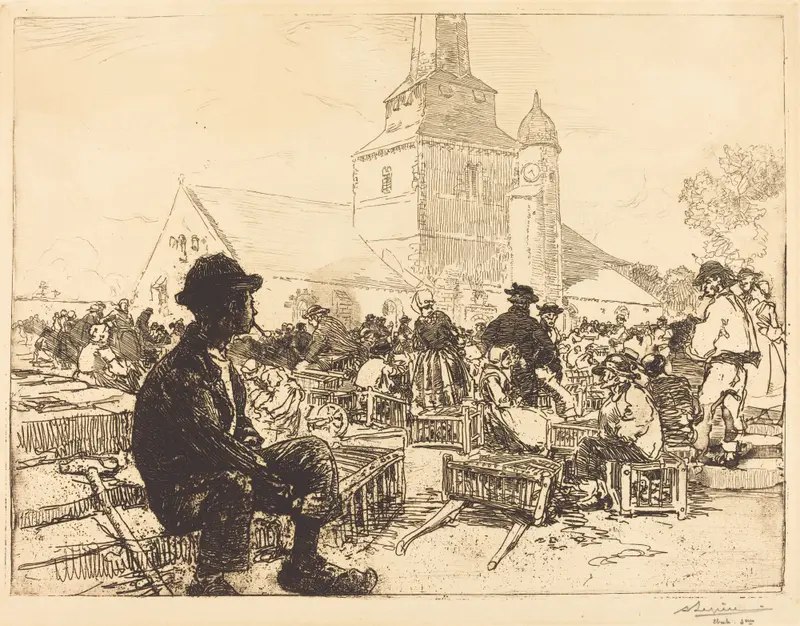
Poultry Market at St.-Jean-de-Mont (Marche a la volaille, a St.-Jean-de-Mont)
Auguste Lepère
More Genre Scene Art

Banquet of the Officers of the St George Civic Guard
Frans Hals

Rembrandt and Saskia in the Scene of the Prodigal Son
Rembrandt van Rijn

Bal du moulin de la Galette
Pierre-Auguste Renoir

Quadrille at the Moulin Rouge
Henri de Toulouse-Lautrec

A Burial at Ornans
Gustave Courbet

When Will You Marry?
Paul Gauguin