
Le Château de Beaulieu; près de Lausanne — History & Facts
In its stillness, it invites the viewer to explore the whispers of nature and the echoes of history, hidden within each brushstroke. Look to the left at the imposing silhouette of Le Château de Beaulieu, standing resolute against the rolling hills. The hues of earthy browns and greens envelop the scene, while the blue skies suggest fleeting moments of change. The artist’s meticulous attention to detail pulls your gaze toward the delicate play of light that dances across the castle's façade, revealing texture and form that breathe life into stone. As you take in the entirety of the landscape, notice the juxtaposition between the castle's permanence and the fluidity of the surrounding nature.
The gentle curves of the hills contrast sharply with the rigid lines of the structure, hinting at a dialogue between the man-made and the organic. This tension speaks to the transient nature of existence, suggesting that even the most formidable edifices are subject to the passage of time and the relentless march of nature. Gustave Courbet created this work in 1875 while living in the region near Lausanne, a time when the artist was deeply engaged in exploring realism. His commitment to depicting the world with authenticity was a response to the romanticism that preceded him, and this painting reflects his desire to capture not just a scene, but the essence of a place steeped in history and the rhythm of life.
More Artworks by Gustave Courbet
Browse all →
Marine
Gustave Courbet
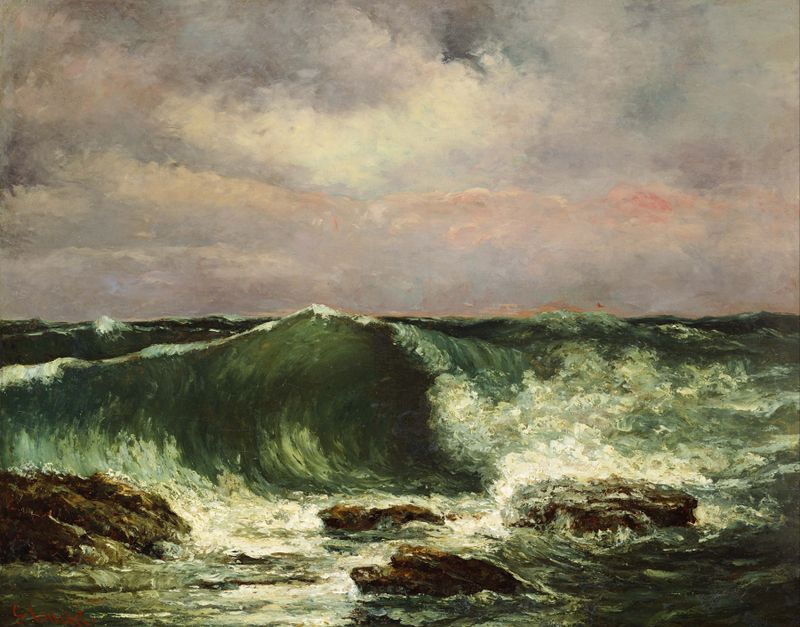
Waves
Gustave Courbet

Étretat; Les Falaises
Gustave Courbet
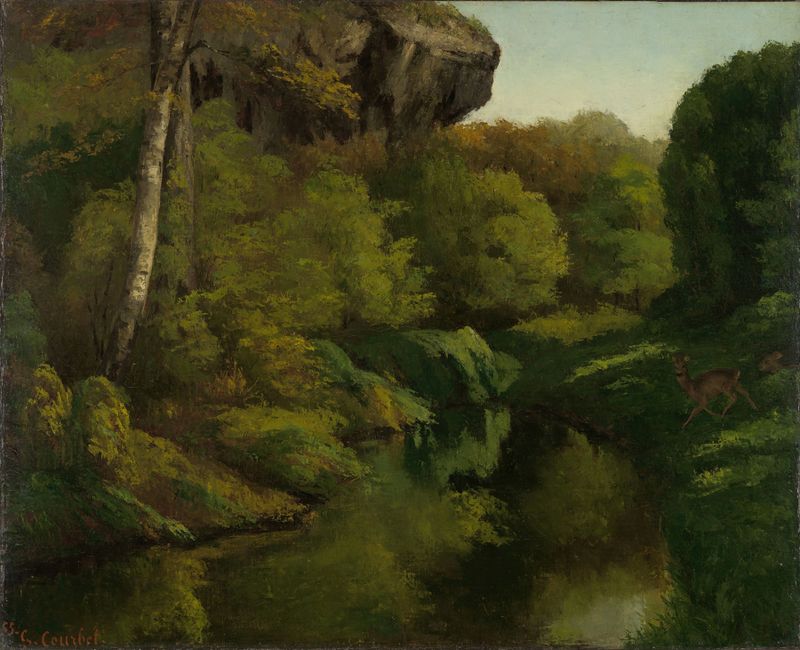
View in the Forest of Fontainebleau
Gustave Courbet
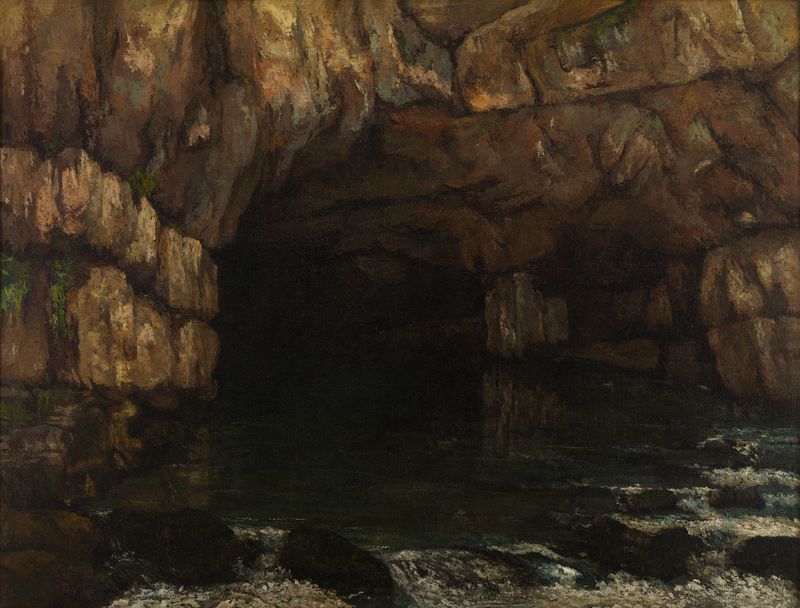
La source de la Loue (The Source of the Loue)
Gustave Courbet

Low Tide at Trouville
Gustave Courbet
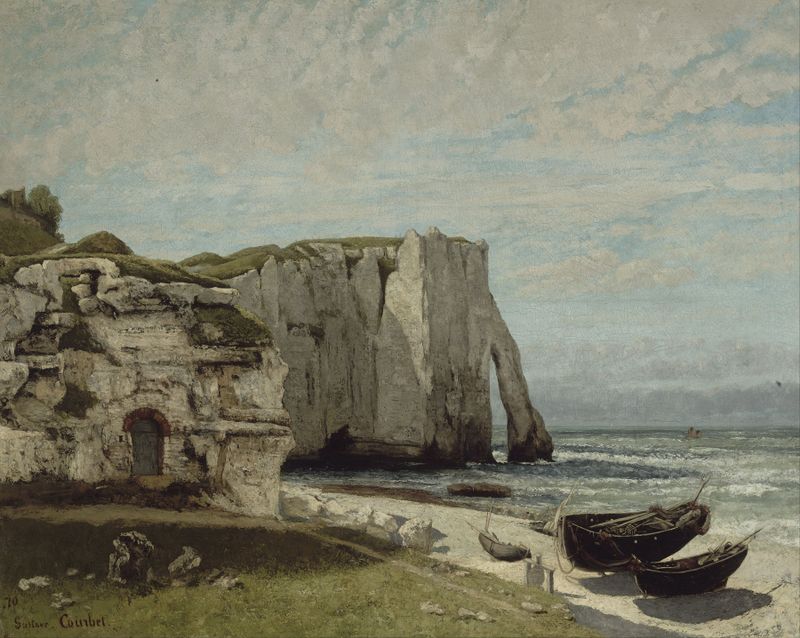
The Etretat Cliffs after the Storm
Gustave Courbet
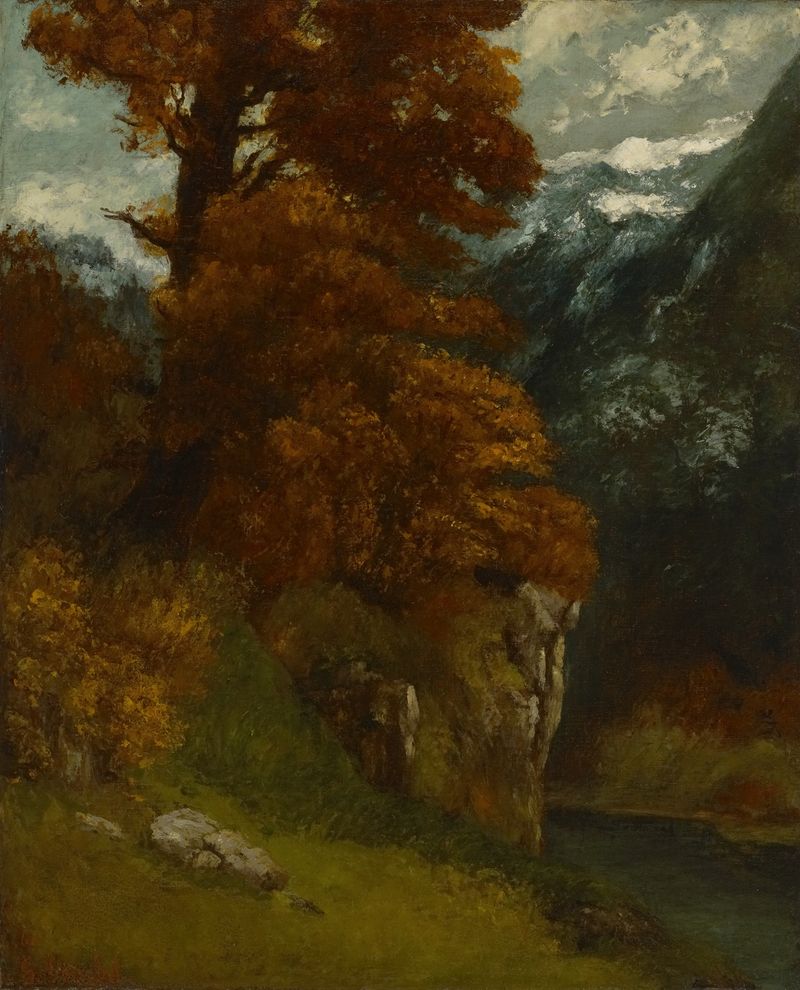
The Glen at Ornans (Bords du Doubs; Effet d’Automne)
Gustave Courbet
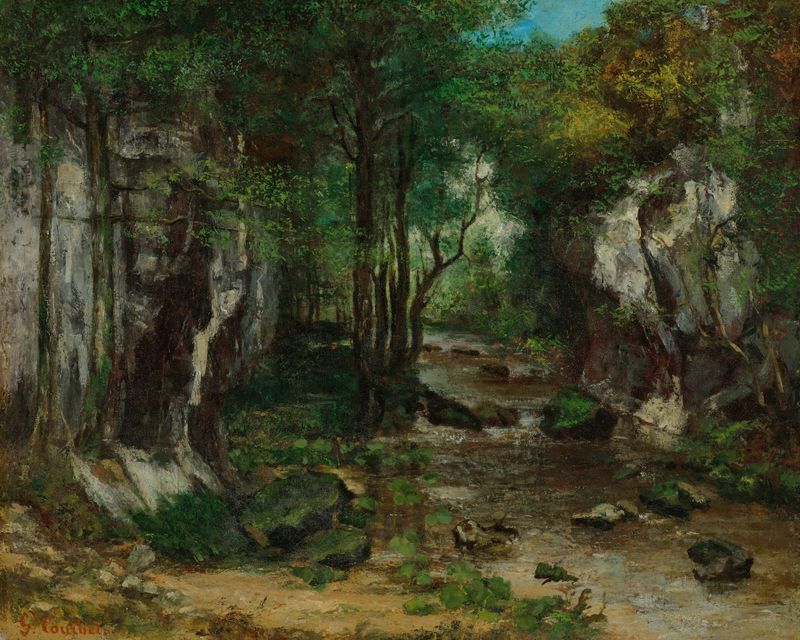
Le Ruisseau de Puits Noir
Gustave Courbet
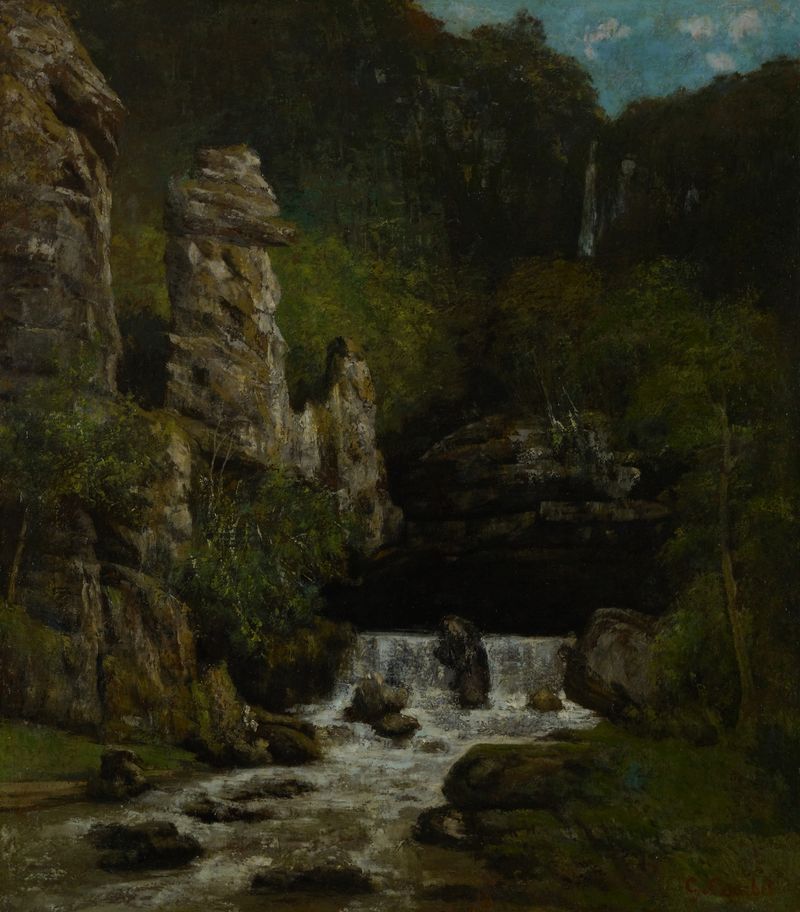
Landscape with a Waterfall
Gustave Courbet





