
Le Croisic. Vue Generale Prise De Pempron — History & Facts
Did the painter know this moment would outlive them? In an age where time slips quickly through our fingers, the fleeting beauty of a coastal scene beckons, steadfast in its quiet endurance against the slow march of decay. Focus on the soft, muted hues of the sky and water, where gentle blues blend seamlessly with hints of grey. The viewer’s eye is drawn first to the horizon line, where the delicate interplay of light creates a shimmering sense of distance. Notice how the brushstrokes, both fluid and precise, capture the whisper of waves lapping against a serene shore.
In this idyllic landscape, the buildings and sailboats sit comfortably, yet their fading details hint at the impermanence that characterizes both life and art. Boudin masterfully intertwines tranquility and transience, showcasing a moment where beauty teeters on the edge of oblivion. The careful depiction of the structures, worn yet dignified, speaks of histories intertwined with the relentless forces of nature and time itself. This interplay of solidity against the ephemeral invites contemplation of our own existence and the inevitable decay on the horizon. In 1897, Boudin was painting amidst a wave of Impressionist innovation, capturing the essence of fleeting moments in everyday life.
Establishing his reputation in the bustling art scene of Paris, he often returned to the coast to evoke the shifting skies and waters that had so enchanted him. At this juncture in his career, he was a mentor to artists like Monet, seeking to convey the beauty of nature while reflecting the broader existential questions of his time.
More Artworks by Eugène Boudin
Browse all →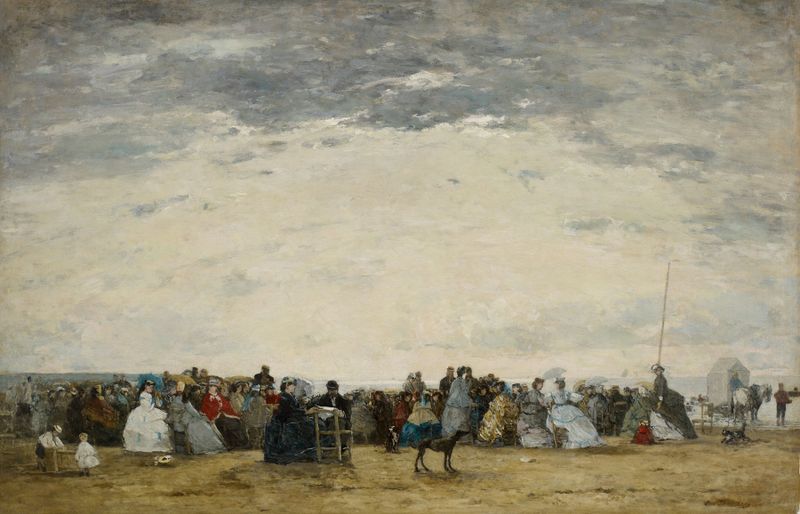
Vacationers on the Beach at Trouville
Eugène Boudin

Washerwoman near Trouville
Eugène Boudin
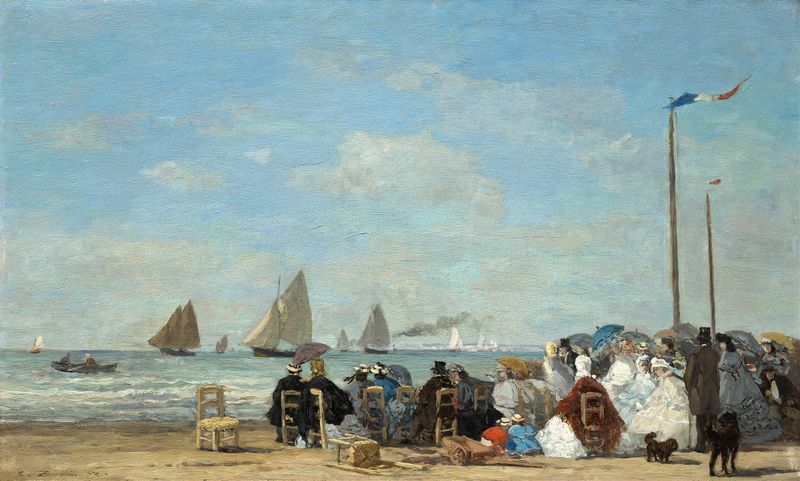
Beach Scene at Trouville
Eugène Boudin

Port aux environs d’Honfleur
Eugène Boudin

Le Faou, un coin du village
Eugène Boudin
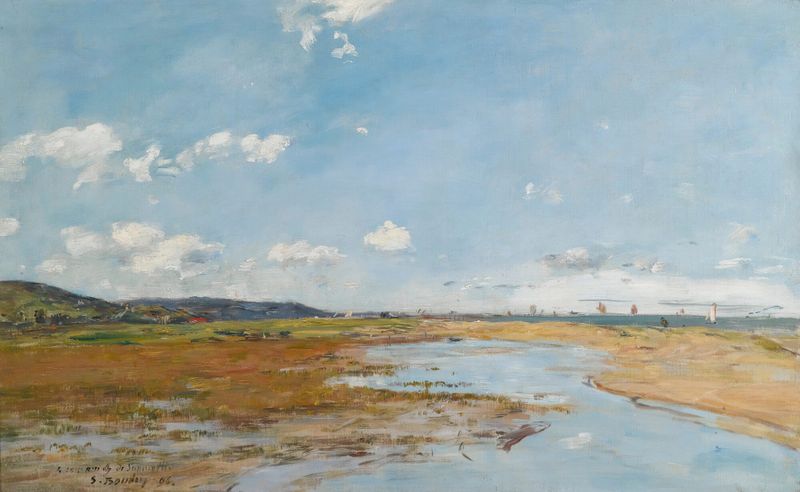
Deauville. Le Rivage
Eugène Boudin
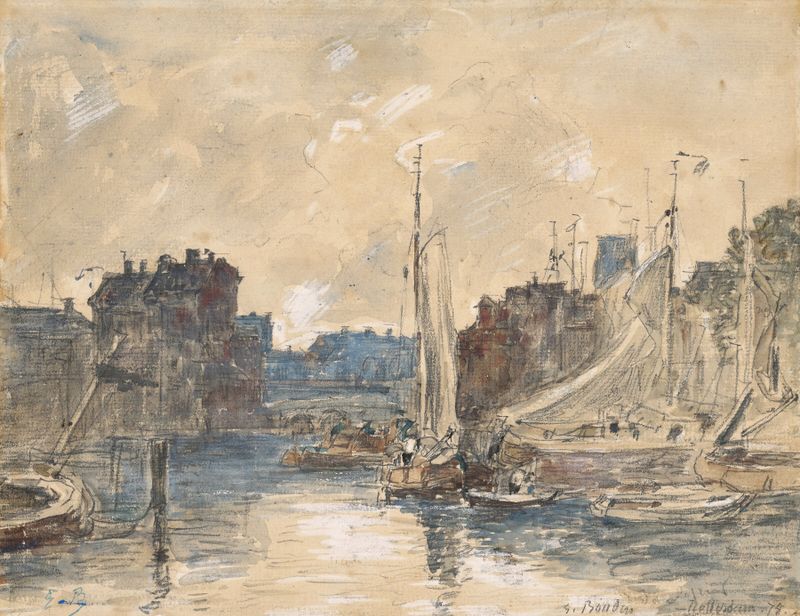
Port de Rotterdam
Eugène Boudin

View of Bordeaux, from the Quai des Chartrons
Eugène Boudin

Trouville, Scène De Plage
Eugène Boudin

Trouville, Le Port
Eugène Boudin





