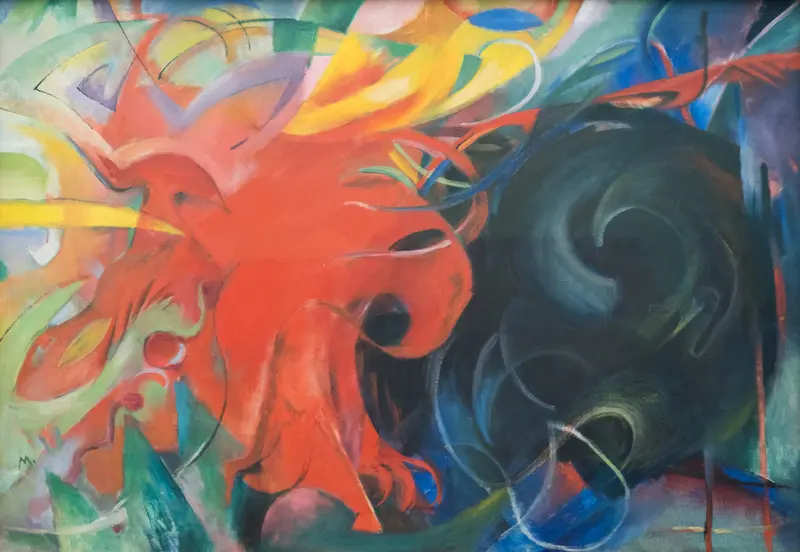
Le Damier jaune — History & Facts
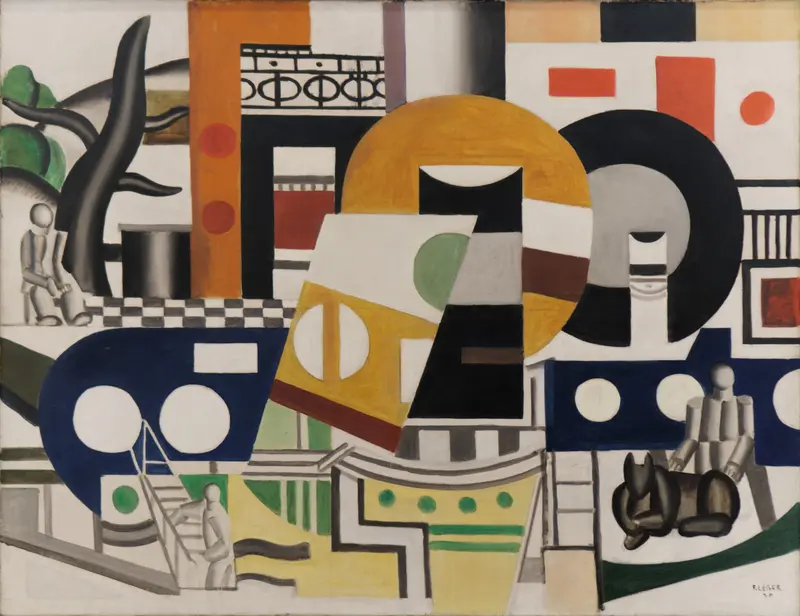
A yellow checkerboard bursts through the center of the composition, anchoring the viewer in a world where the familiar becomes a puzzle. The eye is drawn first to the bright, almost playful squares, then ricochets across a scatter of geometric fragments—books, a table edge, a matchbox, all rendered with the crisp, mechanical precision that marks Fernand Léger’s hand. The forms stack and collide, their boundaries blurred yet deliberate, as if the objects themselves are caught mid-transformation.
The palette—reds, yellows, blacks—creates a sense of warmth and energy, but also of order, as if the chaos of daily life has been distilled into a set of visual principles. The light does not fall from a single source; instead, it seems to radiate from within the objects, giving them a metallic solidity. Painted in November 1918, Le Damier jaune belongs to a world on the edge of renewal. The war had just ended, and artists like Léger were searching for new ways to see and build reality.
Cubism, with its fractured planes and shifting perspectives, offered a language for this search—a way to break down the old and reassemble it. While history has kept few traces of this particular canvas’s journey, its presence in the early twentieth-century Parisian avant-garde is unmistakable. The painting invites us to linger, to piece together its story from the clues it scatters across the surface, and to imagine the world as Léger saw it: full of possibility, and forever unfinished.
More Artworks by Fernand Léger

The Tugboat Bridge
Fernand Léger
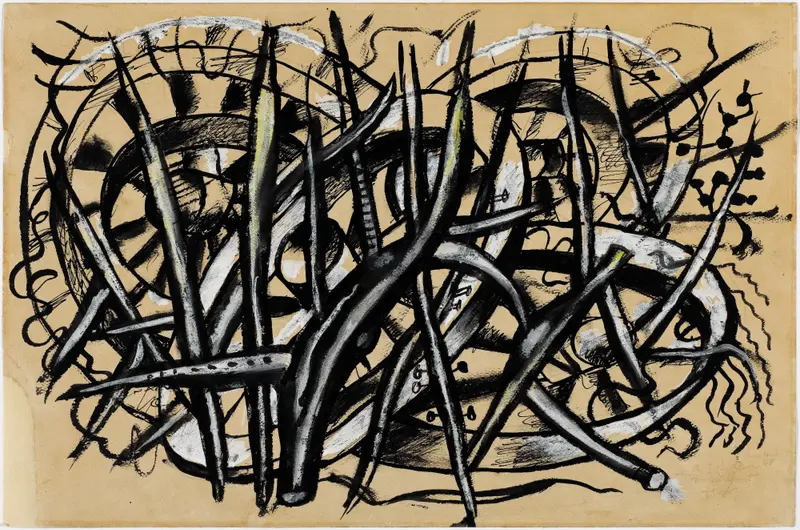
The Wheels
Fernand Léger

Le Cirque Médrano
Fernand Léger
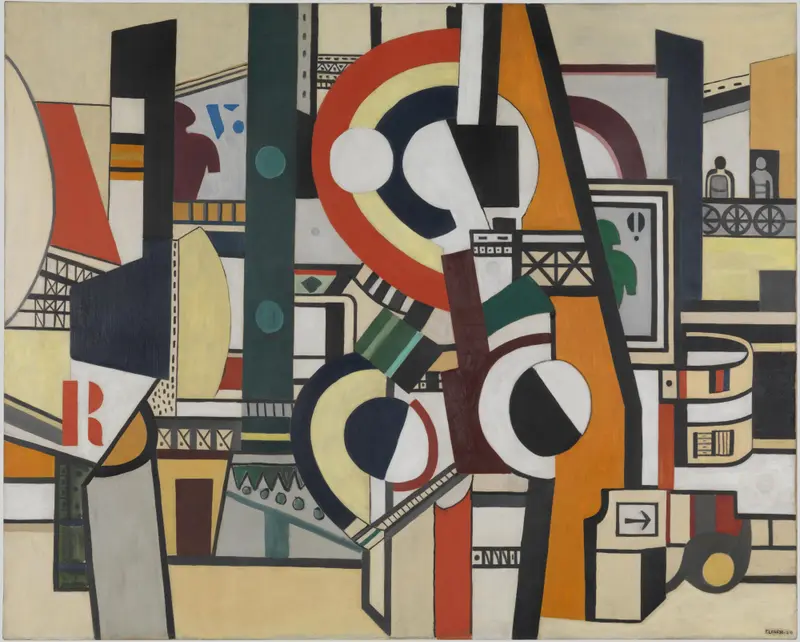
The Disks in the City
Fernand Léger
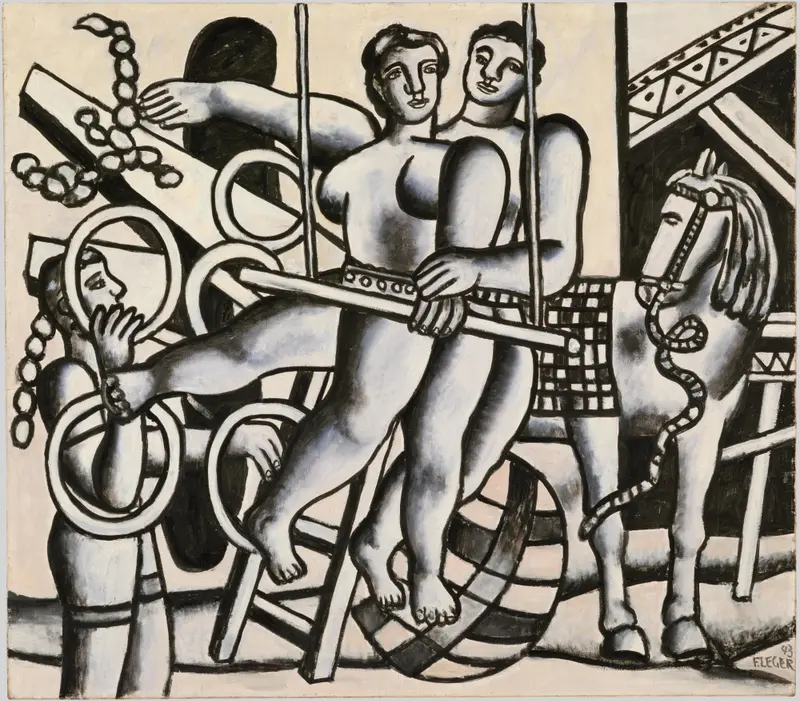
Le Jongleur et les acrobates
Fernand Léger
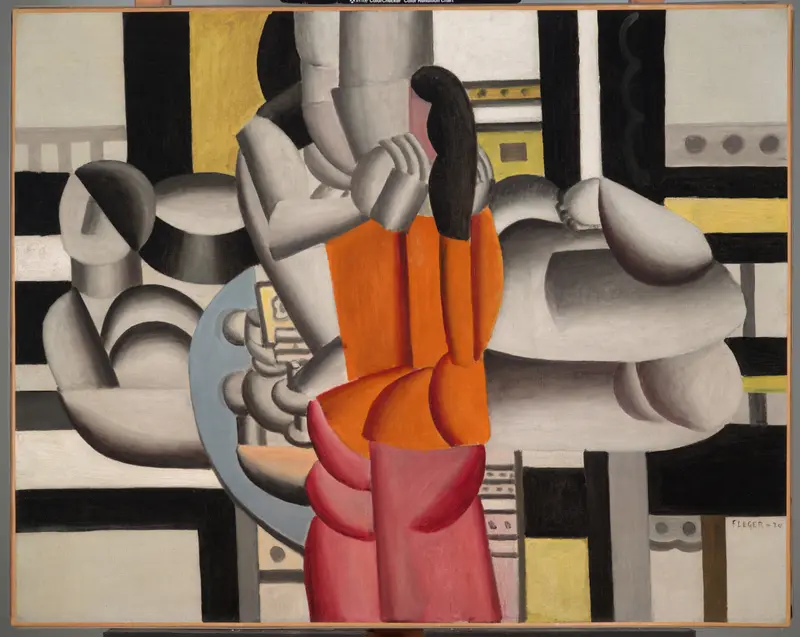
Three Women and Still Life (Déjeuner)
Fernand Léger
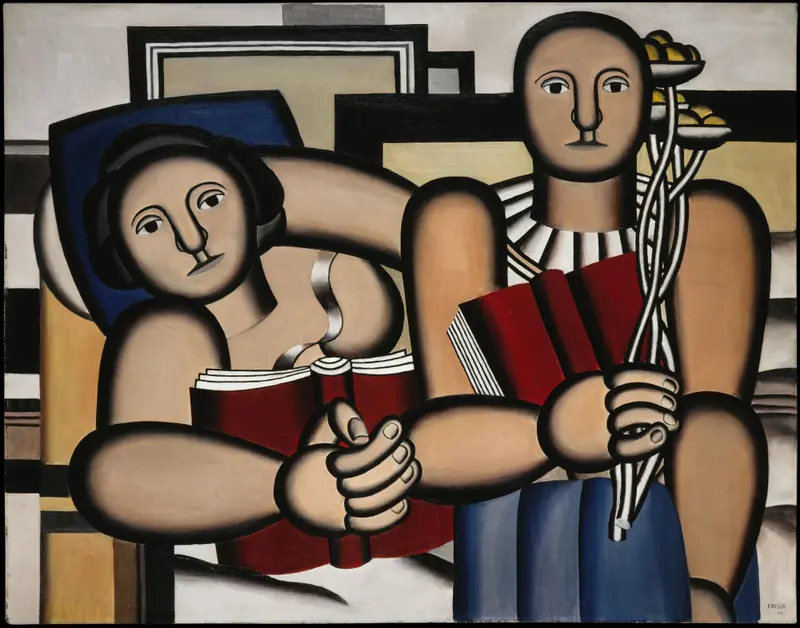
Reading
Fernand Léger
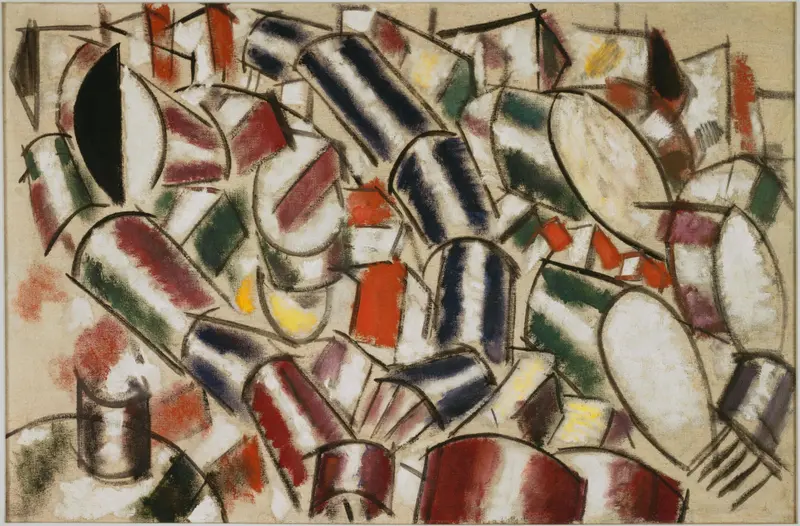
Femme couchée
Fernand Léger
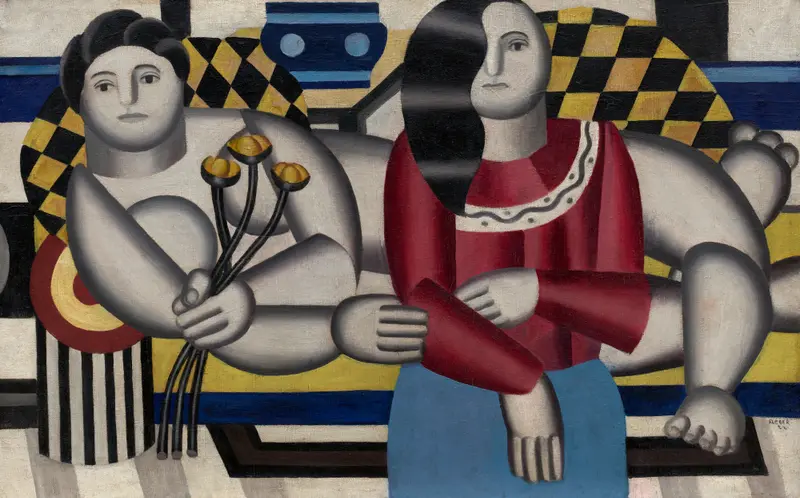
Woman holding flowers
Fernand Léger
The Tug
Fernand Léger