
Le Disque rouge — History & Facts
A red disc pulses at the center of Le Disque rouge, demanding the viewer’s attention before anything else can register. Around it, bold black outlines corral a riot of forms—mechanical, organic, ambiguous—into a composition that feels both tightly engineered and on the verge of bursting apart. The white, segmented hand-like form reaching upward seems to both grasp and shield the disc, while the black, flame-like marks radiating from its core suggest energy or even danger.
Blocks of yellow, blue, and red, interrupted by stripes and curves, evoke the machinery and architecture of the modern city, yet the whole scene is suspended in a kind of visual standoff between order and chaos. Painted in 1943, this work belongs to a world in upheaval, when artists like Fernand Léger responded to the convulsions of war and industry with new visual languages. Léger, a key figure in Cubism and later in the broader movement of modernism, often fused human and machine forms, reflecting both fascination and anxiety about the technological age. The thick black contours and primary colors here are signatures of his mature style, a style that sought clarity and structure in a fractured world.
While little is recorded about the specific origins or early journey of this painting, its presence today—signed, dated, and inscribed by Léger himself—anchors it firmly in the restless, inventive spirit of its time. The longer you look, the more the painting’s puzzle of forms seems to shift and recombine, inviting you to find your own path through its labyrinth.
More Artworks by Fernand Léger

The Tugboat Bridge
Fernand Léger
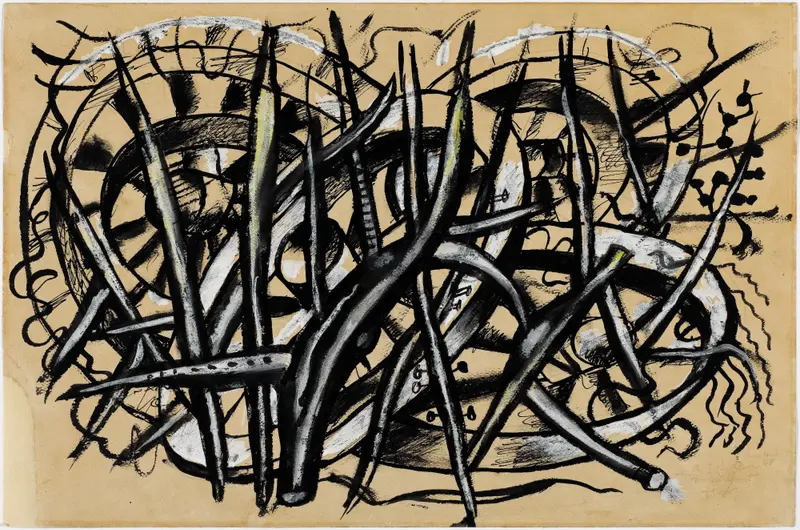
The Wheels
Fernand Léger

Le Cirque Médrano
Fernand Léger
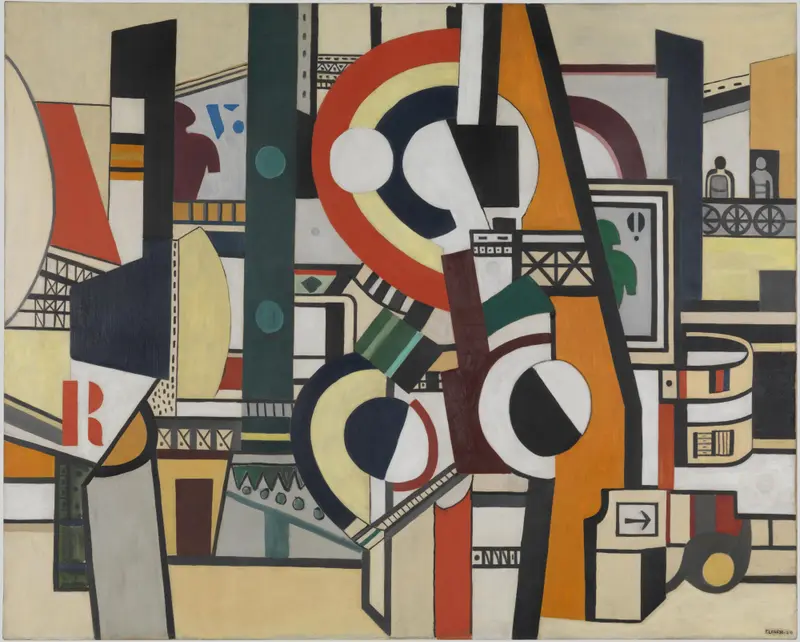
The Disks in the City
Fernand Léger
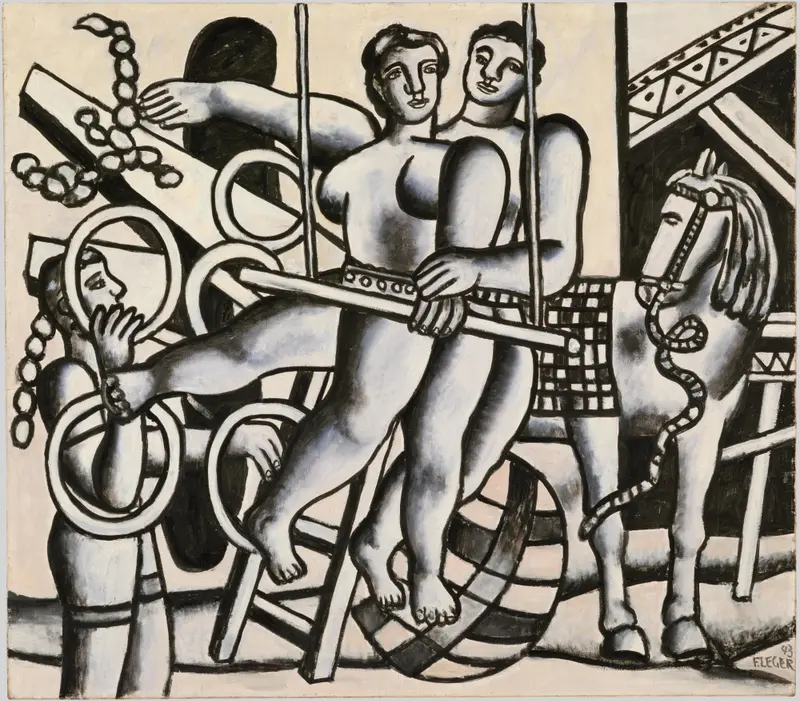
Le Jongleur et les acrobates
Fernand Léger
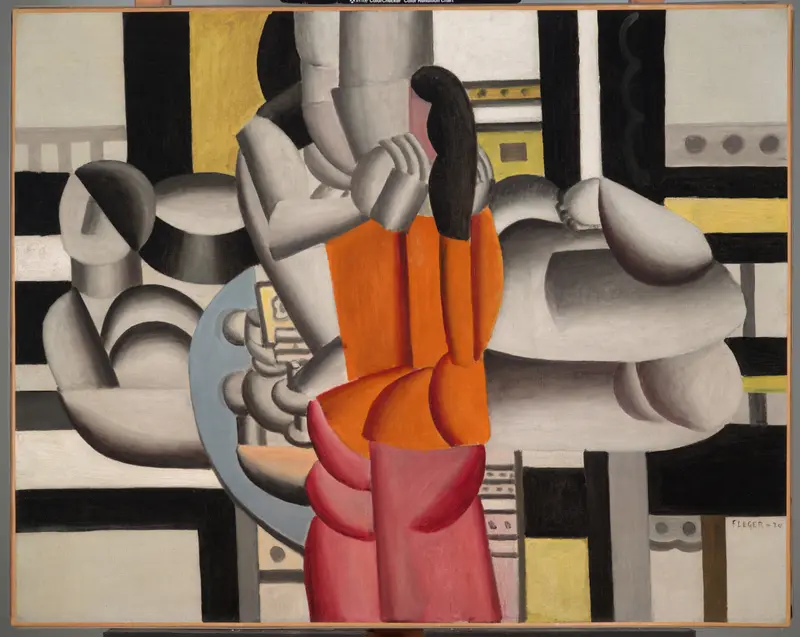
Three Women and Still Life (Déjeuner)
Fernand Léger
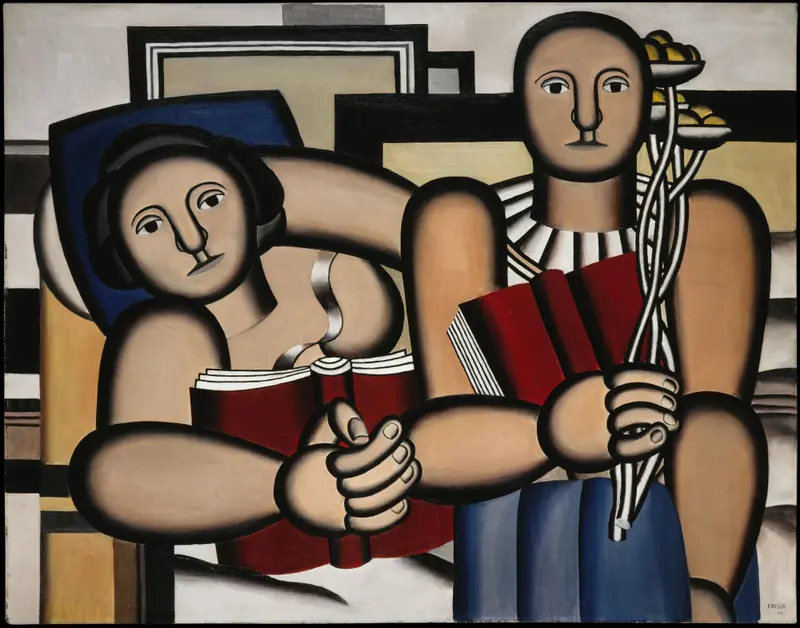
Reading
Fernand Léger
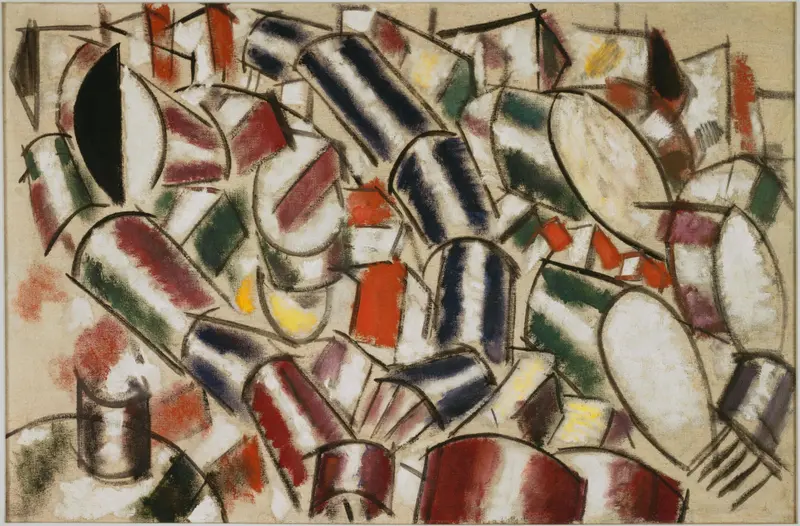
Femme couchée
Fernand Léger
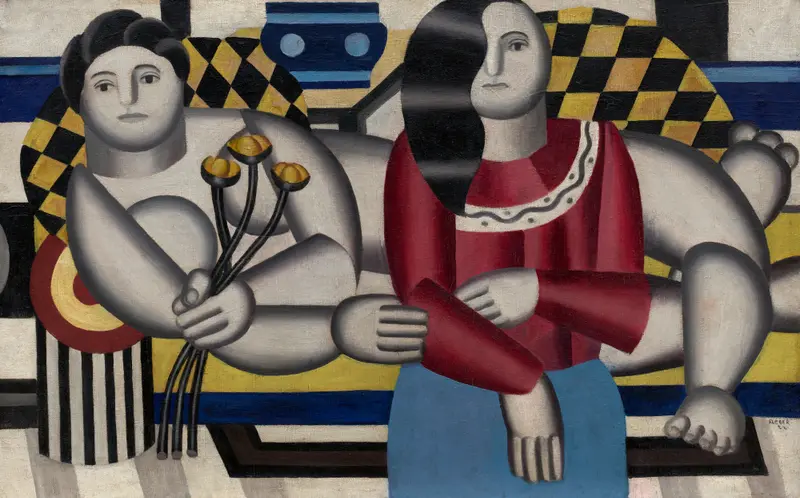
Woman holding flowers
Fernand Léger
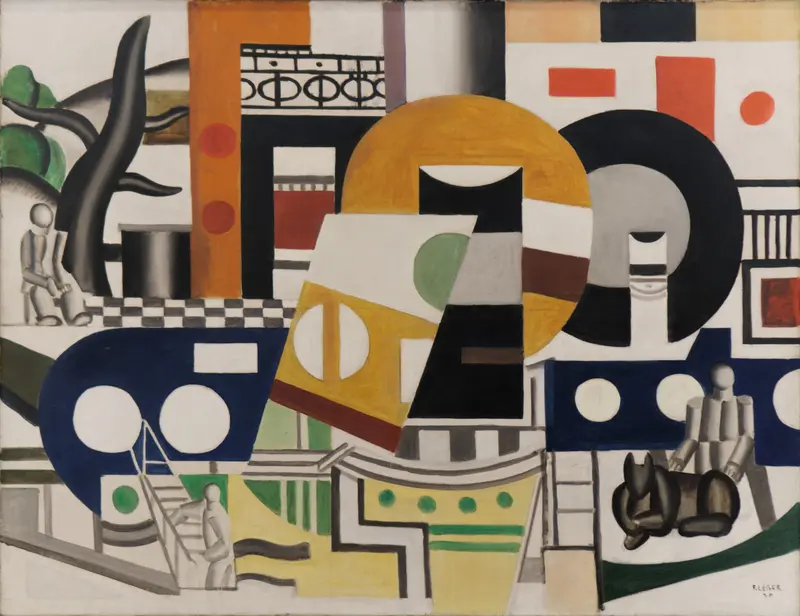
The Tug
Fernand Léger





