
Le Havre — History & Facts
Who listens when art speaks of silence? In Le Havre, an ethereal stillness envelops the canvas, evoking the sense of rebirth within the quiet of a coastal town. Notice how your gaze drifts toward the horizon, where soft pastels blend into a tranquil sky. The delicate brushstrokes capture the gentle undulation of waves, while the muted palette of blues and greys fills the scene with a serene melancholy. The buildings, mere silhouettes against the dawn, suggest a world awakening, as light spills softly over rooftops and reflects in the water.
This masterful interplay of light and shadow hints at the subtle connection between land and sea. The painting encapsulates a moment of transition, the cusp between night and day. The scattered boats bob in the harbor, symbols of both solitude and community, as they await the day's commerce. Boudin’s choice of color and composition creates an emotional tension—between stillness and motion, between the familiar and the unknown.
Each stroke conveys the fleeting nature of time, emphasizing the significance of quiet reflection before the bustle of daily life begins anew. In 1883, while painting Le Havre, the artist was deeply engrossed in capturing the beauty of coastal life, reflecting his fascination with the effects of light in nature. Living in Normandy, he was part of a burgeoning movement that sought to embrace outdoor painting, foreshadowing the Impressionist revolution. This work stands as a testament to both personal and artistic evolution during a time when the world began to awaken to modernism.
More Artworks by Eugène Boudin
Browse all →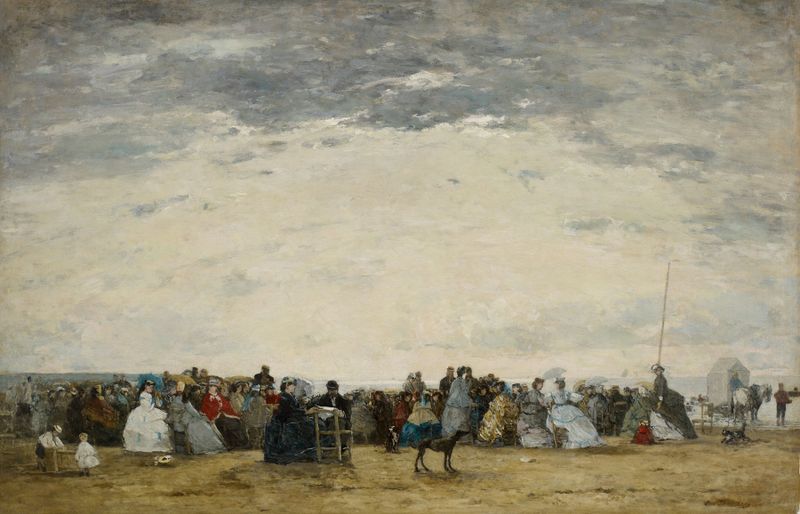
Vacationers on the Beach at Trouville
Eugène Boudin

Washerwoman near Trouville
Eugène Boudin
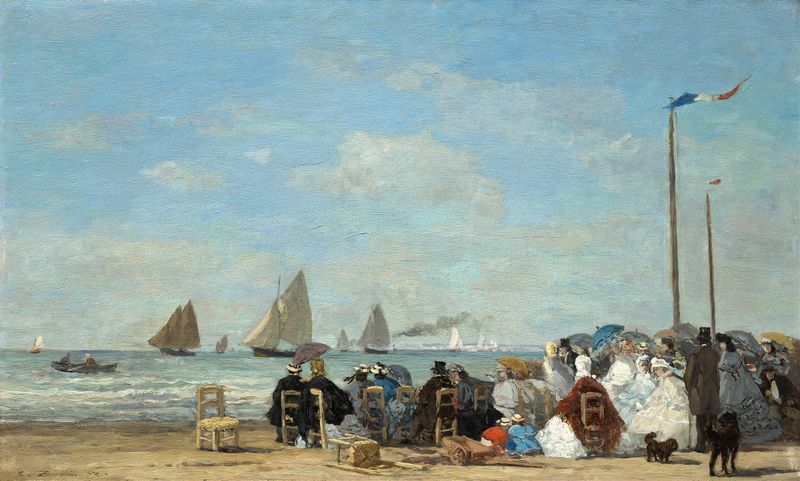
Beach Scene at Trouville
Eugène Boudin

Port aux environs d’Honfleur
Eugène Boudin

Le Faou, un coin du village
Eugène Boudin
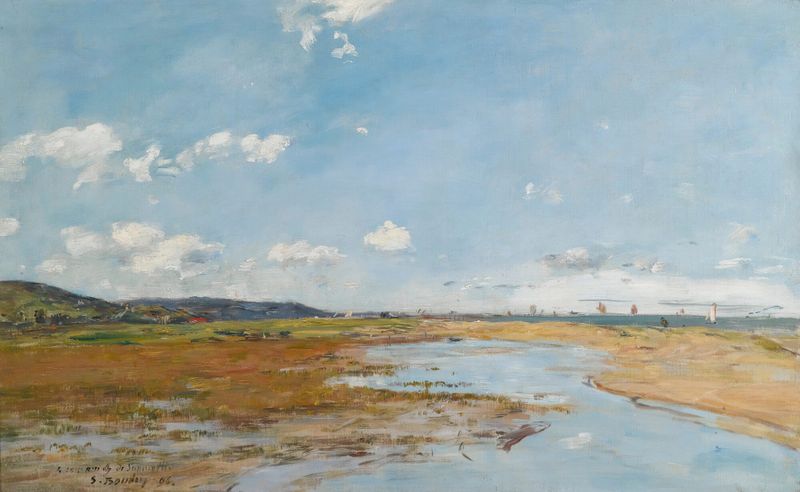
Deauville. Le Rivage
Eugène Boudin
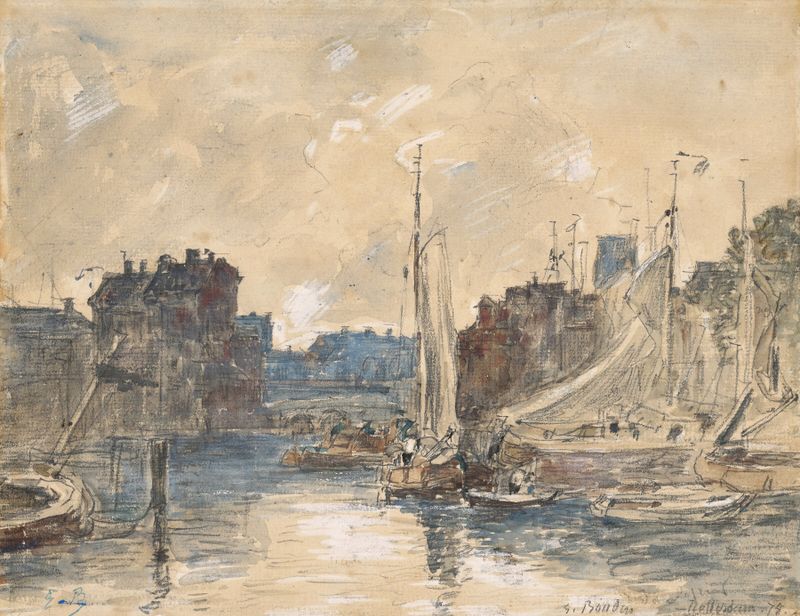
Port de Rotterdam
Eugène Boudin

View of Bordeaux, from the Quai des Chartrons
Eugène Boudin

Trouville, Scène De Plage
Eugène Boudin

Trouville, Le Port
Eugène Boudin





