
Le Havre, entrée du port — History & Facts
Who listens when art speaks of silence? In Le Havre, entrée du port, a transformative moment unfolds, inviting viewers to immerse themselves in the stillness of a bustling harbor. Look to the left at the delicate strokes that define the gentle waves, where shades of blue and green blend seamlessly with the muted, cloud-strewn sky. The light cascades across the scene, illuminating the small vessels anchored in the port. Notice how the brushwork captures the fleeting essence of the atmosphere—every stroke feels deliberate yet spontaneous, as though the artist is revealing both the certainty and uncertainty of marine life. In this work, the contrast between the vibrancy of the boats and the calmness of the water speaks to themes of transition—a world caught between the industriousness of human endeavor and the tranquility of nature.
The distant silhouettes of the harbor buildings echo the tensions of transformation; they stand as witnesses to the ever-changing moods of the sea. Each element, though seemingly ordinary, encapsulates the quiet power of the moment, reflecting the interplay of light and shadow that defines existence itself. In 1891, Eugène Boudin painted this masterpiece in Le Havre, where he had spent many years focused on coastal scenes. At this time, he was recognized for his ability to capture atmospheric effects, aligning with the burgeoning Impressionist movement that sought to depict modern life with sensitivity and immediacy.
The world was shifting—industry was on the rise and cities were transforming, prompting Boudin to explore the delicate balance of movement and stillness in his work.
More Artworks by Eugène Boudin
Browse all →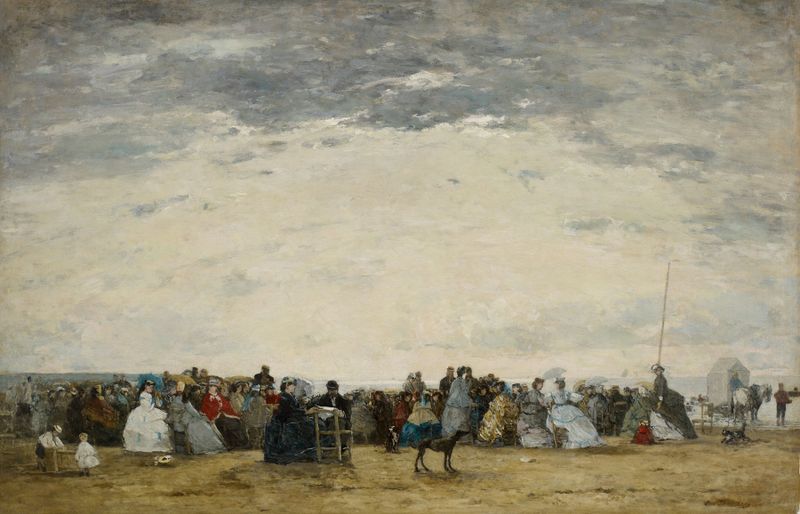
Vacationers on the Beach at Trouville
Eugène Boudin

Washerwoman near Trouville
Eugène Boudin
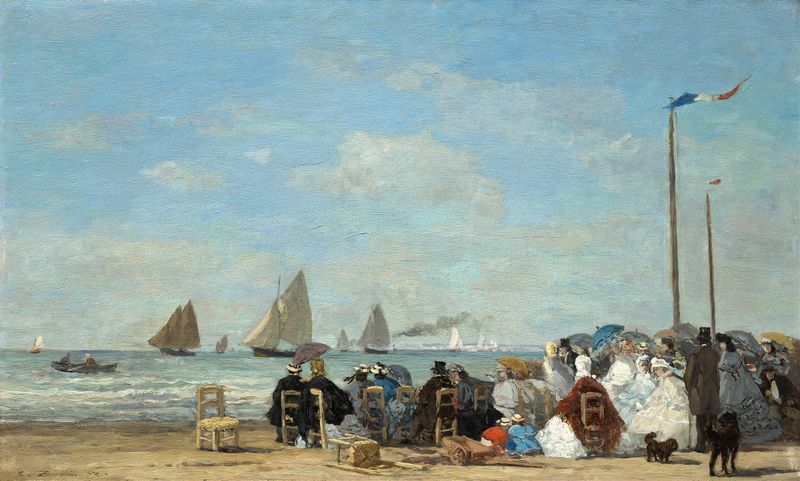
Beach Scene at Trouville
Eugène Boudin

Port aux environs d’Honfleur
Eugène Boudin

Le Faou, un coin du village
Eugène Boudin
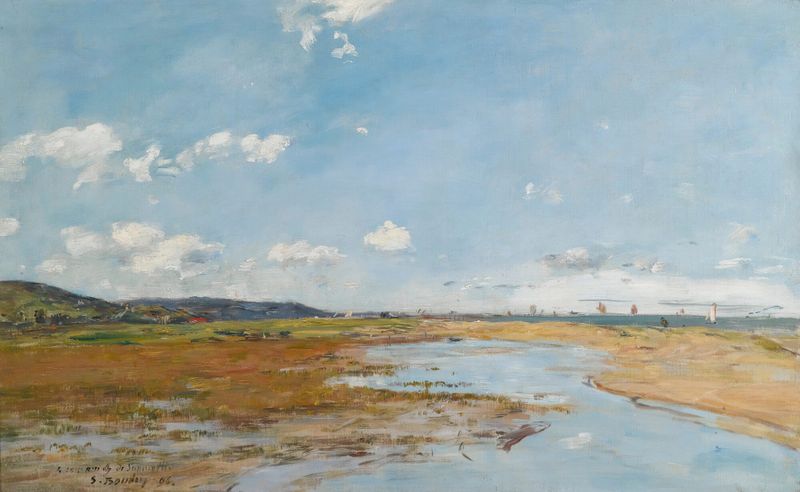
Deauville. Le Rivage
Eugène Boudin
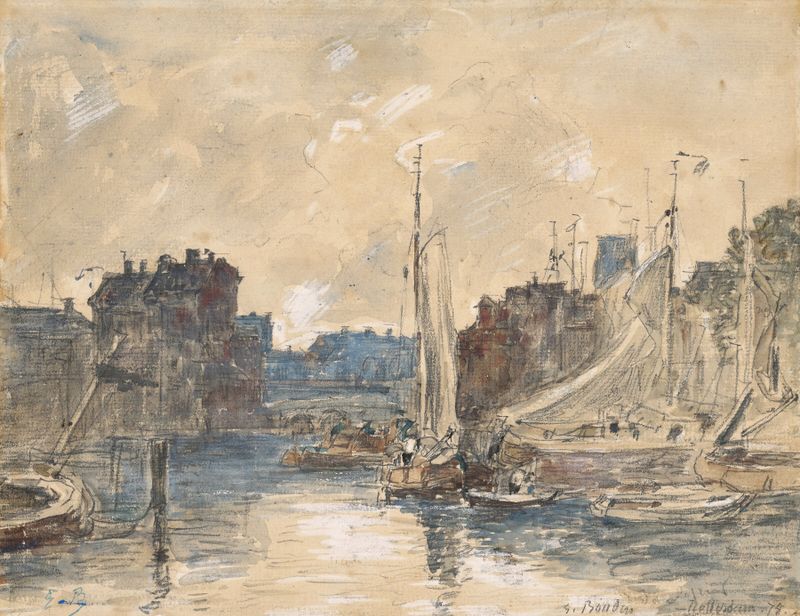
Port de Rotterdam
Eugène Boudin

View of Bordeaux, from the Quai des Chartrons
Eugène Boudin

Trouville, Scène De Plage
Eugène Boudin

Trouville, Le Port
Eugène Boudin





