
Le Havre. L’avant-Port — History & Facts
In the quiet embrace of a seaside town, history lingers in the air, echoing the stories of those who came before and the tide that relentless washes ashore. Each brushstroke stands as a testament to the legacy of a place, a moment forever captured in the embrace of light and shadow. Look to the center of Le Havre. L’avant-Port and notice the bustling activity at the docks.
The interplay of blues and grays creates a harmonious backdrop, while the vibrant sails of the ships catch the eye, inviting us into the narrative. Boudin’s loose brushwork gives life to the figures, as they navigate the comings and goings, their movements harmonizing with the shifting atmosphere of the port. The soft, diffused light casting gentle reflections on the water renders a sense of tranquility amidst the hustle. Boudin masterfully contrasts the human element against the vastness of the sea.
The figures appear small and almost ephemeral, highlighting the insignificance of individual endeavors against nature's grandeur. The painting holds a duality: it celebrates the industrious spirit of the port while evoking the transience of each moment, reminding us that life, like the tides, is ever-changing. The distant horizon, cloaked in mist, speaks to the future — an invitation to ponder what lies ahead and what will be left behind. In 1893, the artist was firmly established as a pivotal figure in the Impressionist movement, having developed a distinctive style that captured the essence of coastal life.
Painting in his native Normandy, Boudin drew inspiration from the shifting qualities of light and atmosphere, positioning himself at the forefront of a new artistic legacy. As the world embraced modernity, his works became a bridge between tradition and the emerging avant-garde, reflecting a transitional moment in the art world.
More Artworks by Eugène Boudin
Browse all →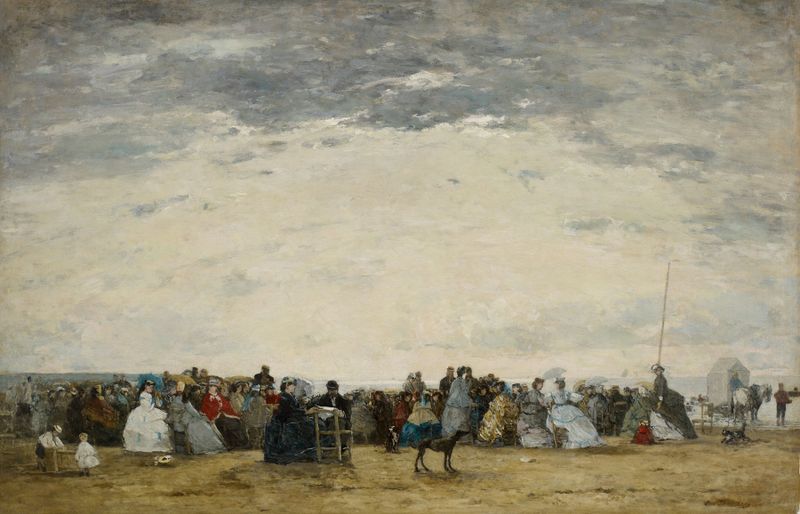
Vacationers on the Beach at Trouville
Eugène Boudin

Washerwoman near Trouville
Eugène Boudin
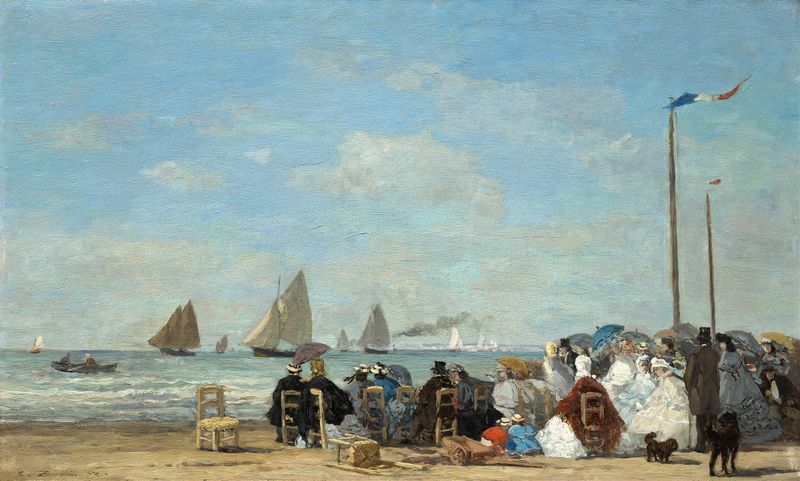
Beach Scene at Trouville
Eugène Boudin

Port aux environs d’Honfleur
Eugène Boudin

Le Faou, un coin du village
Eugène Boudin
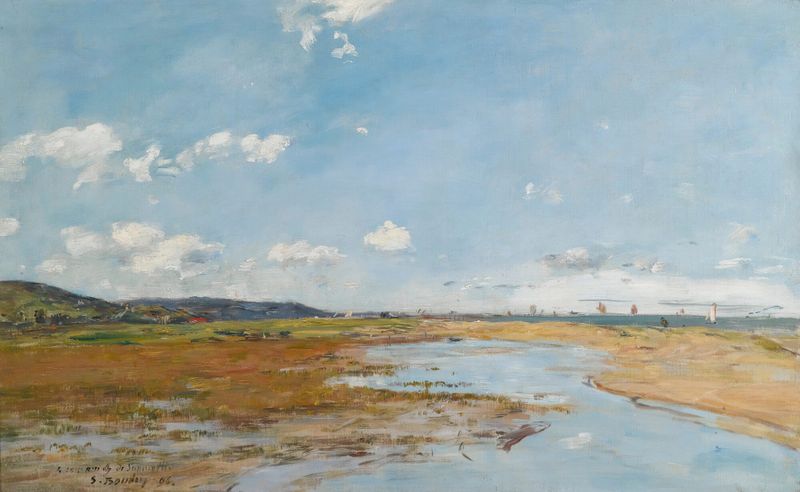
Deauville. Le Rivage
Eugène Boudin
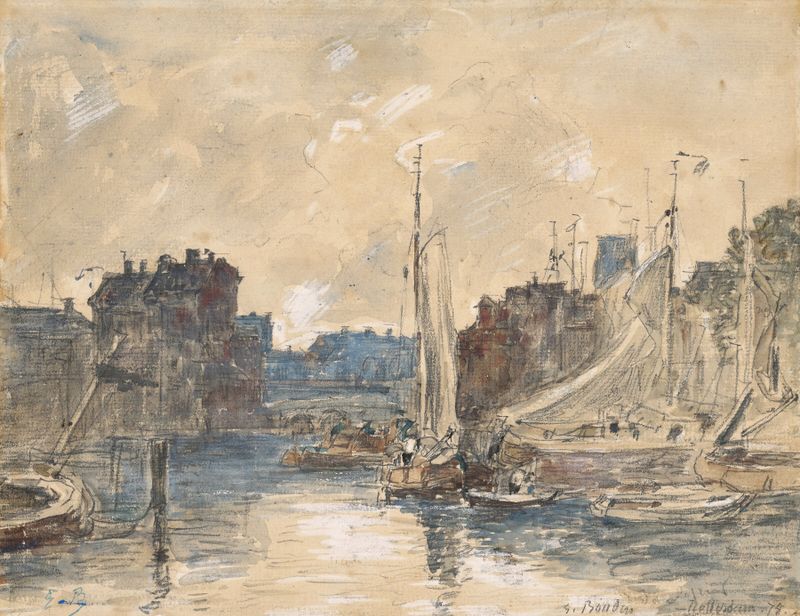
Port de Rotterdam
Eugène Boudin

View of Bordeaux, from the Quai des Chartrons
Eugène Boudin

Trouville, Scène De Plage
Eugène Boudin

Trouville, Le Port
Eugène Boudin





