
Le Havre, navires en pleine mer — History & Facts
Is this a mirror — or a memory? The canvas breathes life into the tumult of the sea, capturing a fleeting moment where chaos and beauty intertwine. Look to the lower half of the painting, where the churning waves rise and fall with a violent grace. The brushstrokes are bold and sweeping, depicting the frothy foam as it collides with the hulls of the ships, which appear both sturdy and vulnerable against nature’s fury. Notice how the palette shifts from deep cerulean blues to soft grays, the color choices echoing the mood of the moment — a conflict between serenity and tumult. The scene pulses with hidden meanings; the ships can be seen as a metaphor for human ambition, battling an indifferent force of nature.
The interplay between the dark, turbulent waves and the glimmers of sunlight breaking through the clouds hints at resilience amidst chaos. Each vessel, though seemingly engulfed, retains a sense of purpose, illustrating the delicate balance between human endeavor and the unpredictable world. Boudin painted this piece in 1866 in his hometown of Le Havre, a setting that profoundly influenced his artistic vision. At this time, he was at the forefront of impressionism, exploring the effects of light and atmosphere on the landscape.
His works were a precursor to modern depictions of everyday life, reflecting not only his personal observations but also the changing world of maritime trade and industry during the 19th century.
More Artworks by Eugène Boudin
Browse all →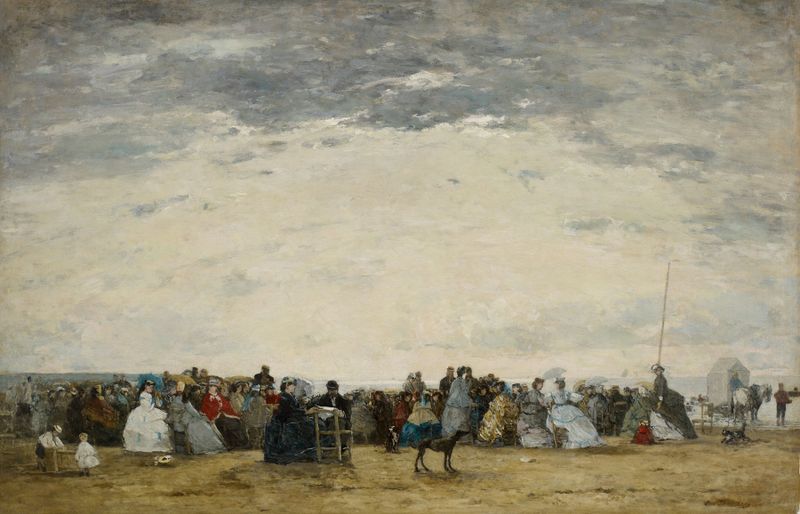
Vacationers on the Beach at Trouville
Eugène Boudin

Washerwoman near Trouville
Eugène Boudin
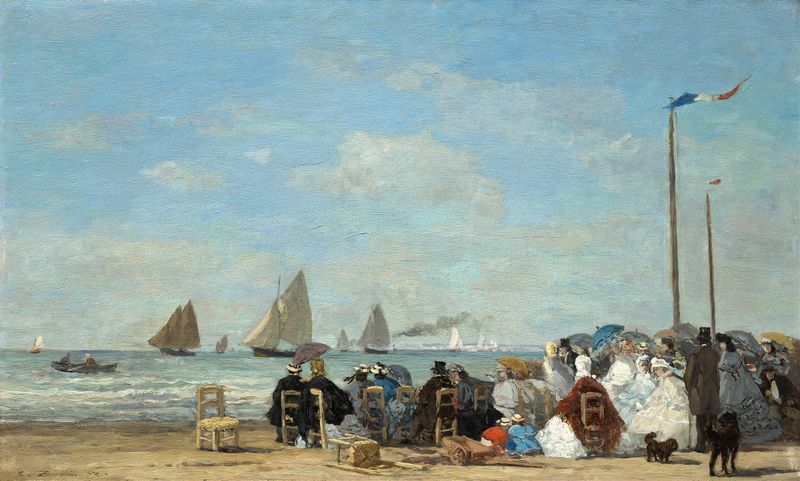
Beach Scene at Trouville
Eugène Boudin

Port aux environs d’Honfleur
Eugène Boudin

Le Faou, un coin du village
Eugène Boudin
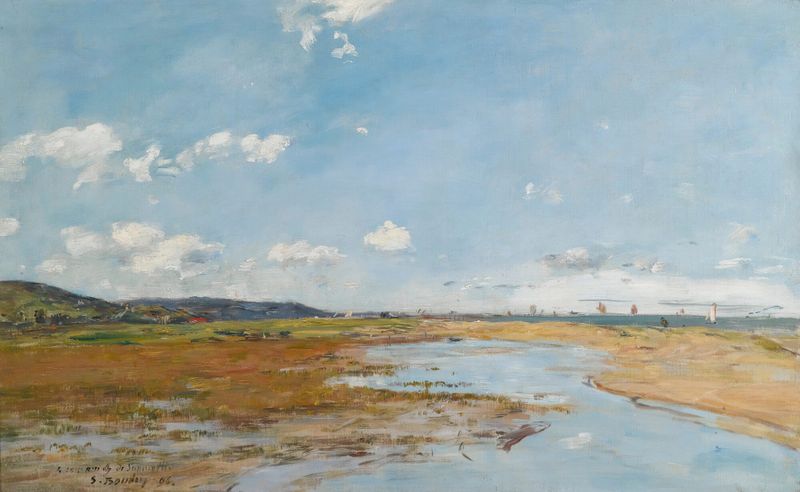
Deauville. Le Rivage
Eugène Boudin
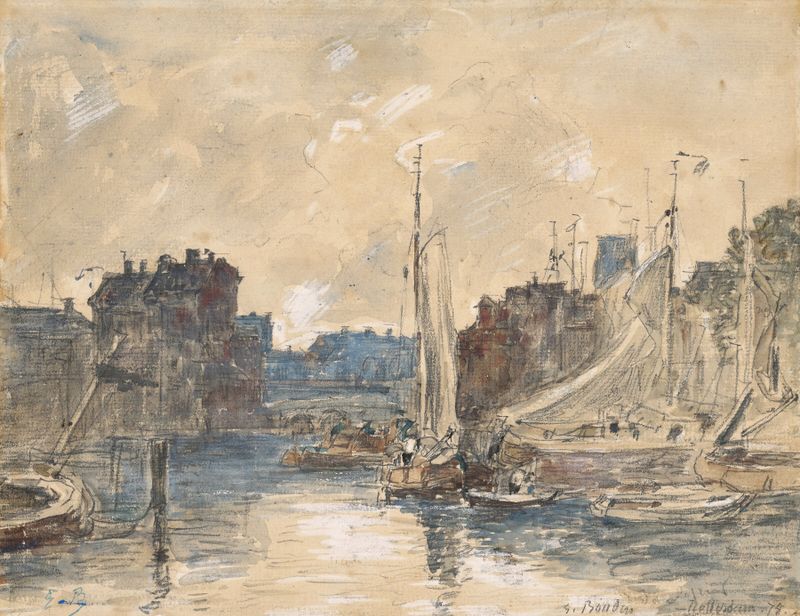
Port de Rotterdam
Eugène Boudin

View of Bordeaux, from the Quai des Chartrons
Eugène Boudin

Trouville, Scène De Plage
Eugène Boudin

Trouville, Le Port
Eugène Boudin





