
Le Pont de Poissy — History & Facts
What first draws the eye in Le Pont de Poissy is the quiet certainty of the river’s reflection, where the town’s towers and the arches of the bridge dissolve into rippling color. The composition leads you gently from the dense, shadowed trees on the right, across the sunlit stone bridge, and into the cluster of rooftops and spires that mark the heart of Poissy. Marquet’s handling of light is direct and unhurried: the pale sky, almost bleached at the horizon, sets off the deeper greens and ochres below, while the water’s surface becomes a painter’s shorthand for movement and calm at once.
The brushwork is broad and confident, flattening detail in favor of atmosphere—notice how the figures and boats are reduced to mere dashes, as if glimpsed in passing. Painted in 1925, this work belongs to a moment when artists like Albert Marquet were reimagining the landscape tradition for a modern age. The early twentieth century saw the rivers and bridges of France become favorite subjects for painters seeking to capture not only place but the changing moods of light and season. While Marquet was associated with the Fauves in his youth, by this period his palette had quieted, and his scenes—like this one—offered a measured, almost meditative response to the world.
History has kept few traces of the journey of this particular painting, but its presence in an online collection today invites us to linger over the everyday beauty that once inspired a generation of artists to set up their easels by the water’s edge.
More Artworks by Albert Marquet
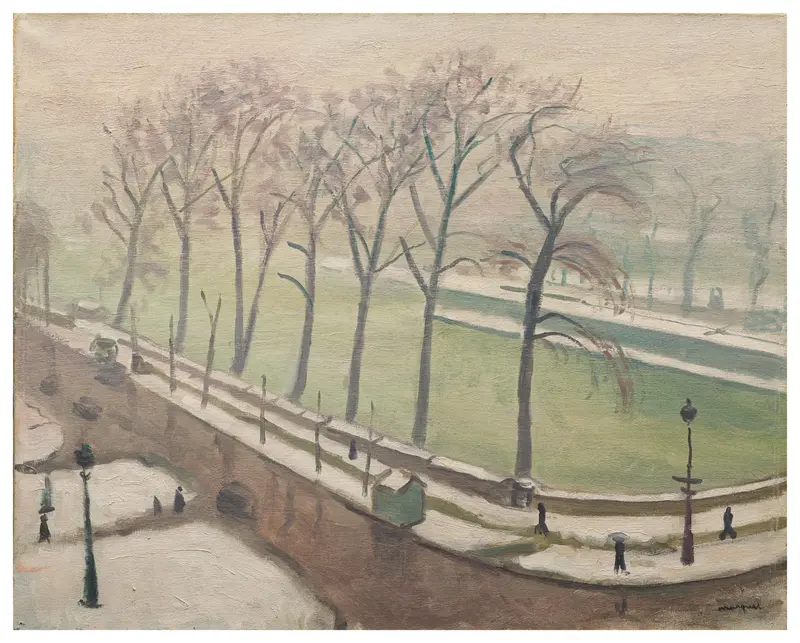
Pont-Neuf sous la neige
Albert Marquet

Le Port d’Alger
Albert Marquet
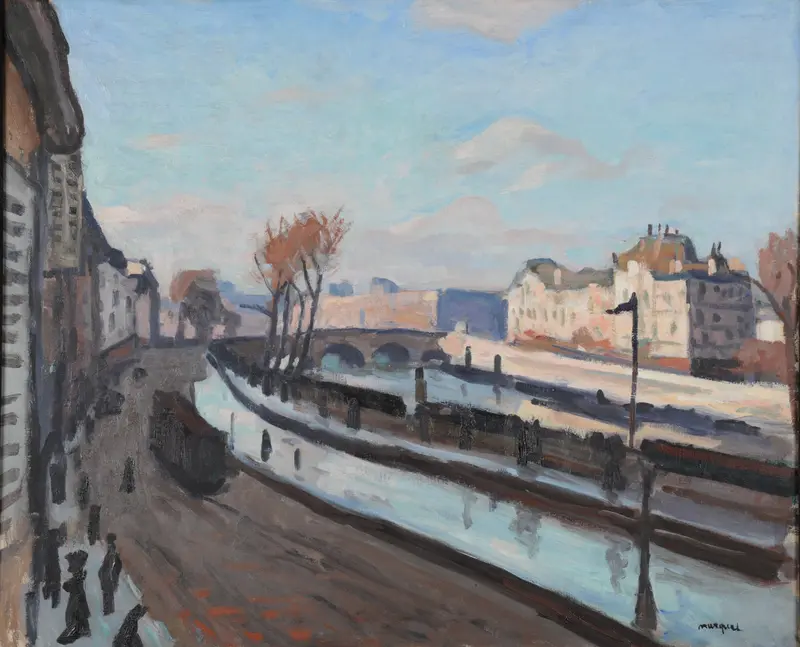
Le quai des Grands Augustins
Albert Marquet

Le jardin à l’Estaque
Albert Marquet
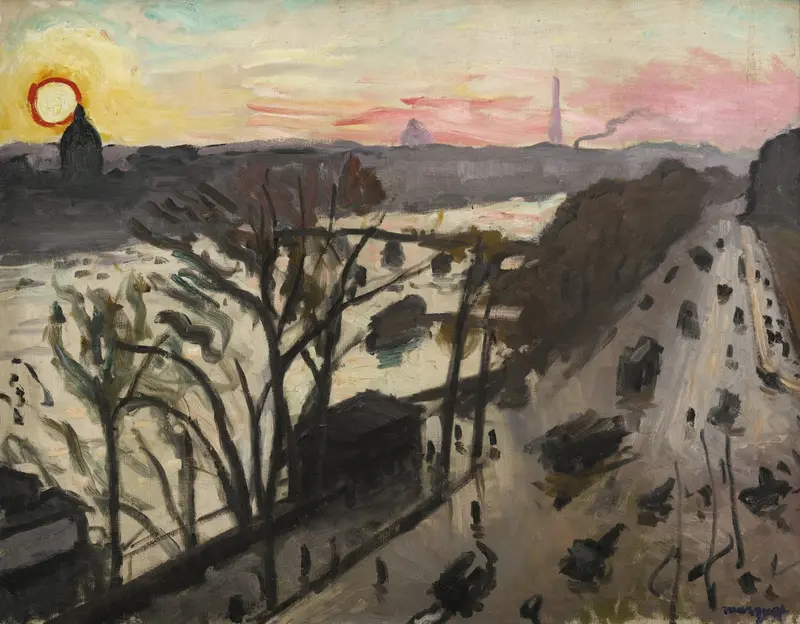
Paris, quai du Louvre, soleil d’hiver
Albert Marquet
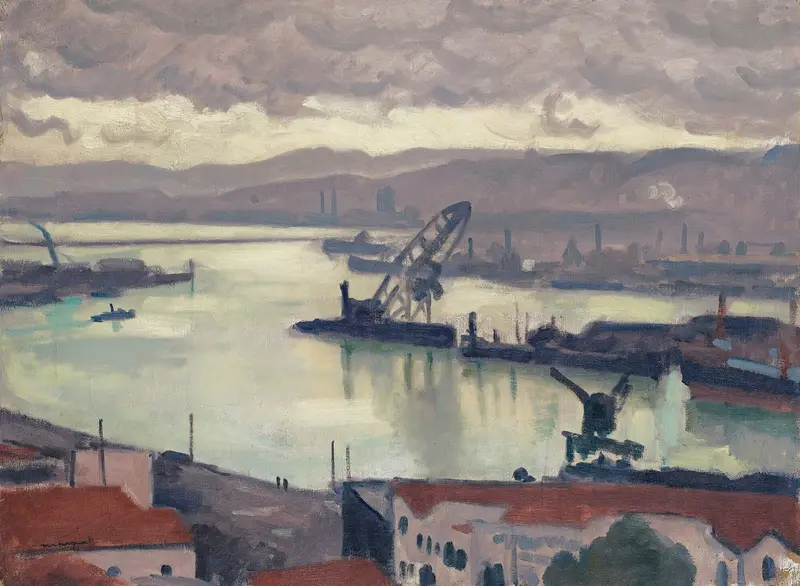
Alger, Temps Gris
Albert Marquet

Berge de la Seine à Méricourt
Albert Marquet
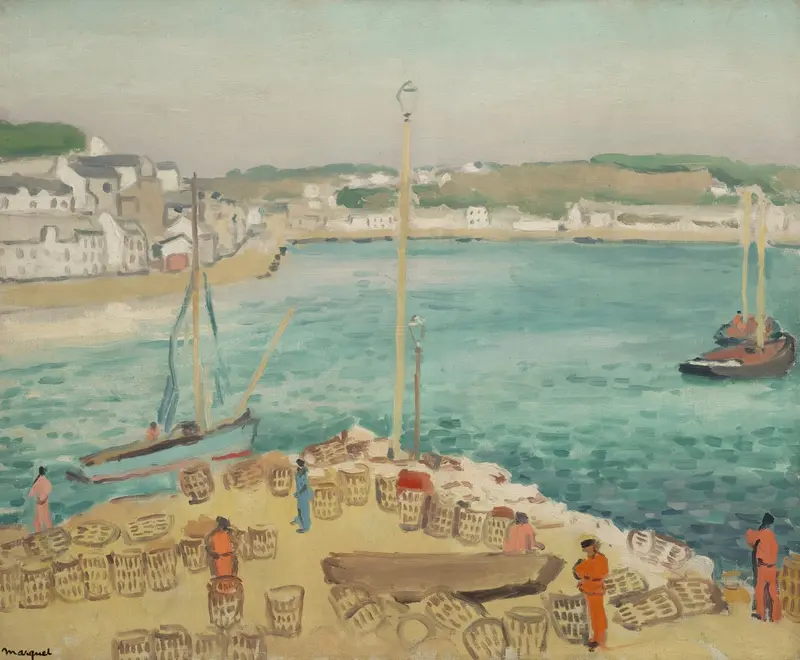
Audierne, les tonneaux
Albert Marquet
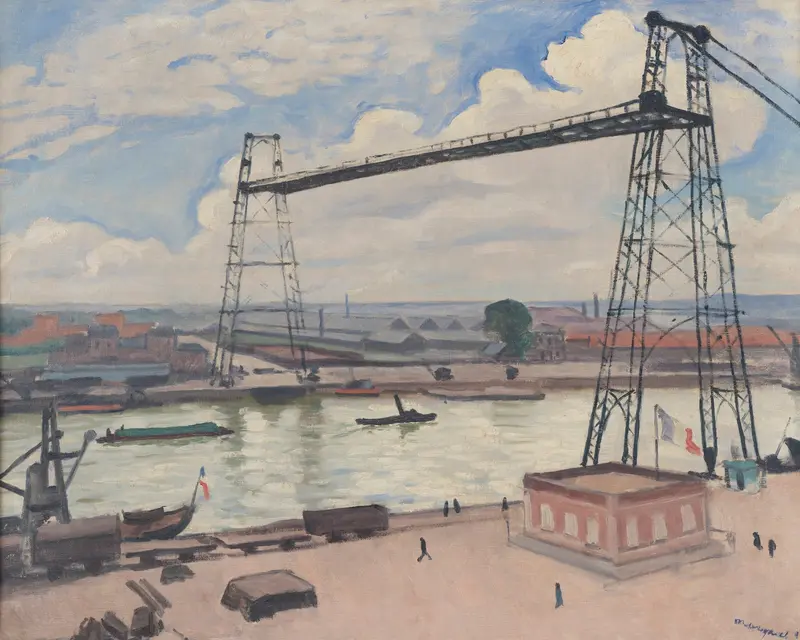
Rouen, le pont transbordeur
Albert Marquet
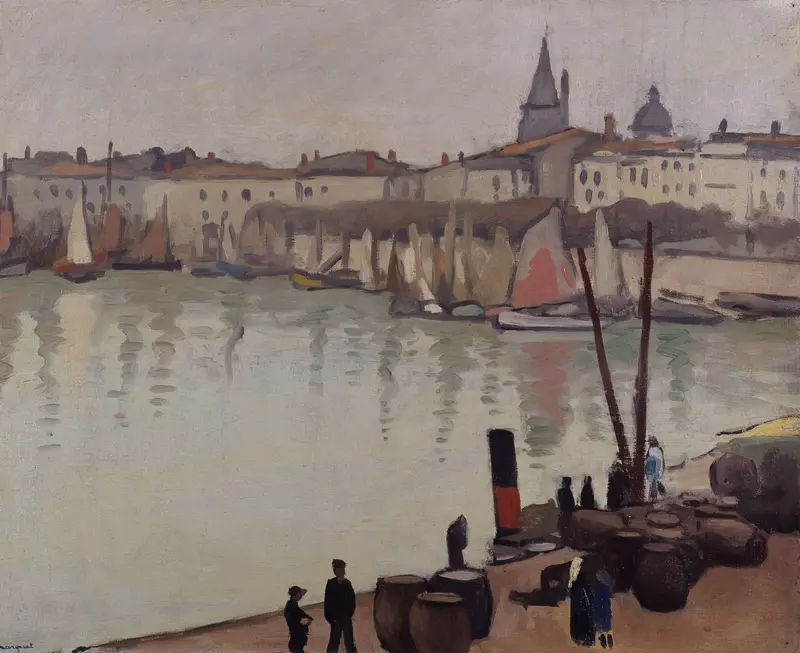
Port of La Rochelle
Albert Marquet
More Landscape Art

The Starry Night
Vincent van Gogh

View of Delft
Johannes Vermeer

Water Lilies
Claude Monet

The Grand Canal, Venice, looking north-west from the Ca' Corner to the Ca' Contarini degli Scrigni, with the campanile of Santa Maria della Carità
Canaletto

Windsor Castle
Canaletto

The Grand Canal looking North-East from the Palazzo Dolfin-Manin to the Rialto Bridge
Canaletto