
Le Port De Trouville — History & Facts
Who listens when art speaks of silence? In the quietude of a seaside port, reflections emerge, not just on water but within the viewer's own thoughts. Look to the left of the canvas, where the gentle hues of the sky blend into the calm surface of the water, a masterful interplay of blues and grays that invites your gaze. Observe how the boats bob lightly, their masts reaching upwards as if to connect with the clouds above. Boudin’s brushwork captures the texture of the waves, each stroke a whisper of the sea’s breath, while the soft light illuminates the scene, creating a sense of early morning serenity. Delve deeper into the painting’s subtle contrasts: the stillness of the water against the rhythmic energy of the sails, each element speaking to the coexistence of tranquility and movement.
The figures in the background, mere silhouettes against the expansive canvas, evoke a sense of anonymity and collective experience. It is as if they are absorbed in their own reverie, reflecting the solitude that can accompany communal moments by the shore. Created in 1891, this work represents a pivotal moment for its creator. Boudin, a pioneer in plein air painting, was fully immersed in capturing the ephemeral beauty of nature, influenced by the Impressionist movement that was gaining momentum.
At this time, he was living in Normandy, where the light and landscape profoundly shaped his artistic vision, marking a transition towards a more modern interpretation of the seaboard life he adored.
More Artworks by Eugène Boudin
Browse all →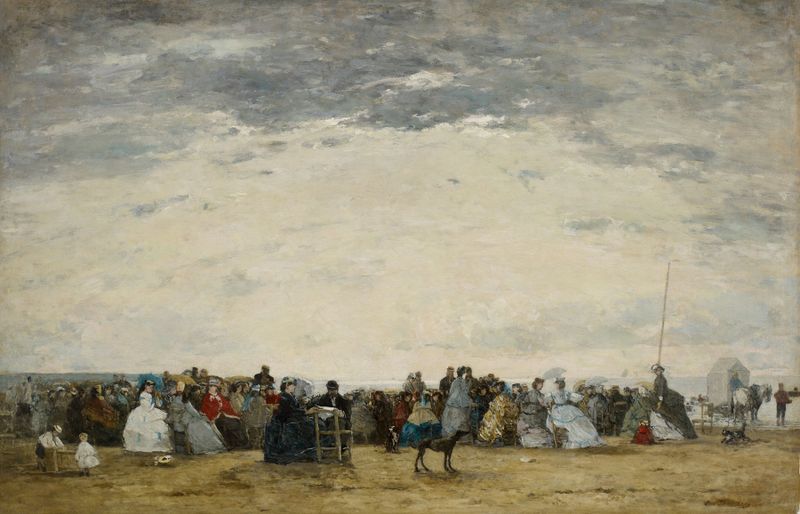
Vacationers on the Beach at Trouville
Eugène Boudin

Washerwoman near Trouville
Eugène Boudin
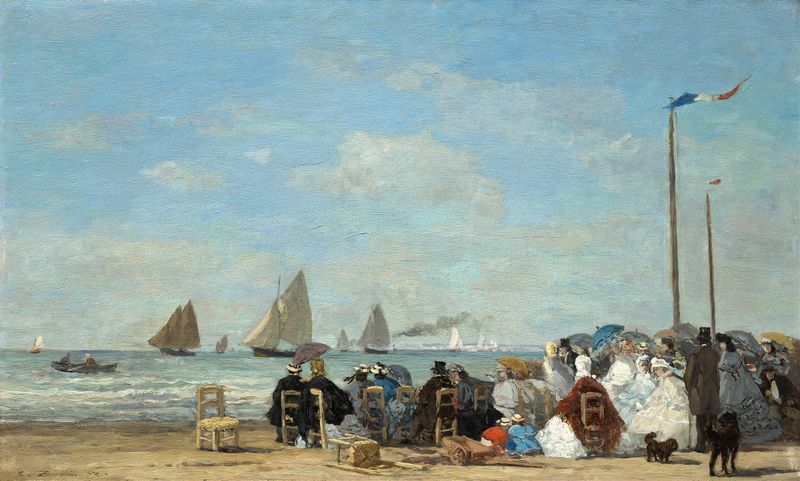
Beach Scene at Trouville
Eugène Boudin

Port aux environs d’Honfleur
Eugène Boudin

Le Faou, un coin du village
Eugène Boudin
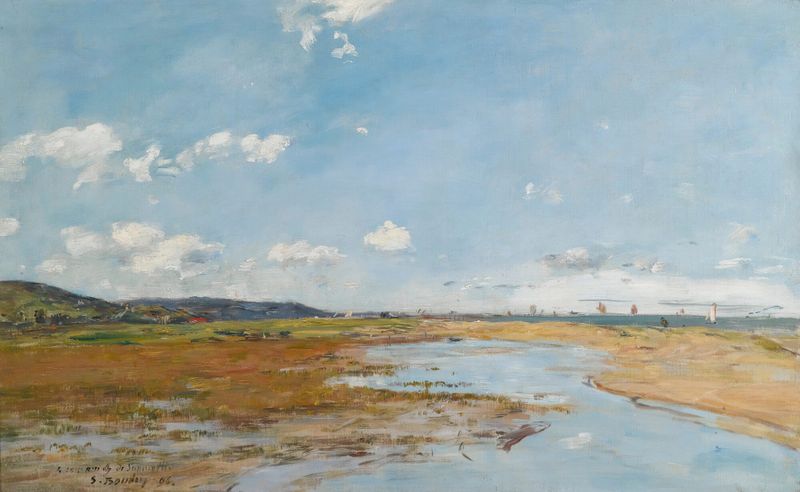
Deauville. Le Rivage
Eugène Boudin
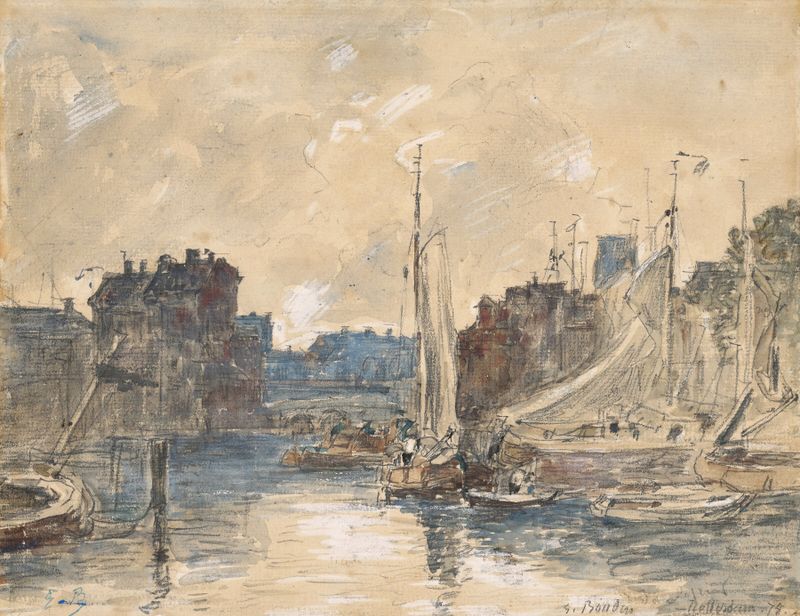
Port de Rotterdam
Eugène Boudin

View of Bordeaux, from the Quai des Chartrons
Eugène Boudin

Trouville, Scène De Plage
Eugène Boudin

Trouville, Le Port
Eugène Boudin





