
Le Port de Trouville — History & Facts
Is this a mirror — or a memory? The shimmering surface of the water in Le Port de Trouville invites a dance between reality and the past, echoing the eternal rhythm of the sea. Look to the right at the delicate sailboats bobbing gently in the harbor, their white sails catching the soft glow of the afternoon sun. The azure hues of the water contrast sharply with the warm earth tones of the sandy shore, pulling your gaze in an inviting embrace. Notice how the light falls upon the fishing boats, imparting a sense of vitality and movement, while wispy clouds drift lazily above, hinting at a tranquil day unfolding.
The brushwork is loose yet purposeful, creating a tapestry of texture that conveys both the immediacy of the scene and the fleeting nature of time. Within this serene tableau lies an undercurrent of rebirth. The juxtaposition of the lively boats against the stillness of the water reflects the complex interplay of human endeavor and nature's tranquility. Small figures dot the shoreline, their presence merging with the landscape as if they are part of the very essence of the harbor.
This harmony between man and the sea speaks to a collective longing for renewal, a moment suspended in which the familiar becomes extraordinary. In 1875, during a time of burgeoning Impressionism, the artist painted this work en plein air in Trouville, France. Boudin was a pioneer in capturing the ephemeral qualities of light on canvas, reflecting the vibrant spirit of the seaside town. As he immersed himself in this coastal scene, he aligned himself with the shifting tides of artistic innovation, marking a period of exploration and freedom in the world of art.
More Artworks by Eugène Boudin
Browse all →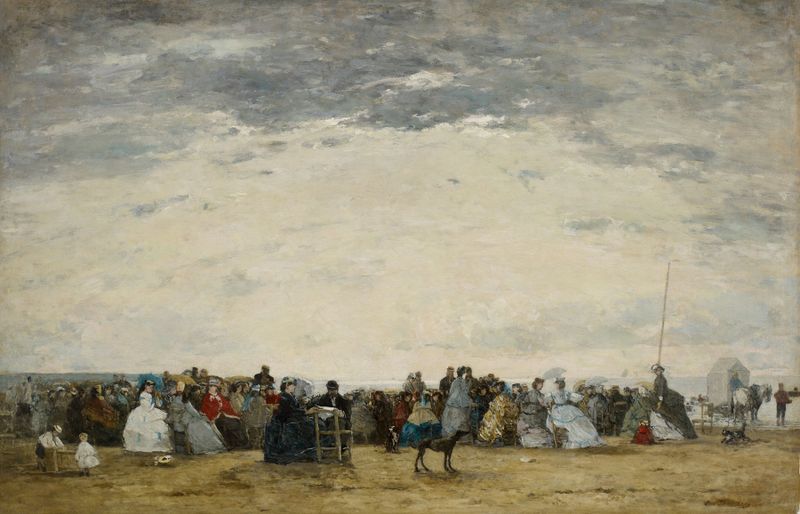
Vacationers on the Beach at Trouville
Eugène Boudin

Washerwoman near Trouville
Eugène Boudin
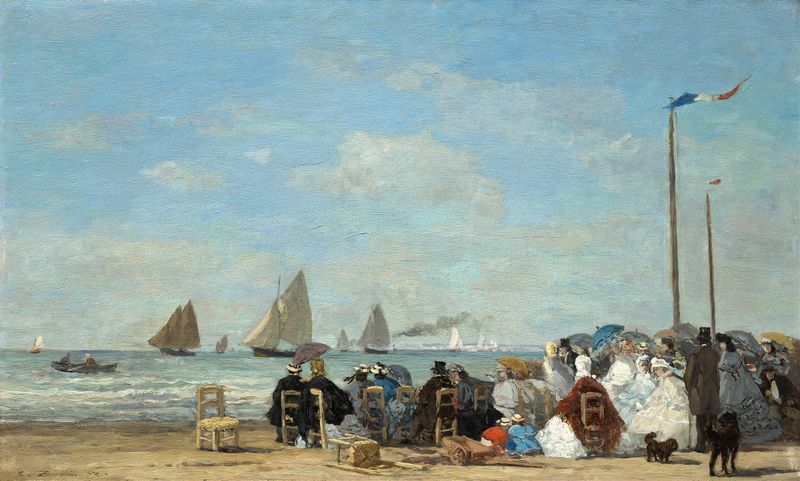
Beach Scene at Trouville
Eugène Boudin

Port aux environs d’Honfleur
Eugène Boudin

Le Faou, un coin du village
Eugène Boudin
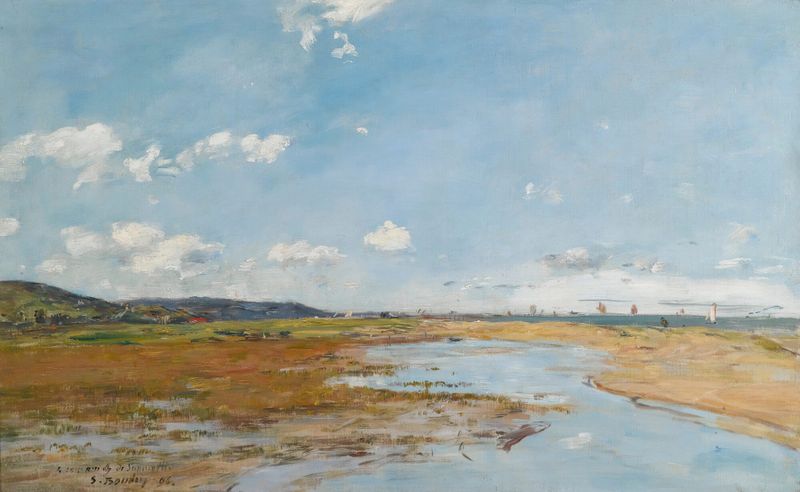
Deauville. Le Rivage
Eugène Boudin
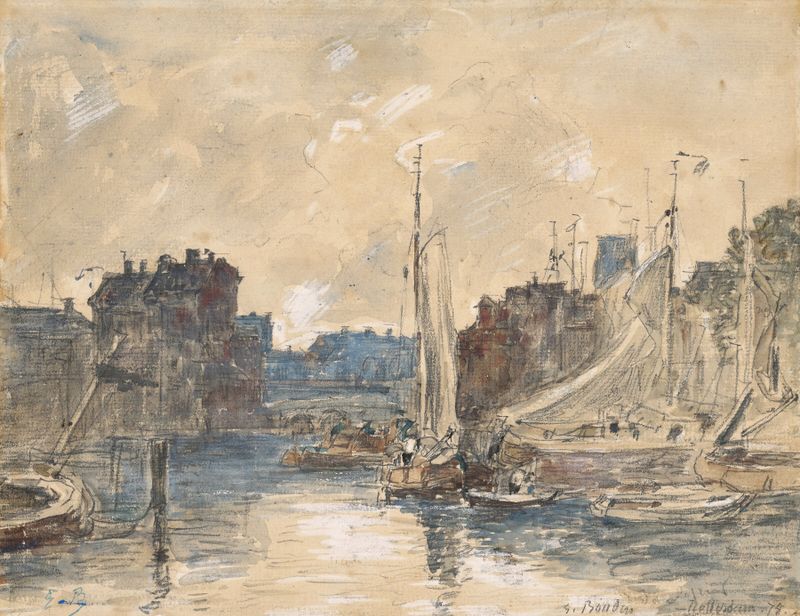
Port de Rotterdam
Eugène Boudin

View of Bordeaux, from the Quai des Chartrons
Eugène Boudin

Trouville, Scène De Plage
Eugène Boudin

Trouville, Le Port
Eugène Boudin





