
Le rivage de Trouville, marée basse — History & Facts
Could a single brushstroke hold eternity? In the quiet embrace of a seaside retreat, where land meets sea, faith lingers in the gentle touch of fading sunlight on a tranquil horizon. Focus first on the horizon line, where the soft blues of the sky melt into the muted greens of the water. Notice how the artist has captured the ebbing tide, leaving behind glistening patches of wet sand that shimmer like precious jewels. The brushstrokes vary from delicate to bold, each stroke conveying both the fleeting nature of the moment and the eternal rhythm of the sea.
The composition balances these elements with a horizon that draws the viewer's eye, inviting contemplation. Yet, amidst the serenity lies a palpable tension. The retreating tide evokes a sense of longing, reflecting the transient beauty of life and the eternal cycle of nature. The scattered figures on the shore, mere silhouettes against the vastness, hint at human experiences intertwined with nature’s vastness—moments of joy, solitude, and reflection.
Here, the interplay of light and shadow seems to whisper secrets of time and existence, revealing both vulnerability and resilience. During the years between 1880 and 1885, Boudin painted Le rivage de Trouville, marée basse while establishing his reputation as a pioneer of plein air painting. At the time, he was exploring the shifting dynamics of light and color, influenced by the Impressionist movement despite not being formally part of it. His love for the Normandy coastline and its changing weather conditions fueled his artistic exploration, capturing ephemeral moments on canvas with remarkable authenticity.
More Artworks by Eugène Boudin
Browse all →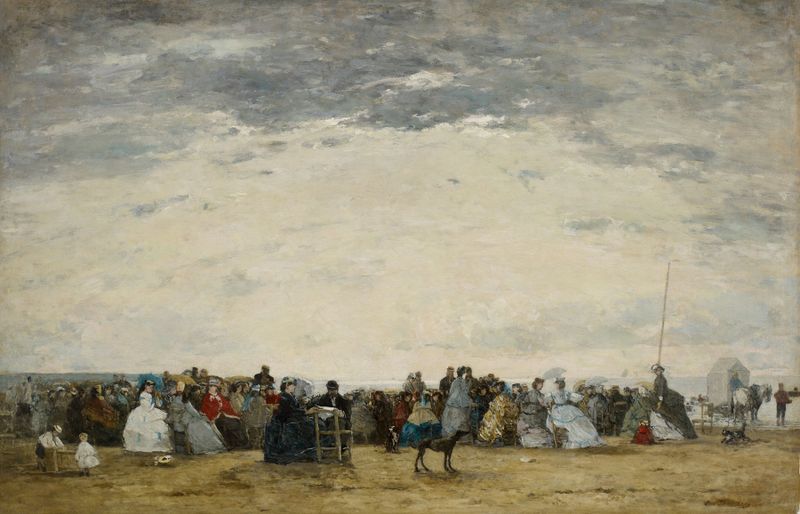
Vacationers on the Beach at Trouville
Eugène Boudin

Washerwoman near Trouville
Eugène Boudin
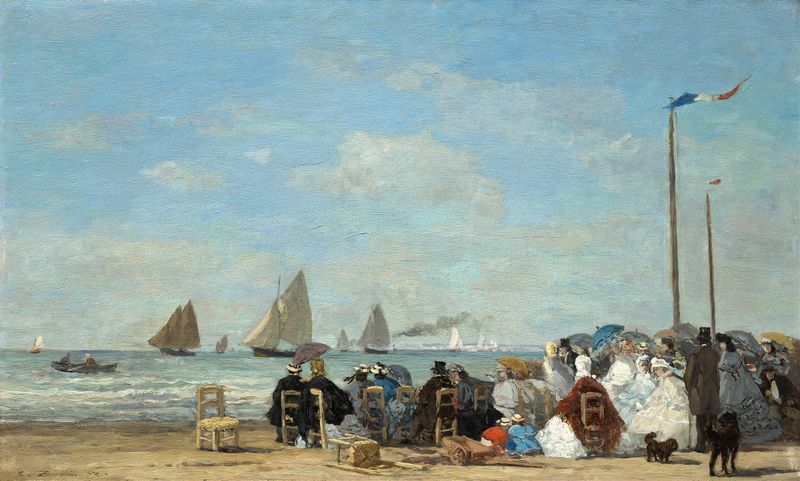
Beach Scene at Trouville
Eugène Boudin

Port aux environs d’Honfleur
Eugène Boudin

Le Faou, un coin du village
Eugène Boudin
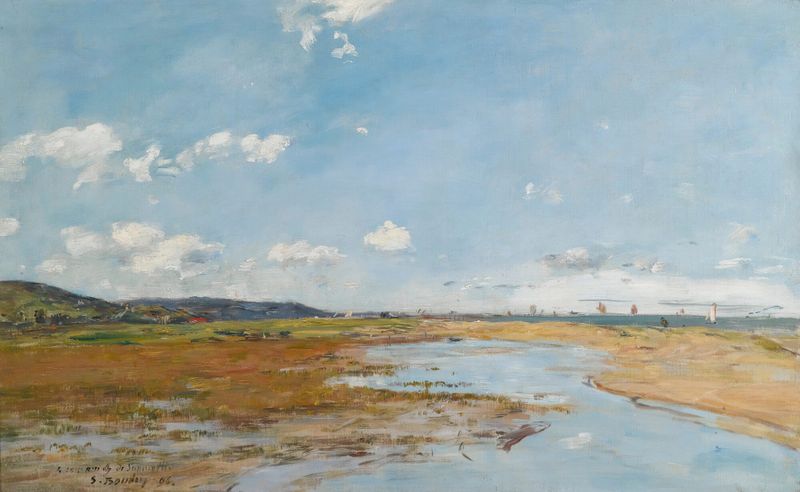
Deauville. Le Rivage
Eugène Boudin
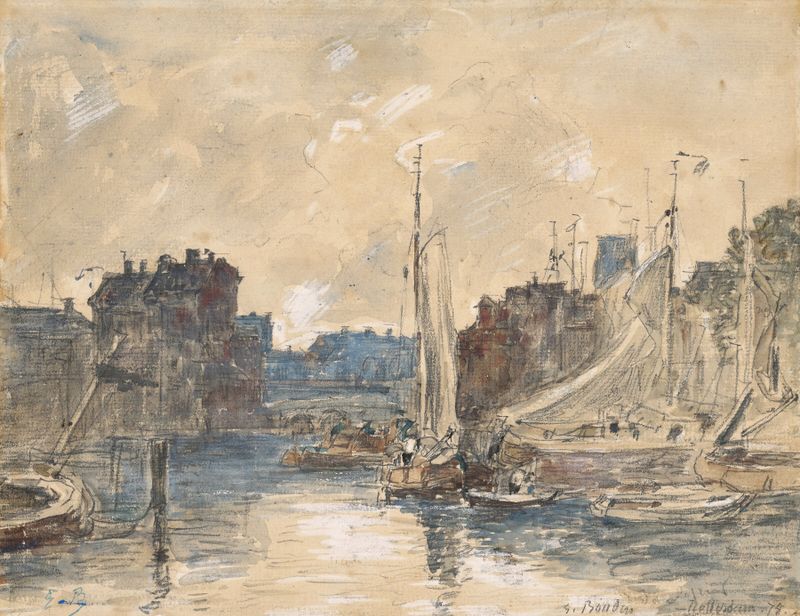
Port de Rotterdam
Eugène Boudin

View of Bordeaux, from the Quai des Chartrons
Eugène Boudin

Trouville, Scène De Plage
Eugène Boudin

Trouville, Le Port
Eugène Boudin





