
Le sas à Trouville — History & Facts
Can paint confess what words never could? In Le sas à Trouville, the answer lies in the delicate interplay of faith and nature, rendered with masterful strokes that speak to the soul. Look to the left at the gentle arch of the wooden bridge, its weathered beams contrasting with the vibrant hues of the sea. The dappled sunlight dances across the water's surface, illuminating the ghostly figures of boats lazily bobbing in the harbor. Notice how the soft blues and greens blend seamlessly, inviting the viewer to breathe in the ocean breeze and feel the tranquility of the moment.
Boudin’s loose brushwork captures the essence of a fleeting summer day in a way that mirrors the very rhythm of life itself. Boudin plays with contrasts—the bustle of the beachgoers against the stillness of the water, the warmth of the sun juxtaposed with the coolness of the waves. Each figure, though rendered with simplicity, conveys a sense of purpose or respite, embodying both joy and contemplation. This fleeting scene serves as a reminder of the delicate balance between human existence and the immutable forces of nature, where faith in the unseen unites them. Created during the late 19th century, this piece reflects Boudin's dedication to en plein air painting, capturing the essence of the French coastline.
At this time, the artist was deeply immersed in the Impressionist movement, striving to express light and atmosphere. His experiences in Trouville, a vibrant seaside resort, influenced his exploration of color and form, as he aimed to depict not just the landscape but the life within it.
More Artworks by Eugène Boudin
Browse all →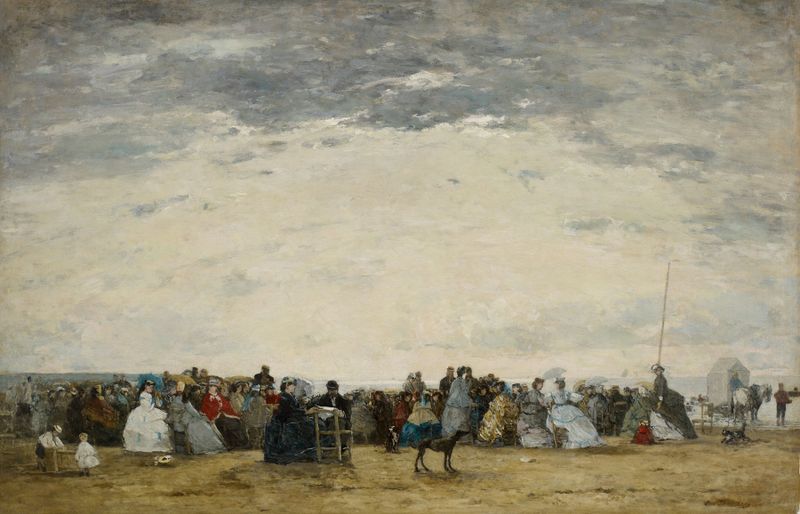
Vacationers on the Beach at Trouville
Eugène Boudin

Washerwoman near Trouville
Eugène Boudin
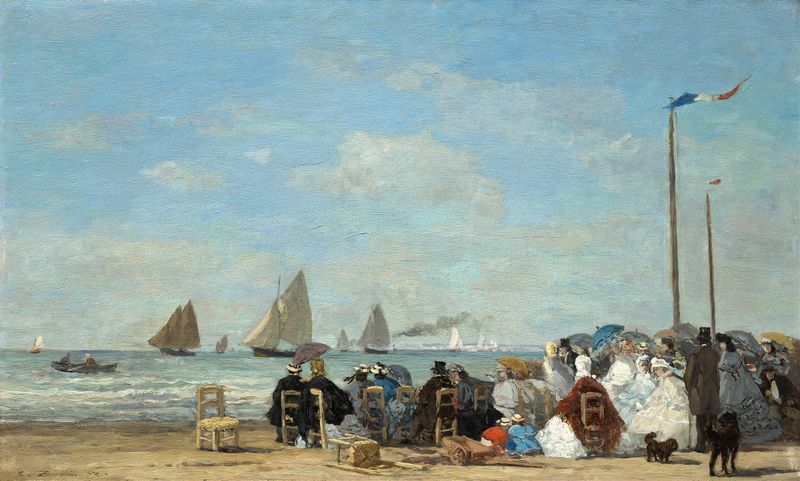
Beach Scene at Trouville
Eugène Boudin

Port aux environs d’Honfleur
Eugène Boudin

Le Faou, un coin du village
Eugène Boudin
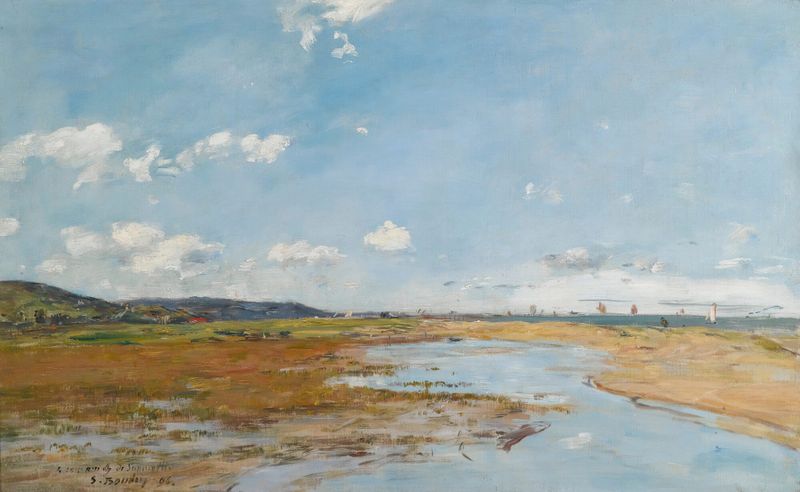
Deauville. Le Rivage
Eugène Boudin
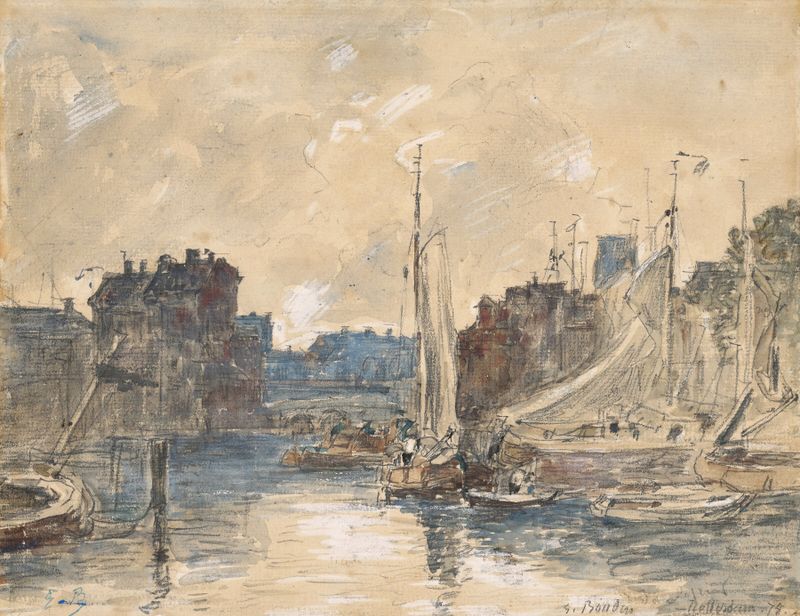
Port de Rotterdam
Eugène Boudin

View of Bordeaux, from the Quai des Chartrons
Eugène Boudin

Trouville, Scène De Plage
Eugène Boudin

Trouville, Le Port
Eugène Boudin





