
Lekande barn i trädgårdsland — History & Facts
What first catches the eye in Lekande barn i trädgårdsland is the lush, almost overwhelming abundance of cabbages, their broad leaves rendered with a precision that makes the garden feel alive and sheltering. Amid this sea of green, a few children’s heads bob up—half-hidden, half-revealed—like secret inhabitants of a miniature jungle. The painter draws us in not with drama, but with the quiet thrill of discovery: the children’s faces emerge only after the viewer’s gaze has wandered through the foliage, a gentle invitation to linger and look again.
The light, filtered through the orchard trees, falls softly on the leaves and children alike, uniting them in a world that feels both cultivated and wild. Works like this, from the hand of August Malmström, belong to a tradition in Scandinavian painting that delights in the everyday, celebrating rural life and the innocence of childhood. In the late nineteenth and early twentieth centuries, such scenes were cherished by a public eager for images of national identity and pastoral calm, often destined for the homes of the rising middle class or local exhibitions. The painting’s presence today in the collection of bukowskis.se reminds us how many of these works have slipped quietly through history, their makers better known than the individual canvases themselves.
Yet the sense of play and the deep green hush of this garden still speak across the years—inviting us to step, for a moment, into the world behind the leaves.
More Artworks by August Malmström

Tonttu
August Malmström
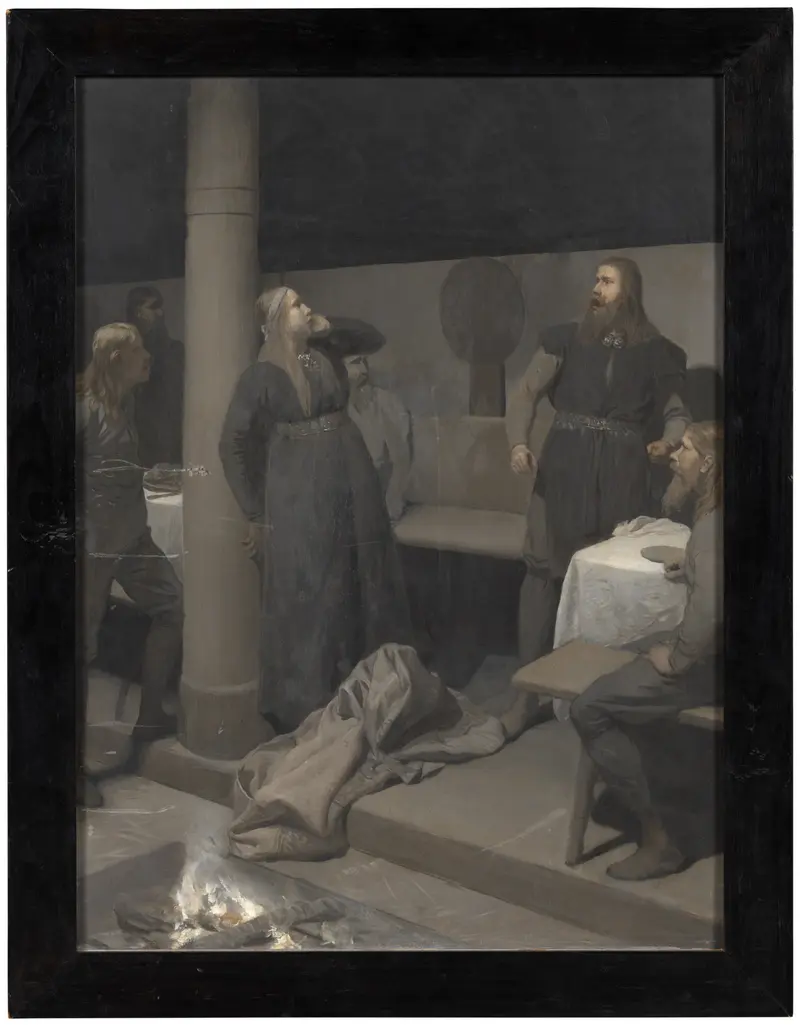
Hallgerd’s Slap
August Malmström
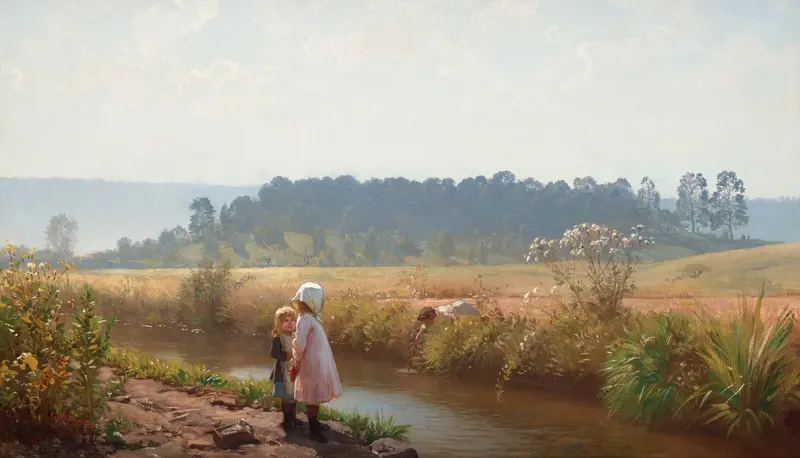
Children playing at the stream
August Malmström
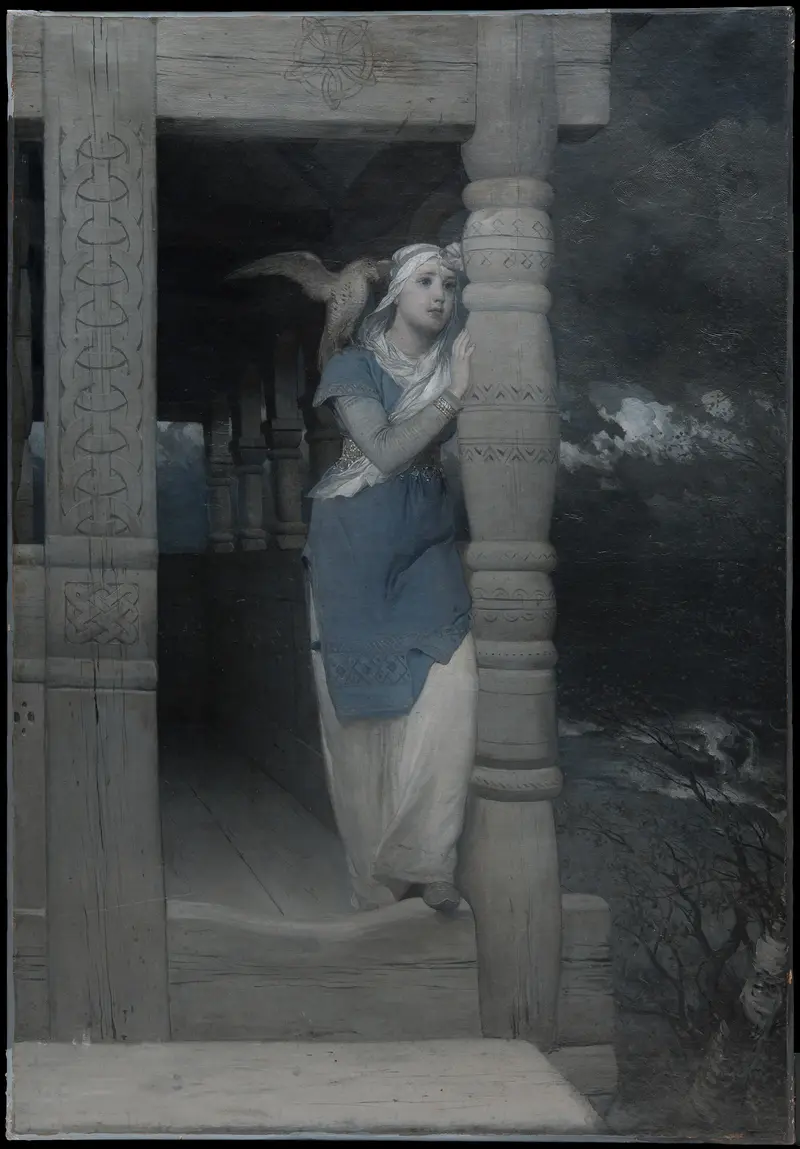
Ingeborg's Lament
August Malmström
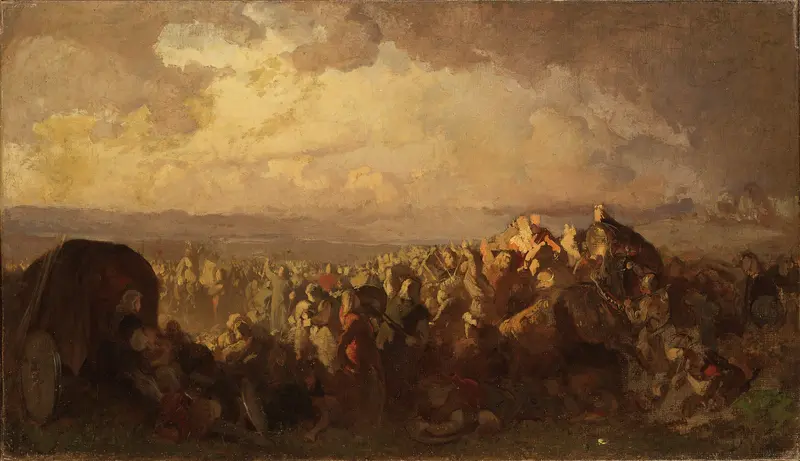
The Battle of Bråvalla. Study
August Malmström
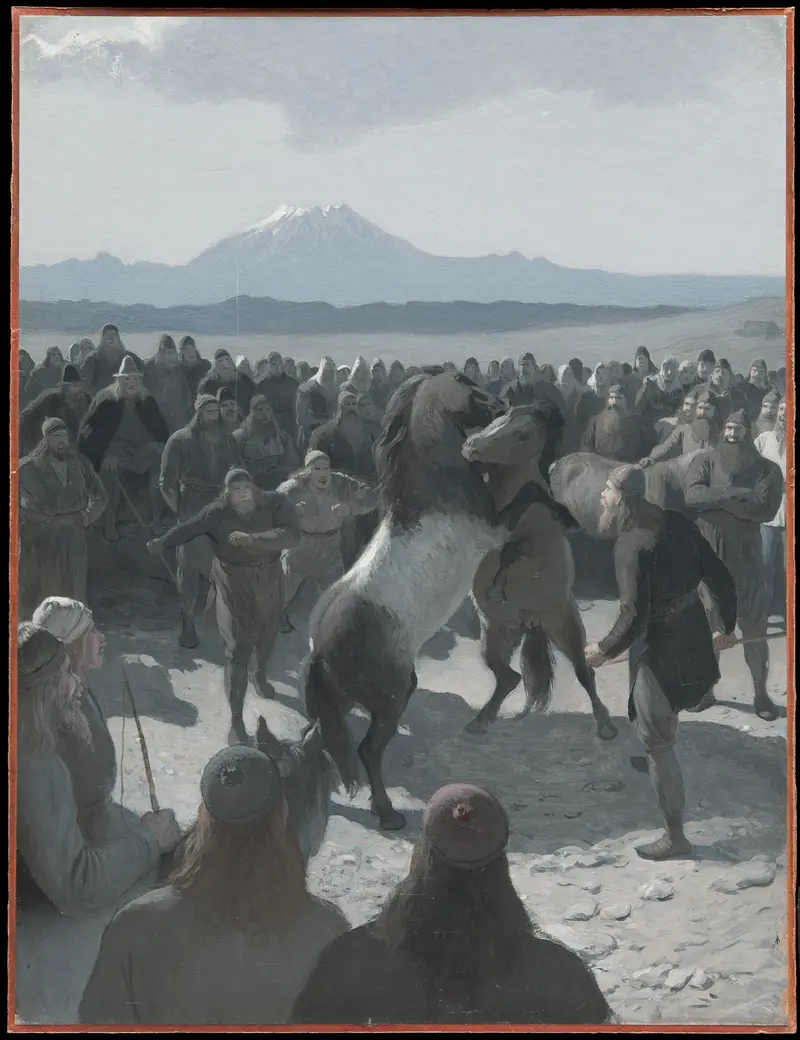
The Horse-Fight at Hlidarendi
August Malmström
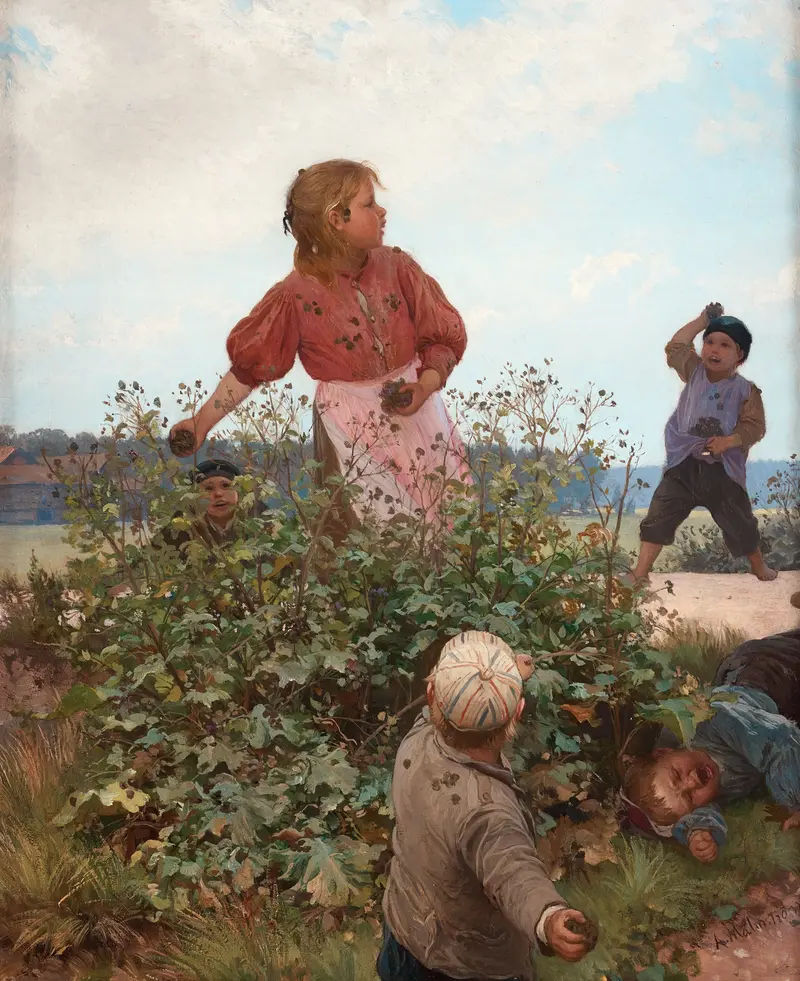
A modern Blenda
August Malmström
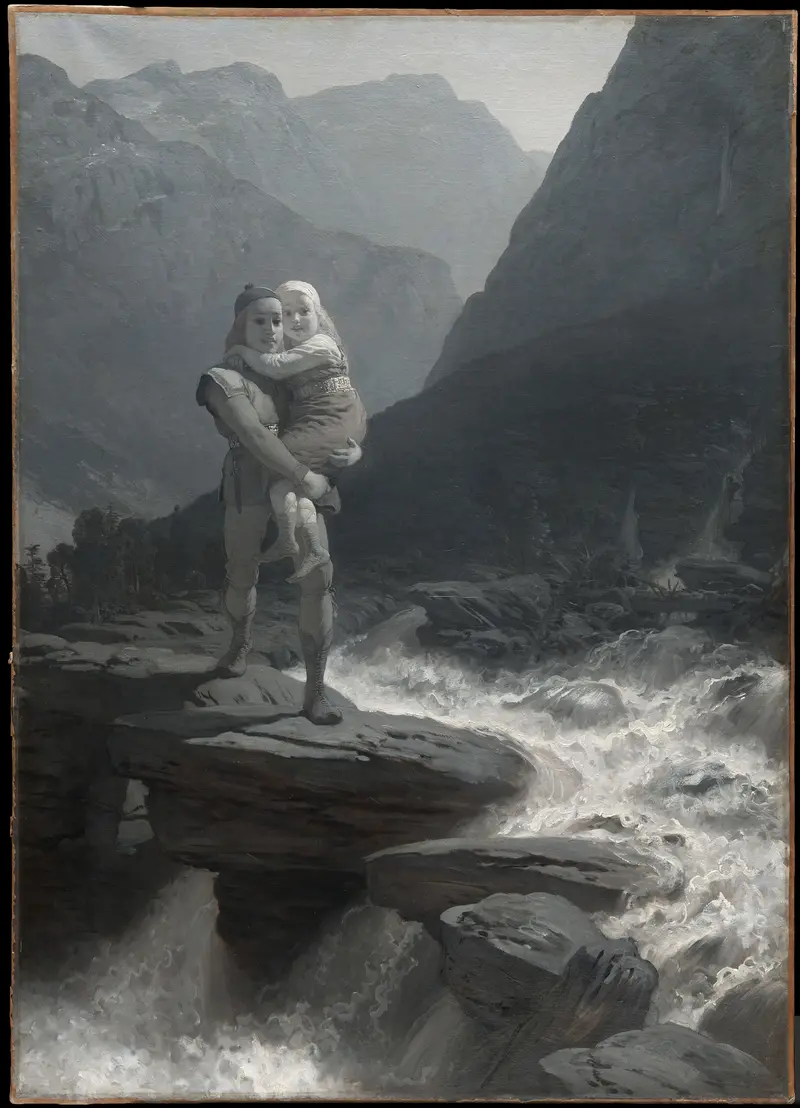
Frithiof and Ingeborg
August Malmström
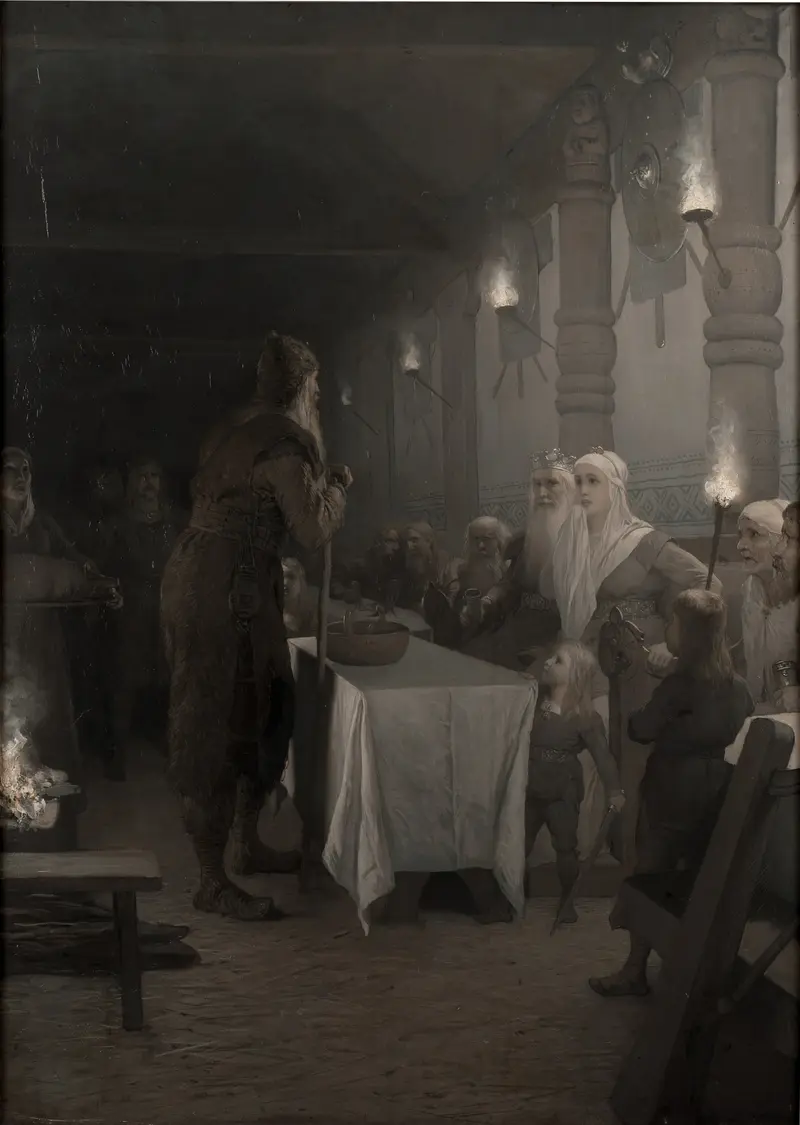
Frithiof kommer till Kung Ring (ur Frithiofs saga)
August Malmström
Frithiofs lycka (ur Frithiofs saga)
August Malmström
More Genre Scene Art

Banquet of the Officers of the St George Civic Guard
Frans Hals

Rembrandt and Saskia in the Scene of the Prodigal Son
Rembrandt van Rijn

Bal du moulin de la Galette
Pierre-Auguste Renoir

Quadrille at the Moulin Rouge
Henri de Toulouse-Lautrec

A Burial at Ornans
Gustave Courbet

When Will You Marry?
Paul Gauguin