
L’entrée du port de Trouville — History & Facts
Can paint confess what words never could? In L’entrée du port de Trouville, the rhythm of waves and the flurry of sails reveal a world caught between tranquility and madness—a fleeting moment suspended in color and light. Look to the left at the boats clustered at the harbor’s edge, their sails billowing as if conversing with the gusty winds. Notice how the sky, a blend of soft blues and whites, dances with hints of golden sunlight, illuminating the scene with gentle warmth. The brushwork is spontaneous and lively, with strokes that seem to mirror the chaotic energy of the water.
This vibrant interplay of hues invites the viewer to delve deeper into the emotional pulse of the moment. In the distance, the figures on the shore stand still, contrasting sharply with the lively boats. Their composed demeanor echoes the quiet tension of life at sea; they are both engaged and distanced from the tumult around them. The juxtaposition of the vibrant harbor and the peaceful beach evokes a sense of longing—a yearning for freedom, perhaps, or a desire to capture the very essence of fleeting joy.
The scene encapsulates a delicate balance between nature’s fury and the calmness of human presence. Eugène Boudin painted this piece in 1894 while working in Trouville, a popular seaside resort in Normandy. At this time, he was gaining recognition for his approach to plein air painting, capturing the ever-changing environment around him. The world of art was shifting, with Impressionism taking hold, and Boudin’s work became a precursor to the movement, reflecting both his admiration for the natural world and the burgeoning excitement of contemporary artistic expression.
More Artworks by Eugène Boudin
Browse all →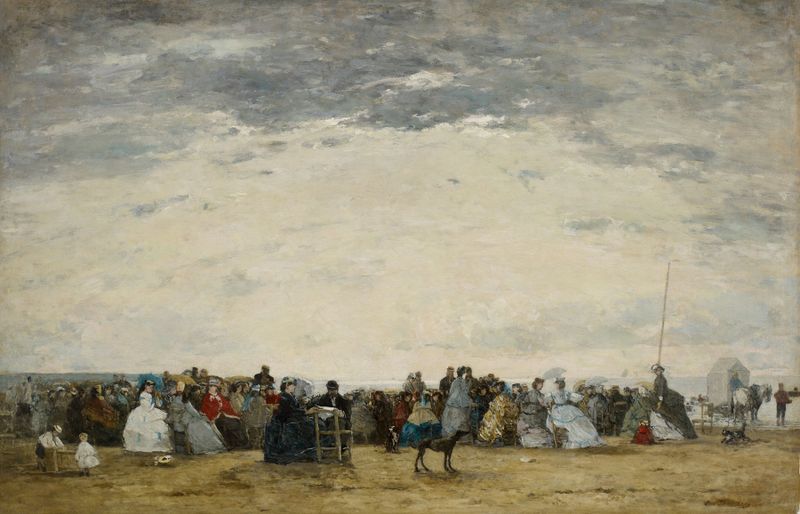
Vacationers on the Beach at Trouville
Eugène Boudin

Washerwoman near Trouville
Eugène Boudin
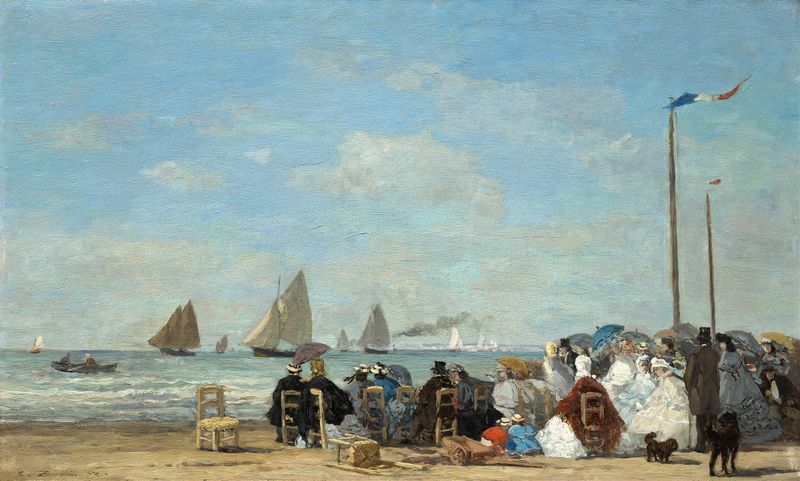
Beach Scene at Trouville
Eugène Boudin

Port aux environs d’Honfleur
Eugène Boudin

Le Faou, un coin du village
Eugène Boudin
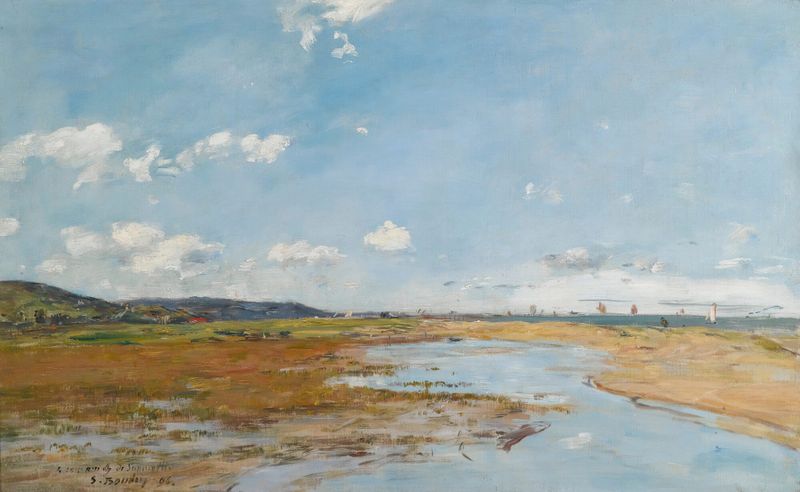
Deauville. Le Rivage
Eugène Boudin
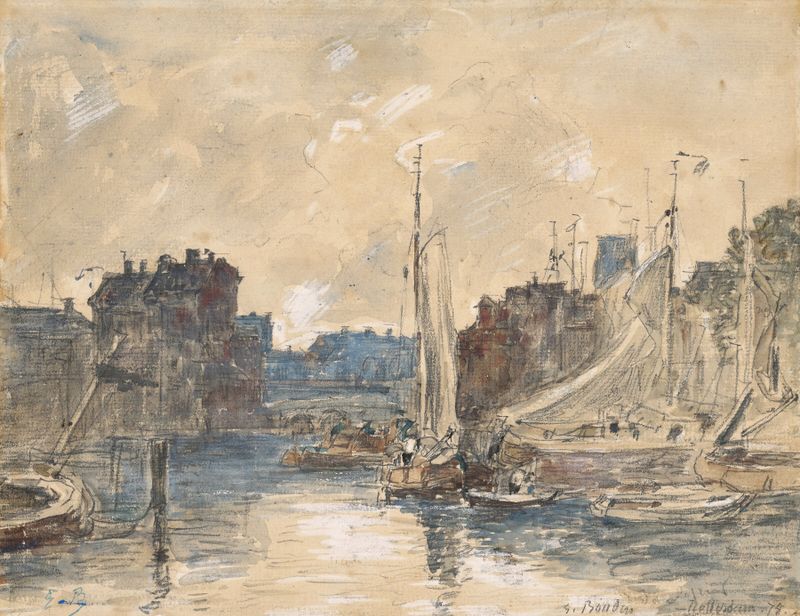
Port de Rotterdam
Eugène Boudin

View of Bordeaux, from the Quai des Chartrons
Eugène Boudin

Trouville, Scène De Plage
Eugène Boudin

Trouville, Le Port
Eugène Boudin





