
Les Bateaux — History & Facts
Can beauty exist without sorrow? In Eugène Boudin's Les Bateaux, the question lingers like the gentle breeze that sweeps across the canvas, inviting contemplation on the duality of existence. Look to the center, where the boats sway gracefully upon the water, their sails billowing against a backdrop of soft, muted pastels. The artist employs delicate brushstrokes to capture the shimmering surface of the sea, reflecting a sky that teeters between the tranquility of dawn and the impending turbulence of a storm. Notice how the interplay of light and shadow creates a sense of movement, drawing the eye from the small, anchored vessels to the horizon, suggesting both calmness and an ever-present uncertainty. Delve deeper, and you’ll find contrasts that resonate with human experience.
The boats, symbols of adventure and exploration, also represent the fragility of life upon the unpredictable sea. The clouds gather ominously at the edges, hinting at the potential for upheaval, while the serene colors evoke a fleeting beauty. Each brushstroke seems to hold a story—a bittersweet narrative that merges joy and melancholy, life and loss. During the time Boudin worked on Les Bateaux, he was immersed in the artistic surge of late 19th-century France, a period marked by the rise of Impressionism.
Painting around the late 1860s to early 1870s in Normandy, he sought to capture the essence of the coastline while establishing connections with nature’s ephemeral beauty. Influenced by the changing world around him, Boudin was a pioneer in outdoor painting, inviting viewers to experience the nuances of fleeting moments in a rapidly evolving society.
More Artworks by Eugène Boudin
Browse all →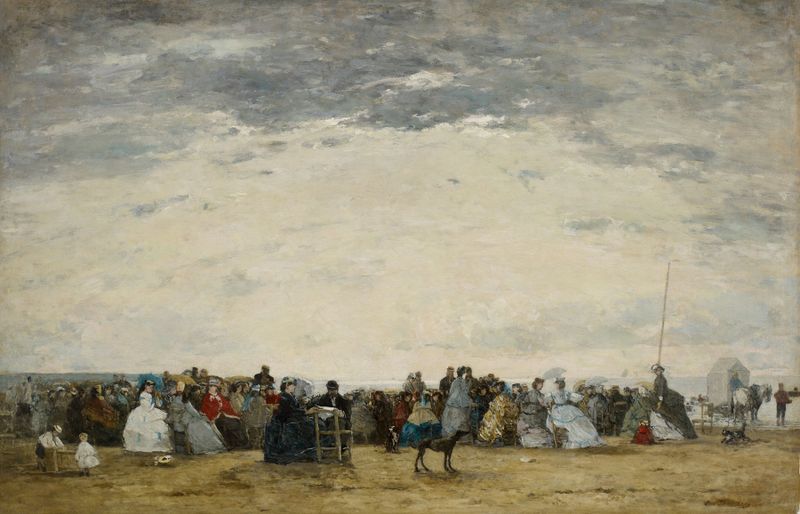
Vacationers on the Beach at Trouville
Eugène Boudin

Washerwoman near Trouville
Eugène Boudin
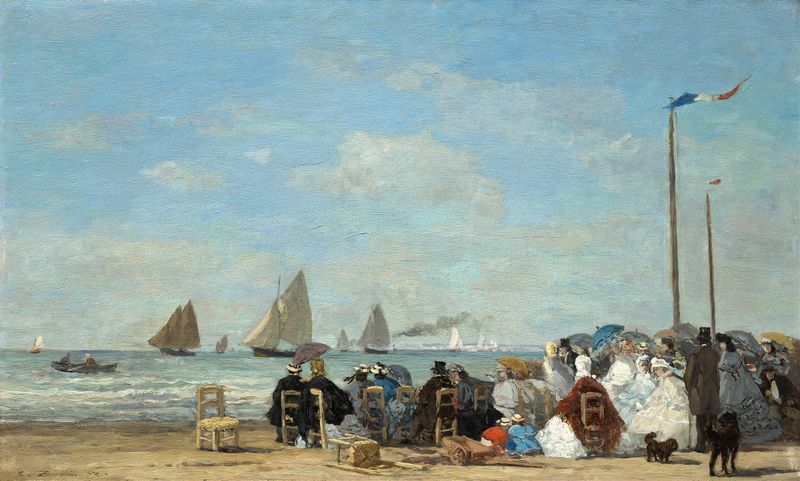
Beach Scene at Trouville
Eugène Boudin

Port aux environs d’Honfleur
Eugène Boudin

Le Faou, un coin du village
Eugène Boudin
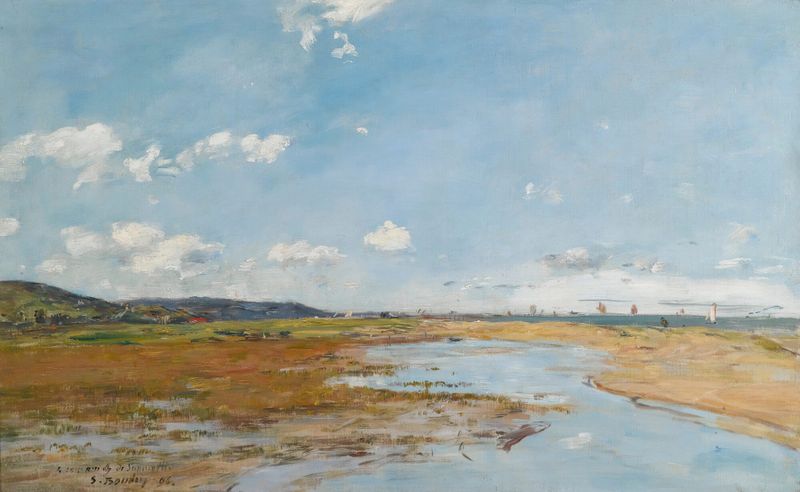
Deauville. Le Rivage
Eugène Boudin
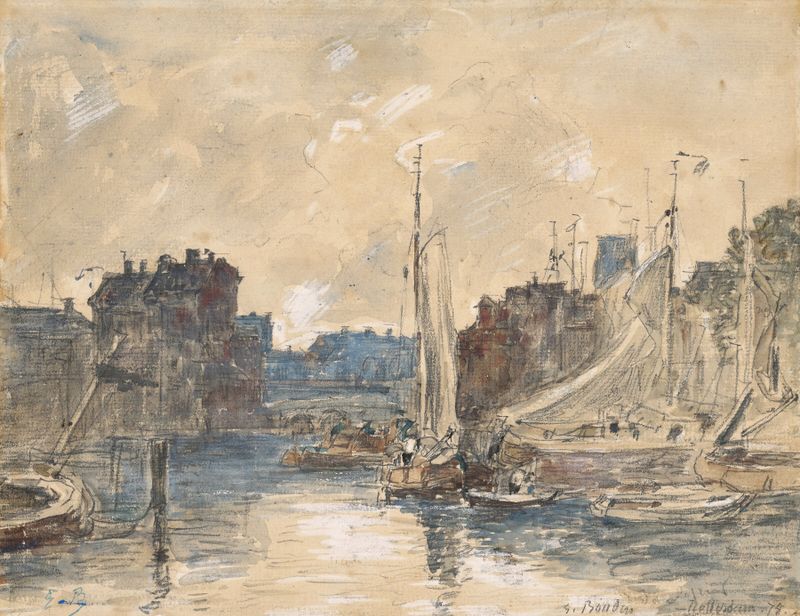
Port de Rotterdam
Eugène Boudin

View of Bordeaux, from the Quai des Chartrons
Eugène Boudin

Trouville, Scène De Plage
Eugène Boudin

Trouville, Le Port
Eugène Boudin





