
Les Bords De La Touques Pendant Les Grandes Marées — History & Facts
In the delicate strokes of Boudin’s work, the passing moments resonate with the quiet ache of loss and nostalgia. Look to the foreground, where gentle waves kiss the sandy shore, their rhythmic motion captured in soft hues of blue and green. The palette is a tender blend of muted earth tones and the iridescence of the sky, evoking the ephemeral beauty of nature. Notice the wisps of clouds hovering above, as if they too are witnesses to the transient scene, while the dim light of an overcast day bathes everything in a somber glow, inviting contemplation. As you explore further, the horizon's line holds deeper significance; it represents the boundary between the known and the unknown, evoking a sense of longing and reflection.
The lonely boat in the distance, partially obscured by mist, suggests both solitude and a search for connection. Each brushstroke seems to whisper stories of the past, while the melding colors evoke the duality of hope and grief – reminders of what is fleeting and cherished. In 1895, Boudin painted this masterpiece in France during a period of personal sadness and artistic transition. Though he was gaining recognition, he grappled with the realities of aging and the changing art world around him.
The impressionistic style was evolving, and Boudin remained committed to capturing the ephemeral beauty of daily life, often at the coast, where he found solace in the waves, forever marked by the passage of time.
More Artworks by Eugène Boudin
Browse all →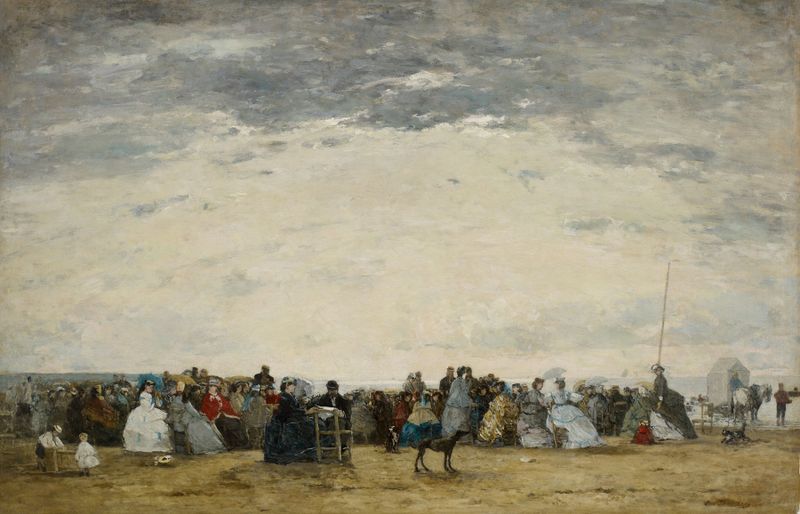
Vacationers on the Beach at Trouville
Eugène Boudin

Washerwoman near Trouville
Eugène Boudin
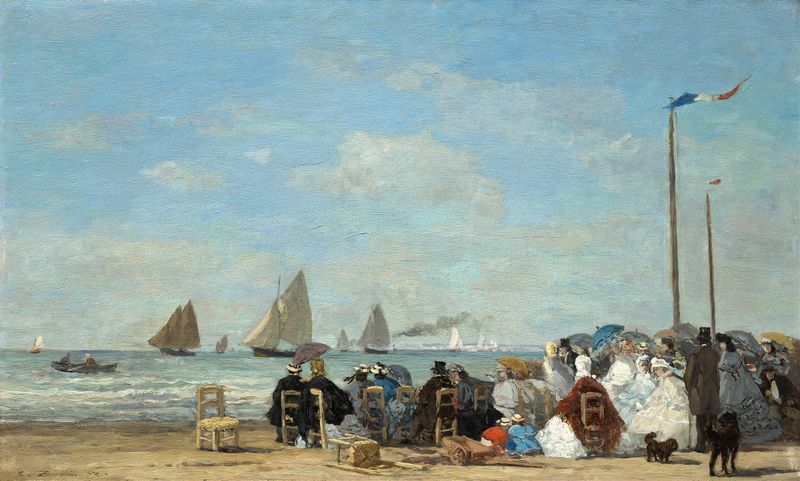
Beach Scene at Trouville
Eugène Boudin

Port aux environs d’Honfleur
Eugène Boudin

Le Faou, un coin du village
Eugène Boudin
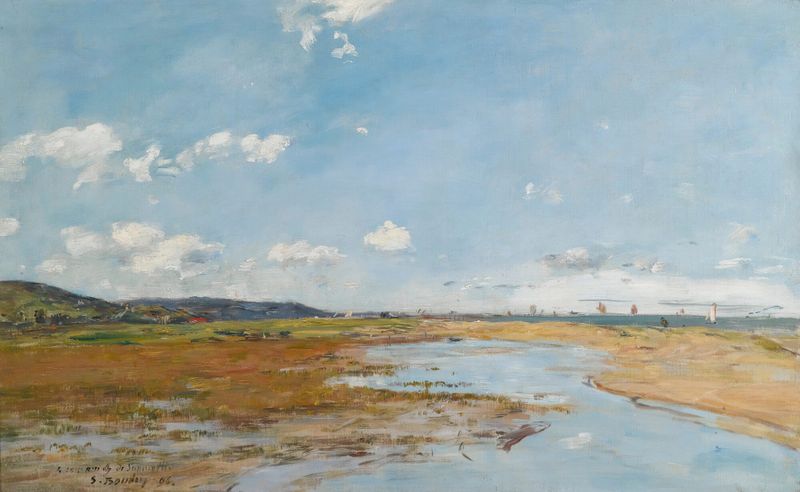
Deauville. Le Rivage
Eugène Boudin
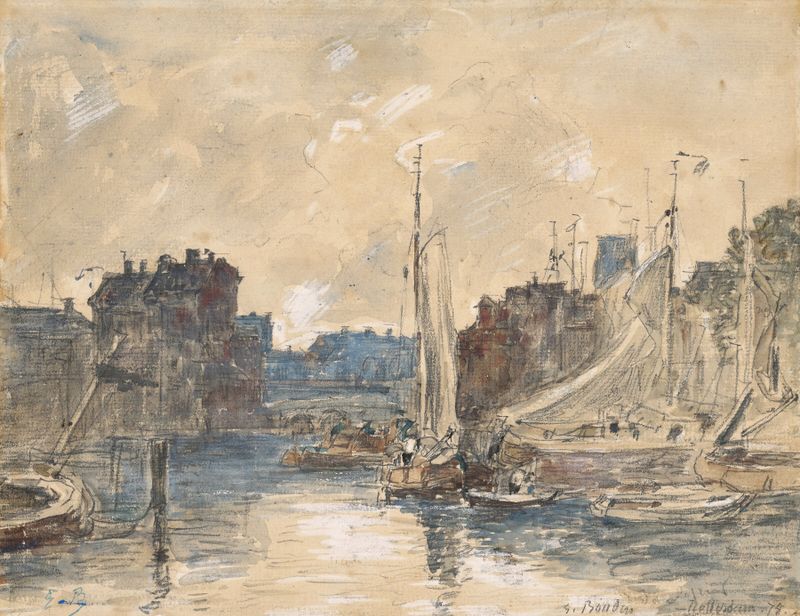
Port de Rotterdam
Eugène Boudin

View of Bordeaux, from the Quai des Chartrons
Eugène Boudin

Trouville, Scène De Plage
Eugène Boudin

Trouville, Le Port
Eugène Boudin





