
Les canots sur la plage à Trouville — History & Facts
The act of reflection transforms the ordinary into something extraordinary, inviting us to linger in the moment. How do we capture the essence of fleeting beauty and the passage of time? Look to the foreground, where delicate strokes of white and blue merge to depict the shimmering water lapping against the sandy shore. The boats, painted with a gentle hand, rest serenely, their colors muted yet evocative, quietly suggesting stories of distant travels.
Notice how the light dances across the surface of the sea, casting mesmerizing reflections that signal the presence of life and movement beneath the stillness. Beyond the boats, the shoreline reveals figures moving about — some engaged in conversation, others absorbed in their own reveries. This grouping contrasts the tranquility of the anchored boats, evoking a sense of connection amidst solitude. Each element speaks of leisure and the quiet joy found in nature, while the distant horizon hints at limitless possibilities.
The interplay of shadow and sunlight heightens the emotional landscape, capturing the essence of a day spent by the sea. During the time Les canots sur la plage à Trouville was created, Boudin was solidifying his reputation as a master of plein air painting, embracing the changing light and atmospheric effects of the French coast. Living in Normandy, he often depicted this very landscape, drawing inspiration from both the beauty of his surroundings and the burgeoning Impressionist movement, of which he would become a pivotal figure. This period marked a turning point for many artists, as they began to explore the interplay between light, color, and the human experience in their work.
More Artworks by Eugène Boudin
Browse all →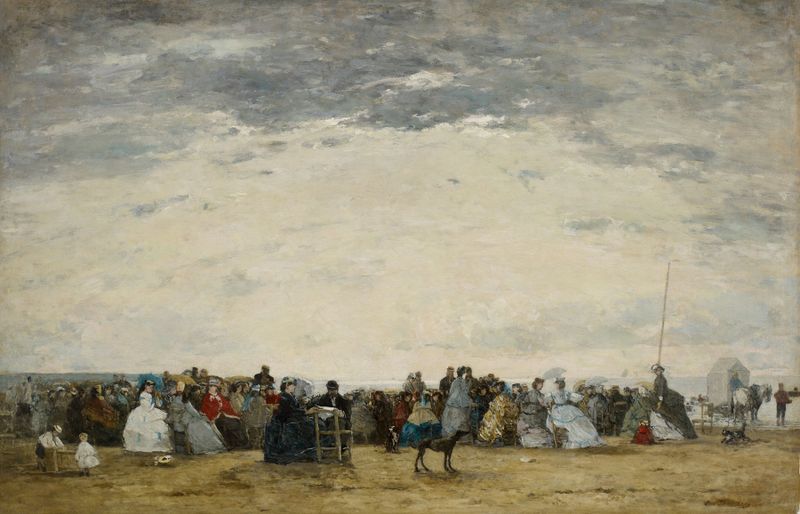
Vacationers on the Beach at Trouville
Eugène Boudin

Washerwoman near Trouville
Eugène Boudin
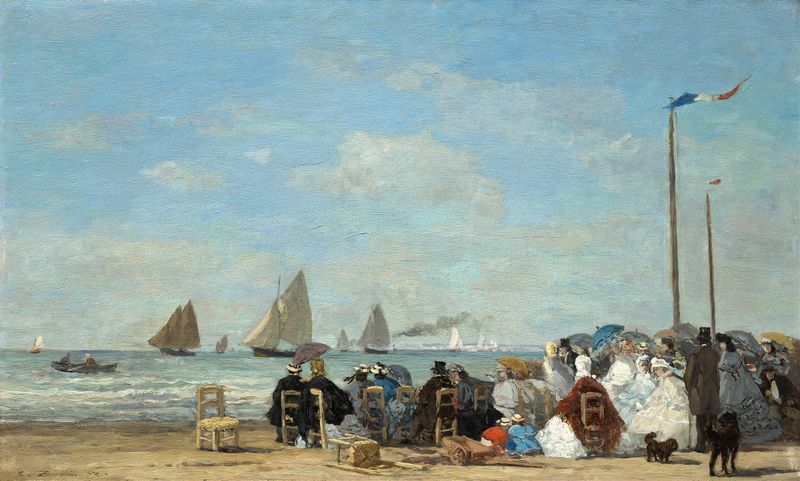
Beach Scene at Trouville
Eugène Boudin

Port aux environs d’Honfleur
Eugène Boudin

Le Faou, un coin du village
Eugène Boudin
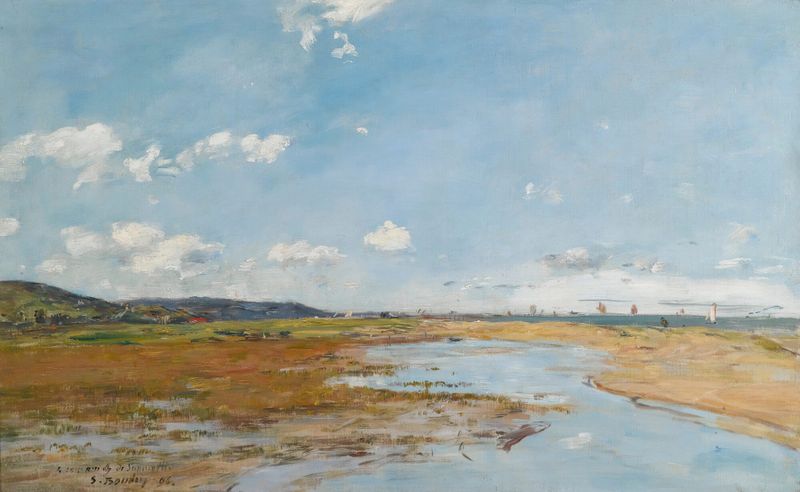
Deauville. Le Rivage
Eugène Boudin
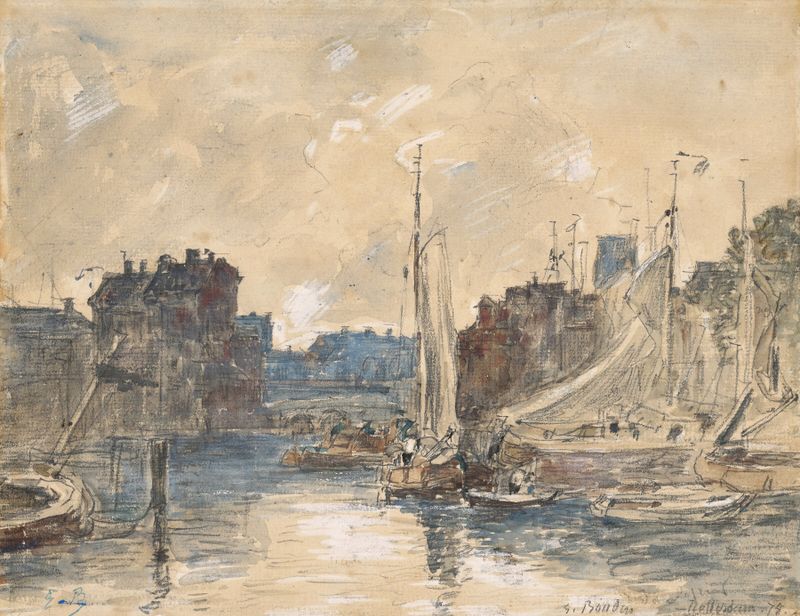
Port de Rotterdam
Eugène Boudin

View of Bordeaux, from the Quai des Chartrons
Eugène Boudin

Trouville, Scène De Plage
Eugène Boudin

Trouville, Le Port
Eugène Boudin





