
Les Cylindres colorés — History & Facts
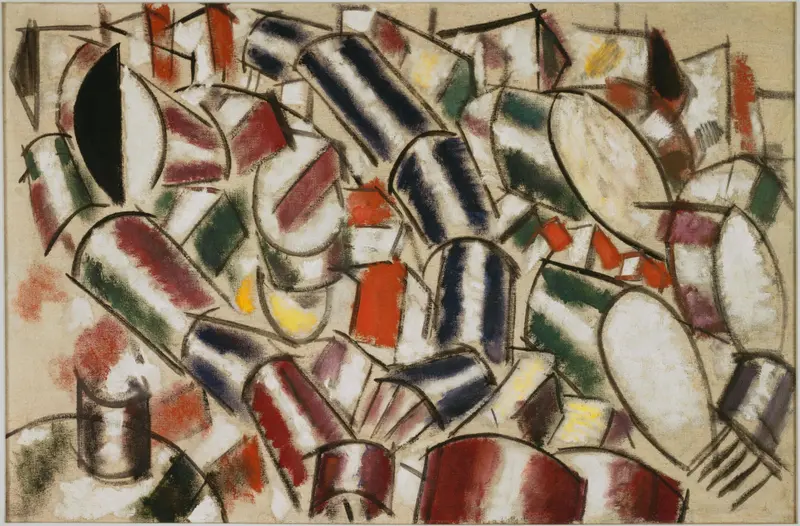
What first catches the eye in Les Cylindres colorés is the sense of controlled chaos: a tangle of metallic cylinders, each rendered with crisp black outlines and a palette that swings from cool lavenders and silvers to sharp, almost industrial yellows and reds. The forms overlap and collide, their edges slicing through space, yet the overall effect is not confusion but a kind of mechanical rhythm. Léger guides the viewer’s gaze with deliberate contrasts—here a flash of red, there a gleam of yellow—while the shadows and highlights on each cylinder give them a weight and volume that feels almost sculptural.
The composition pulses with energy, as if these forms might at any moment begin to rotate or assemble themselves into some new machine. Painted in 1918, this work stands at the crossroads of a world transformed by war and industry. Léger, a central figure in the Cubist movement, was fascinated by the visual language of the modern city—its pipes, gears, and architectural fragments. In this period, artists like Léger broke down objects into basic shapes, seeking a new order in the chaos of the twentieth century.
The title, Les Cylindres colorés, hints at both the literal subject and the spirit of the age: color and form as building blocks of a new visual reality. History has kept few traces of this particular canvas’s early journey, but its bold geometry and industrial palette place it firmly in the feverish aftermath of the First World War, when artists sought to rebuild the world through art. Let your eye wander through its maze of forms and imagine the clangor and promise of the machine age.
More Artworks by Fernand Léger

The Tugboat Bridge
Fernand Léger
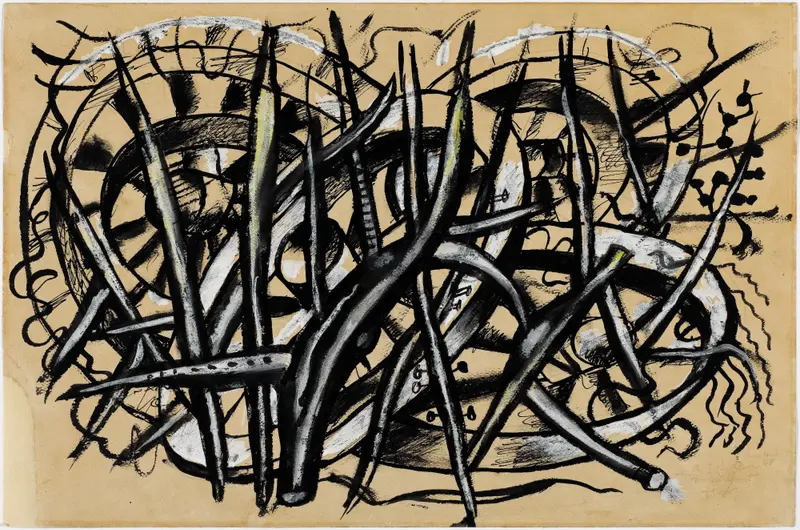
The Wheels
Fernand Léger

Le Cirque Médrano
Fernand Léger
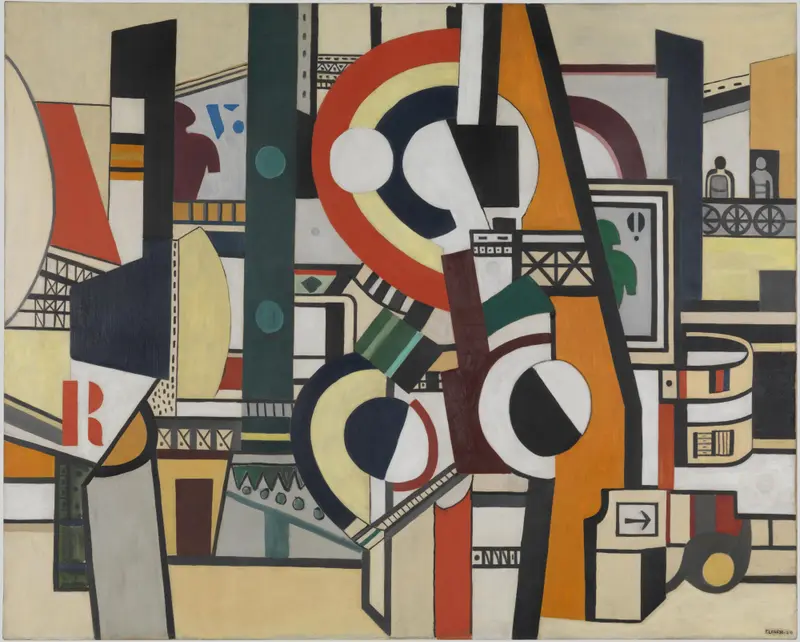
The Disks in the City
Fernand Léger
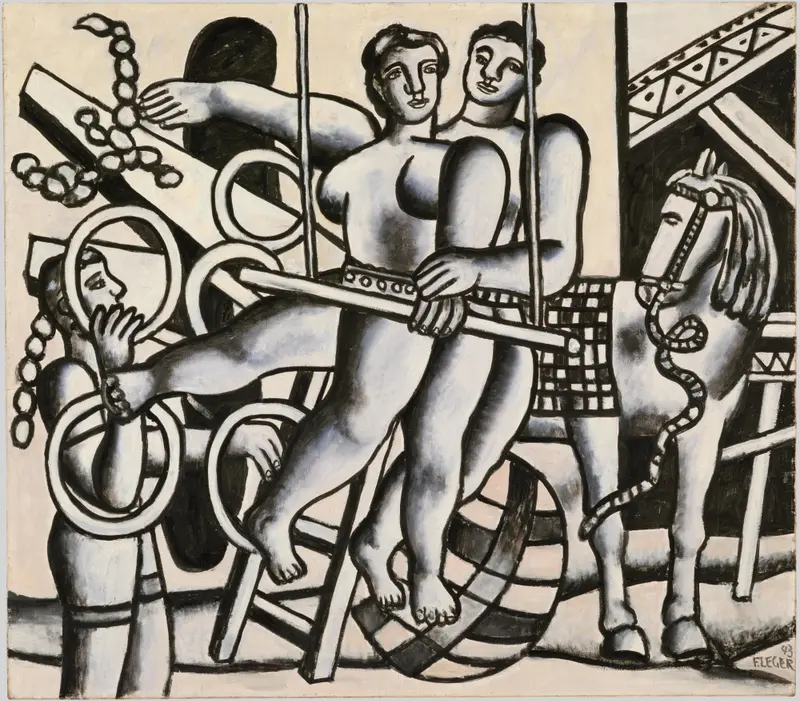
Le Jongleur et les acrobates
Fernand Léger
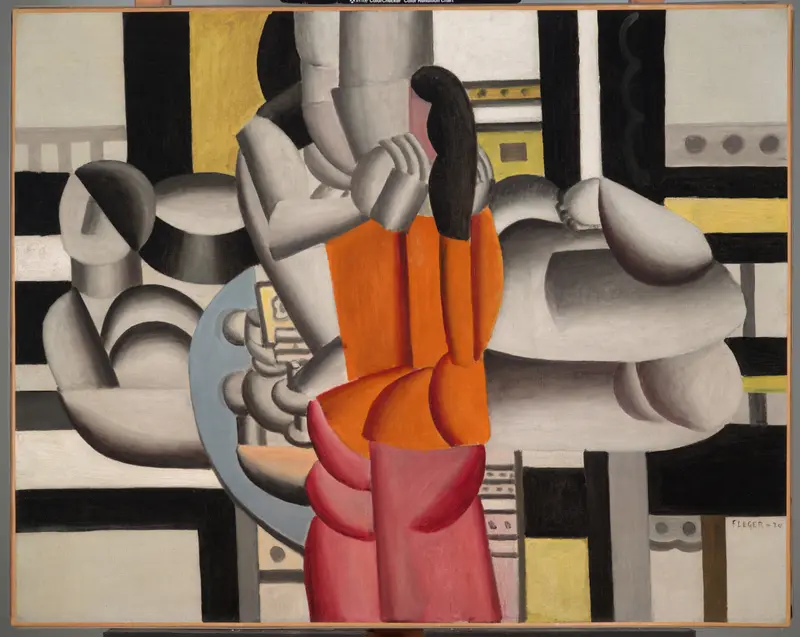
Three Women and Still Life (Déjeuner)
Fernand Léger

Reading
Fernand Léger
Femme couchée
Fernand Léger
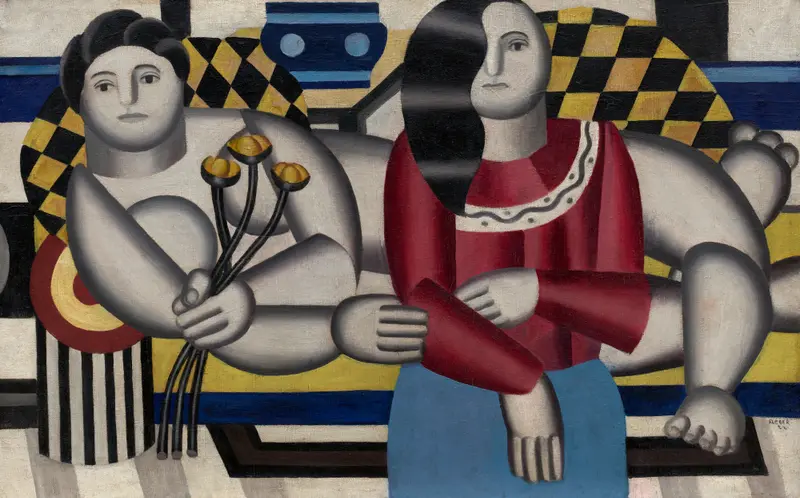
Woman holding flowers
Fernand Léger
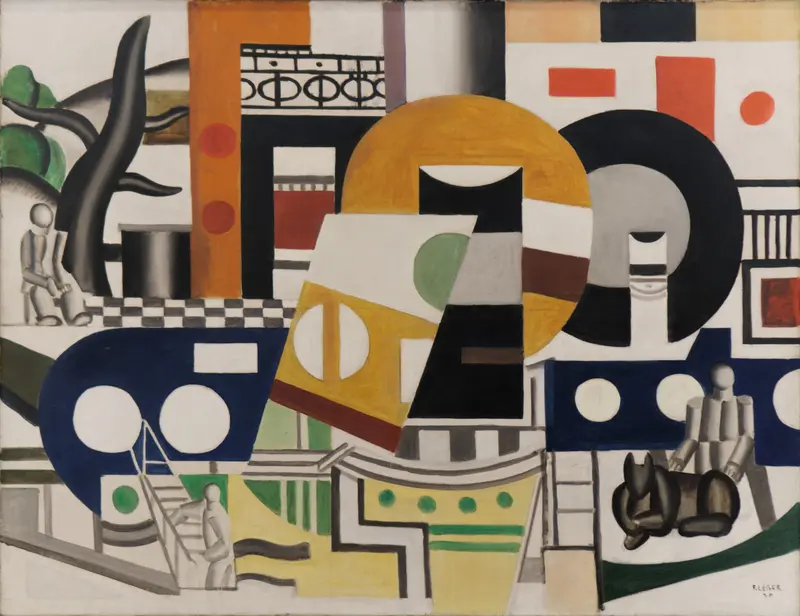
The Tug
Fernand Léger





