Les Deux sphères de couleur — History & Facts
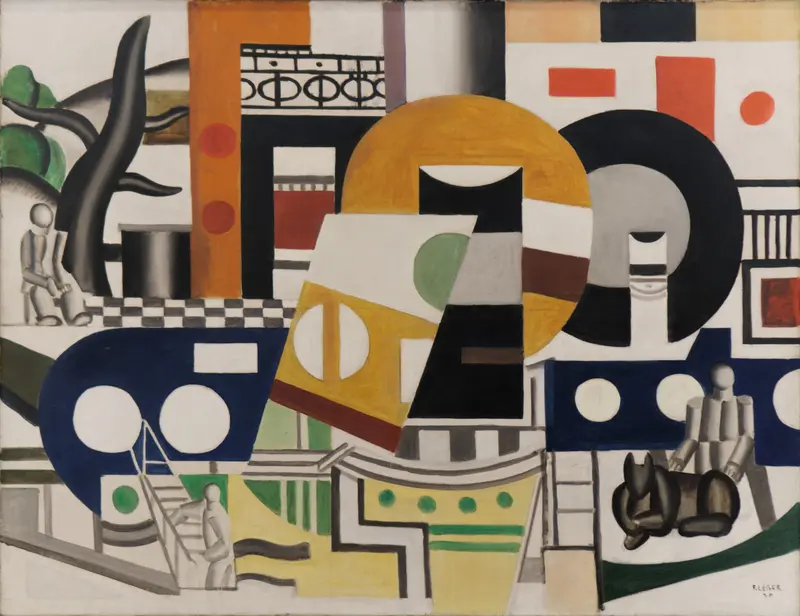
What first catches the eye in Les Deux sphères de couleur is the sense of machinery and play, as if the painting were a stage set for a drama between forms. Two boldly colored spheres—one ringed with yellow and green, the other patterned in red and turquoise—anchor the composition, floating against a backdrop of black-and-white checks that suggest a distorted chessboard or the tiled floor of a laboratory. Black, looping lines snake across the surface, tying the spheres together like electrical cords or the tendrils of some mechanical vine.
The palette is crisp and deliberate, with the deep blue border pressing the viewer’s gaze inward, heightening the sensation of peering into a controlled experiment or a futuristic tableau. The visual tension between the geometric order of the background and the organic, restless movement of the lines keeps the eye in constant motion. Painted in 1928, this work belongs to a world fascinated by the machine age and the promise of modernity. Fernand Léger, a leading figure of early twentieth-century abstraction, often explored the intersection of technology and daily life, drawing inspiration from the forms and rhythms of industrial society.
In the late 1920s, artists like Léger were breaking away from traditional representation, embracing bold color, mechanical motifs, and a kind of playful rigor that echoed the optimism and anxiety of their time. The painting’s presence in a Sotheby’s auction catalogue hints at its journey through private hands rather than public institutions, a reminder that history has kept few traces of some works beyond their physical survival. The energy of the era—restless, inventive, and charged with possibility—still pulses through these painted forms, inviting the viewer to look again and imagine the world they were made for.
More Artworks by Fernand Léger

The Tugboat Bridge
Fernand Léger
The Wheels
Fernand Léger

Le Cirque Médrano
Fernand Léger
The Disks in the City
Fernand Léger
Le Jongleur et les acrobates
Fernand Léger
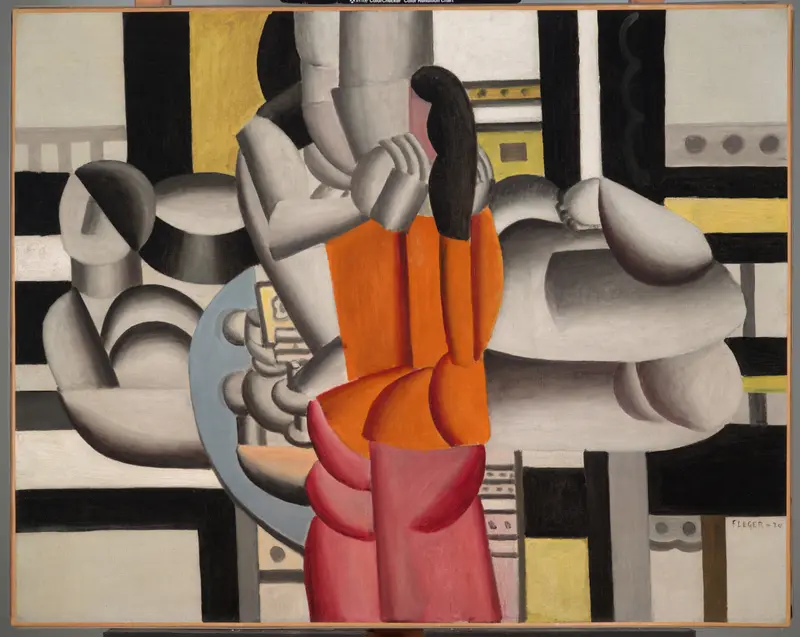
Three Women and Still Life (Déjeuner)
Fernand Léger
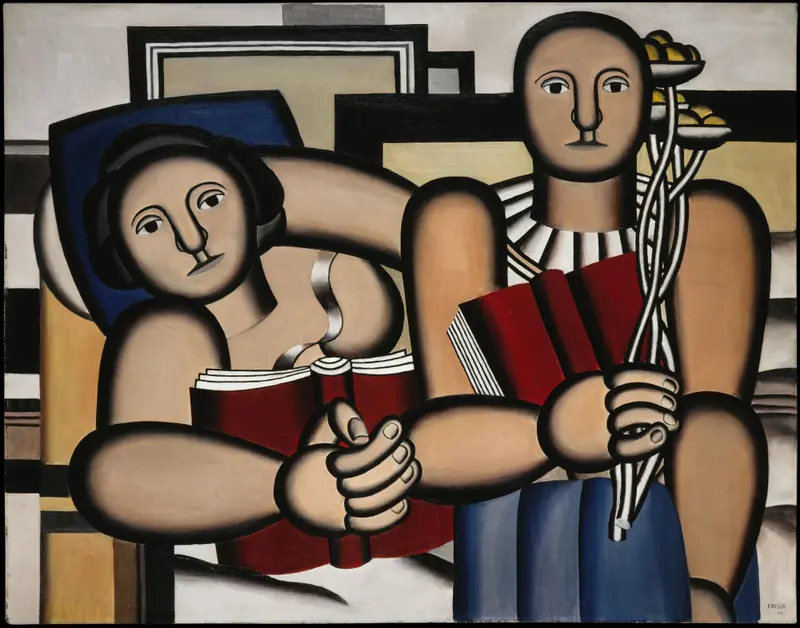
Reading
Fernand Léger
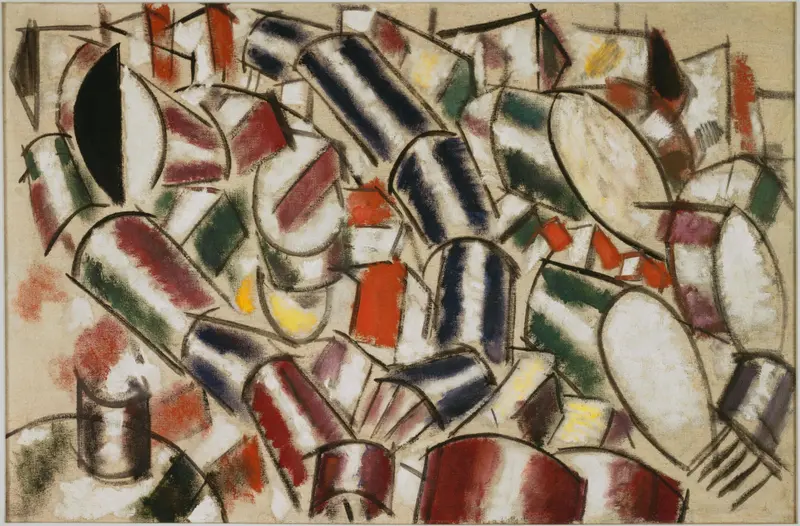
Femme couchée
Fernand Léger
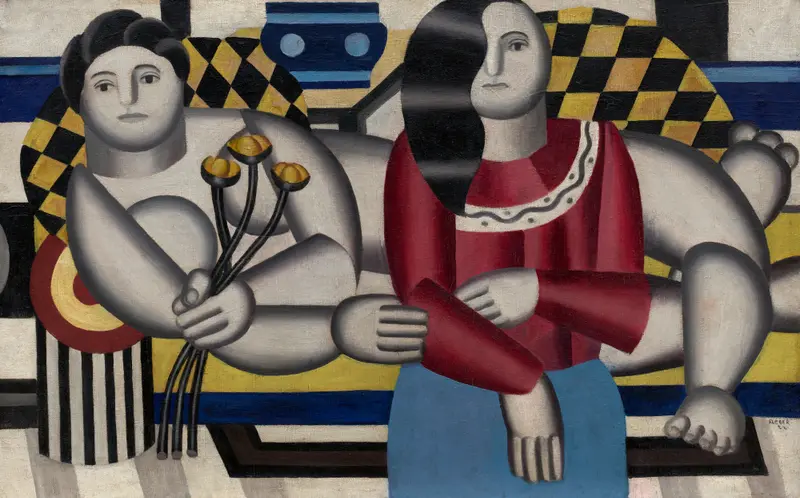
Woman holding flowers
Fernand Léger
The Tug
Fernand Léger