
Les Fruits — History & Facts
A single leaf, rendered with the precision of a machine part, seems almost to float against a backdrop of bold, interlocking shapes—this is where the eye lands first in Les Fruits by Fernand Léger. The painting’s geometry is not a cold abstraction, but a stage for a quiet drama: organic forms—fruit, leaves, stems—are caught in a web of color blocks and lines, their natural curves set off by the strict discipline of red, yellow, black, and white. Léger’s palette is deliberate, the yellow and red verticals calling out like signals, while the black bars slice through the composition, both dividing and connecting.
The fruit, simplified to near abstraction, still holds the memory of its roundness and weight, while the curling vine at the bottom right hints at movement, a slow growth or a gentle unfurling. Light here is not a source but a tool, flattening some forms, sculpting others, and always directing the gaze from one element to the next. Painted in 1927, Les Fruits belongs to a world enthralled by the promise and anxiety of modernity. In the Paris of the 1920s, artists like Léger were fascinated by the machine age, translating its rhythms and forms into the language of painting.
Still life, once a genre for displaying abundance or vanitas, becomes in Léger’s hands a meditation on the relationship between nature and industry—organic shapes are stylized, mechanized, and set into a grid. Such works were rarely painted for private homes; they spoke to a new audience, one eager to see the future in art. Though little is recorded about the specific journey of this canvas, its date and signature place it firmly within Léger’s mature period, when he was refining his vision of a mechanized harmony.
The painting invites us to look again, to find the pulse of life within the order of lines.
More Artworks by Fernand Léger

The Tugboat Bridge
Fernand Léger
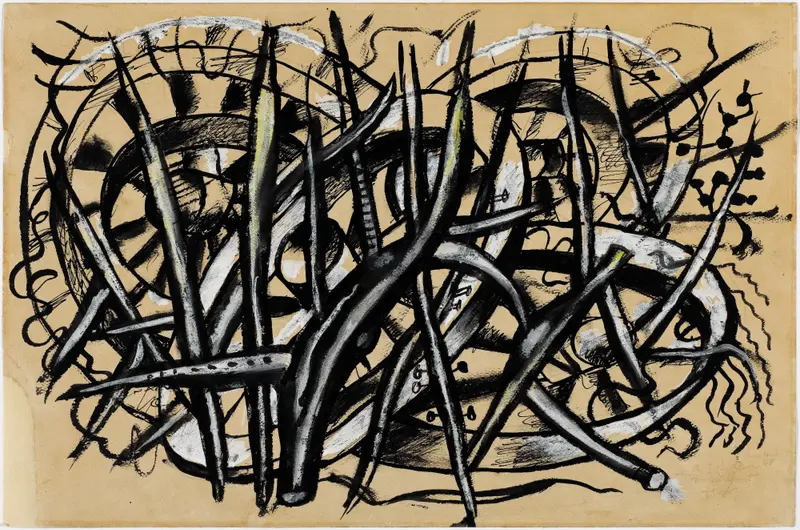
The Wheels
Fernand Léger

Le Cirque Médrano
Fernand Léger
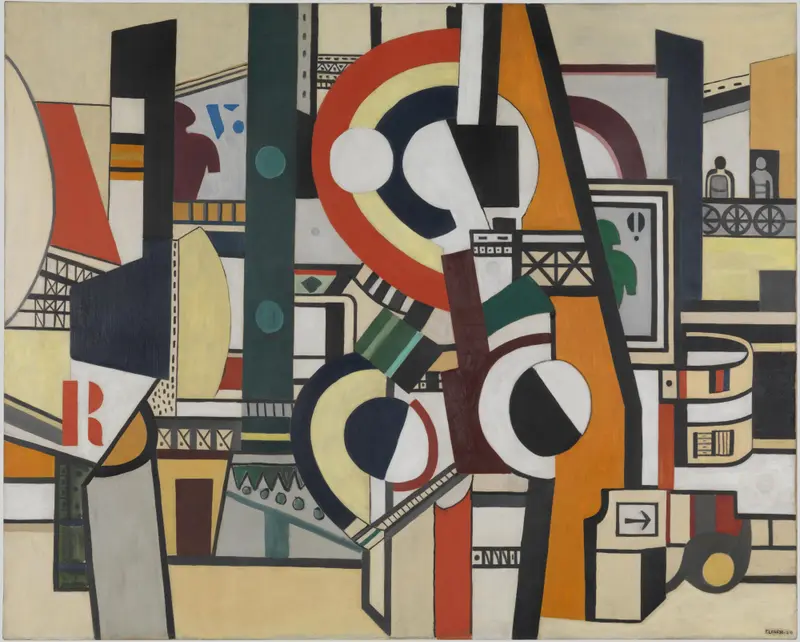
The Disks in the City
Fernand Léger
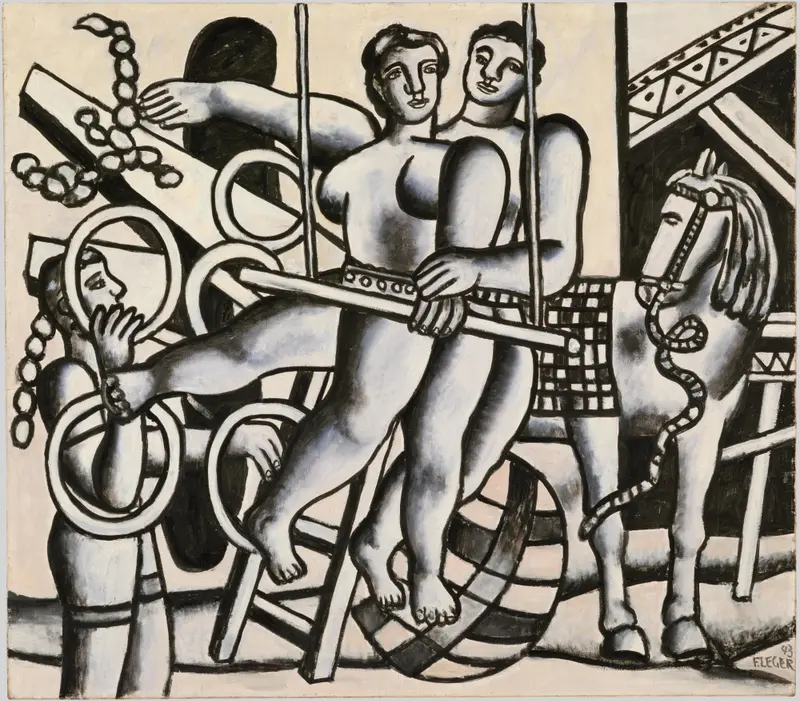
Le Jongleur et les acrobates
Fernand Léger
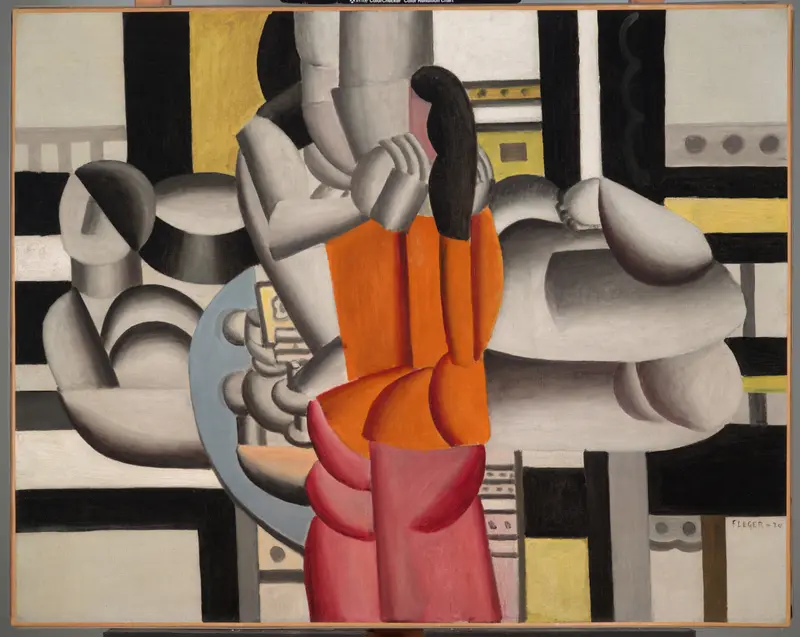
Three Women and Still Life (Déjeuner)
Fernand Léger
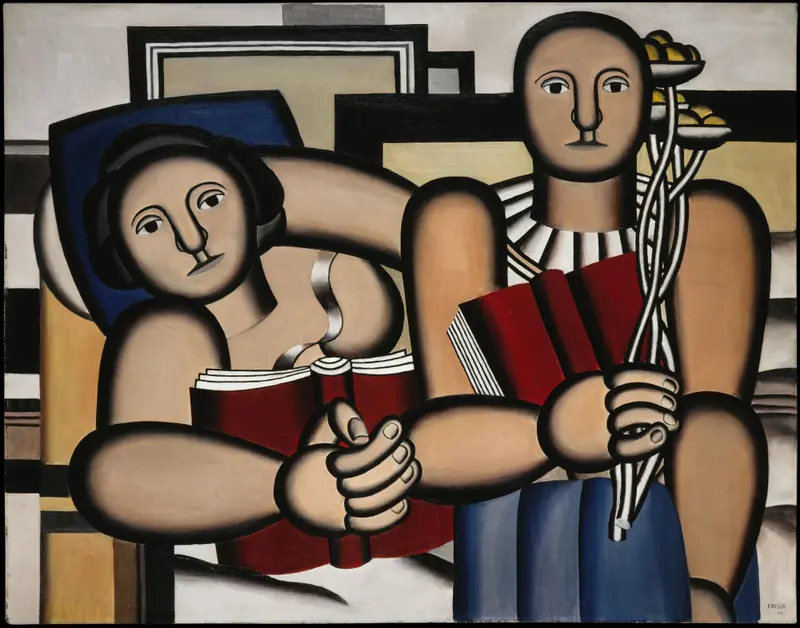
Reading
Fernand Léger
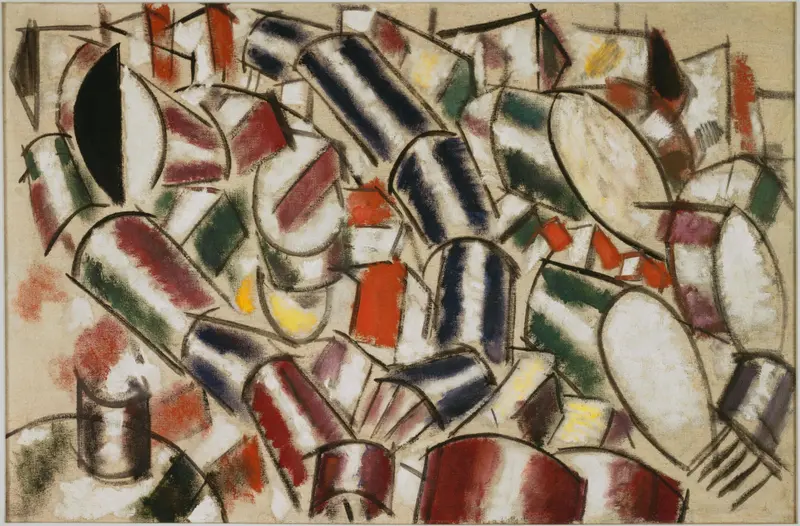
Femme couchée
Fernand Léger
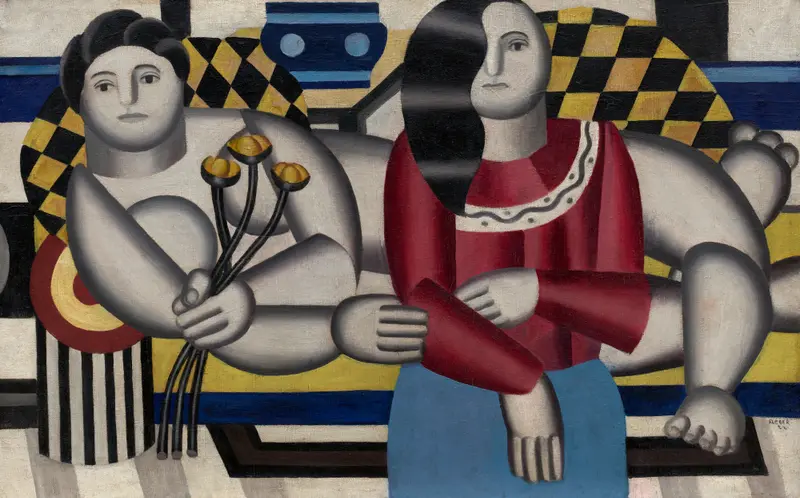
Woman holding flowers
Fernand Léger
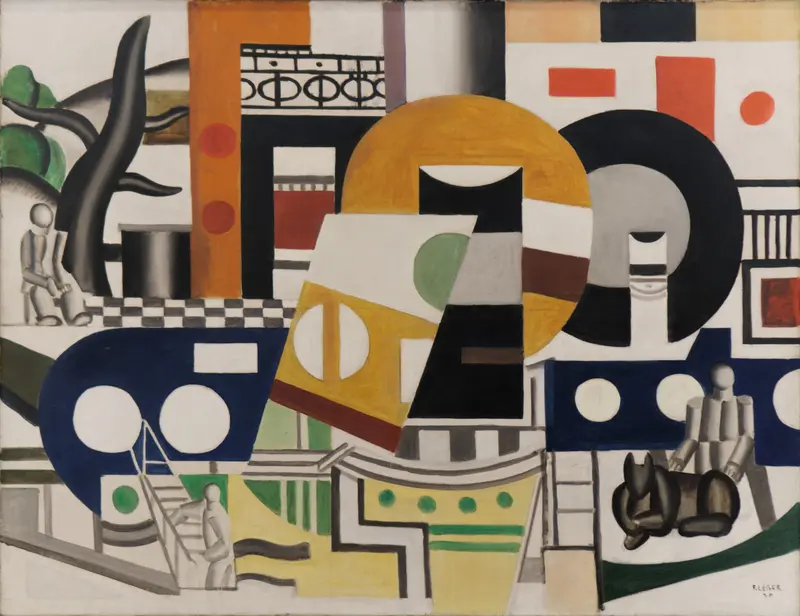
The Tug
Fernand Léger





