
L’hôtel des Haricots (prison de la Garde Nationale), quai Saint- Bernard. — History & Facts
Could beauty survive in a century of chaos? Within the confines of L’hôtel des Haricots, a delicate balance of ecstasy and despair unfolds, capturing a moment suspended in time amid societal tumult. Look closely at the figures crowded together in the dim light, their eyes reflecting a blend of hope and resignation. The use of chiaroscuro draws your gaze to the central figure, whose outstretched arm seems to beckon for freedom while their weary posture conveys defeat. Notice how the muted colors of the prison walls contrast sharply with the vibrancy of the clothing worn by the prisoners, signaling both individuality and the weight of their shared fate.
This interplay of light and shadow enhances the emotional depth, creating a sense of claustrophobia that envelops the viewer. Beyond the immediate scene lies a poignant commentary on human resilience. The juxtaposition of the lively gestures among the captives against the oppressive environment suggests an enduring spirit that cannot be easily quelled. Furthermore, the attention to the details of their expressions reveals a spectrum of emotions—fear, longing, and an underlying ecstasy of solidarity in adversity.
Each face tells a story, inviting reflection on the fragility of liberty and the strength found in collective experience. In 1829, Auguste-Sébastien Bénard painted this work during a time of political unrest in France, right on the heels of the July Revolution. As the nation grappled with the struggles for freedom and equality, the artist found himself deeply engaged in the tumultuous world of art and politics. His exploration of social issues through vivid scenes like this one would come to define his legacy, shedding light on the human spirit's capacity for hope even amidst chaos.
More Artworks by Auguste-Sébastien Bénard
Browse all →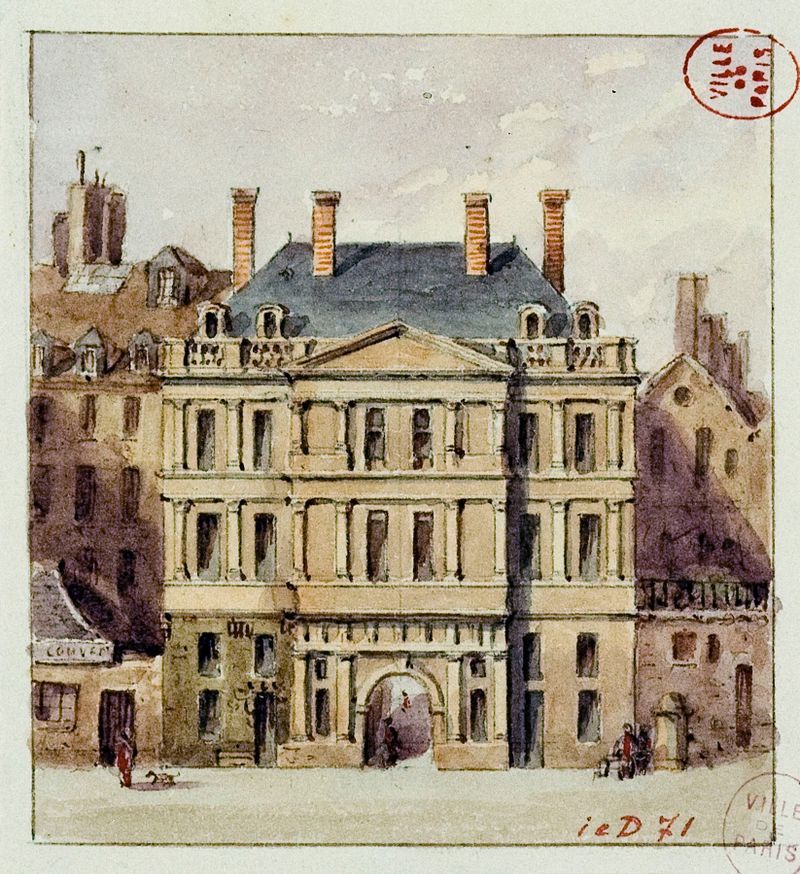
Cour de la Sainte Chapelle.
Auguste-Sébastien Bénard
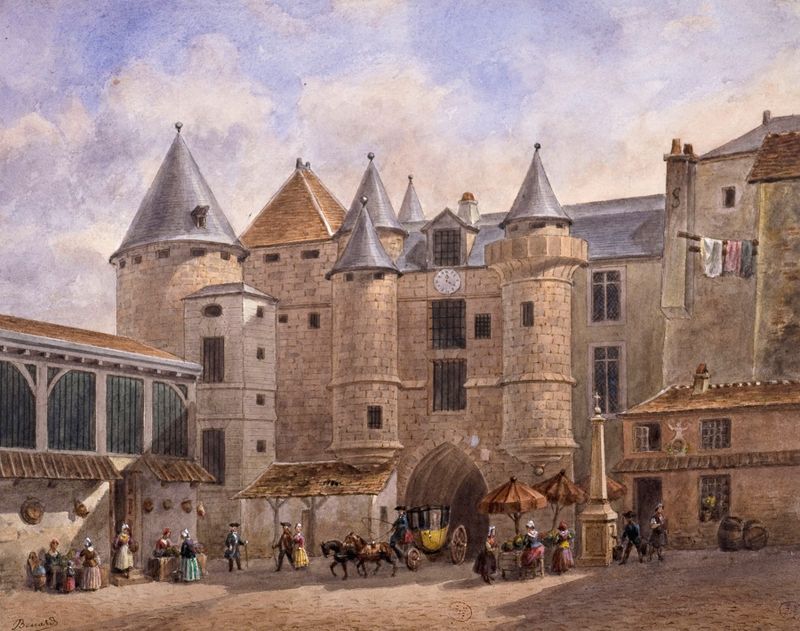
Le Grand Châtelet du XVIIIème siècle.
Auguste-Sébastien Bénard

Place de l’Hôtel de Ville.
Auguste-Sébastien Bénard

Salle souterraine du Palais de Justice.
Auguste-Sébastien Bénard

Voûtes du quai de Gesvres
Auguste-Sébastien Bénard

Monument expiatoire élevé à la mémoire du duc de Berry, à l’emplacement de l’ancien Opéra
Auguste-Sébastien Bénard
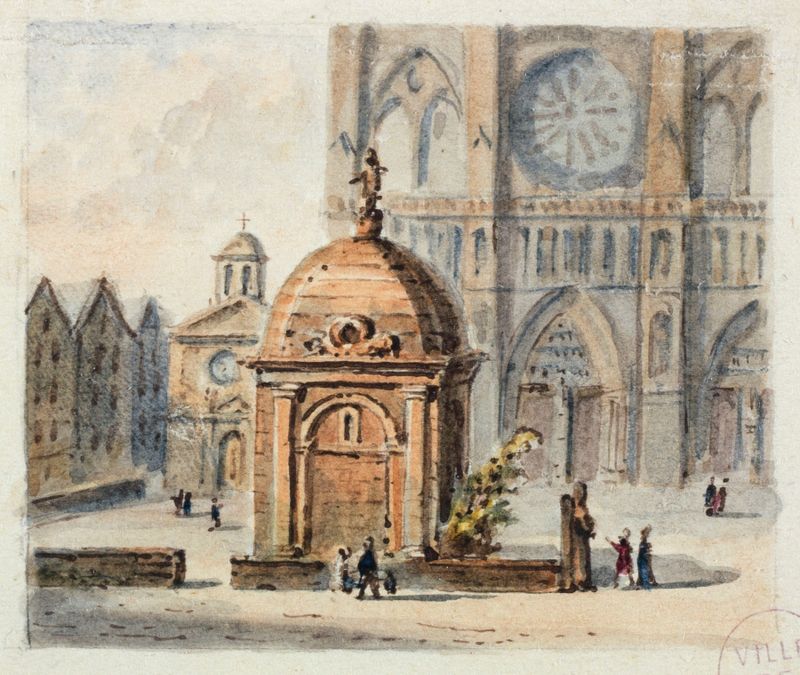
Le parvis de Notre-Dame de Paris
Auguste-Sébastien Bénard

Rue des chantres (entre le quai aux fleurs et la rue Chanoinesse).
Auguste-Sébastien Bénard

L’entrée de l’ancienne forteresse du Grand Châtelet, un jour de Carnaval
Auguste-Sébastien Bénard
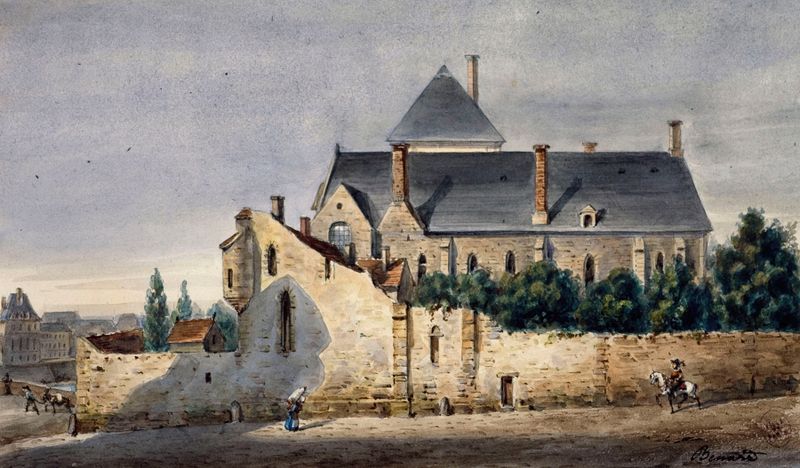
Les restes des bâtiments de l’hôtel du Petit Bourbon.
Auguste-Sébastien Bénard
More Historical Art
Browse all →
The Night Watch Militia Company of District II under the Command of Captain Frans Banninck Cocq
Rembrandt van Rijn

Lincoln Memorial
Henry Bacon

The Third of May 1808
Francisco de Goya

Isaac and Rebecca, Known as ‘The Jewish Bride’
Rembrandt van Rijn

The Charge of the Mamelukes (1814)
Francisco de Goya

De vier ruiters van de apocalyps
Albrecht Dürer