
Linlithgow Palace — History & Facts
It holds the weight of history, echoing stories of power, vulnerability, and the violence of time. In the shadows of its grandeur, beauty and decay dance closely, inviting us to ponder what lies beneath the surface. Look to the left at the crumbling stone walls of Linlithgow Palace, where light plays a gentle game with the contours of the ancient structure. The soft haziness of the sky contrasts with the sharp lines of the architecture, drawing the eye to the delicate balance between nature's reclaiming touch and the human endeavor to create lasting beauty.
The rich palette of greens and browns evokes both life and decay, encapsulating the essence of a place once vibrant with purpose, now rendered silent. Beneath the serene surface lurks an unsettling tension; the palace, once a symbol of royalty and strength, is now a reminder of fallen power and neglect. The juxtaposition of the idyllic landscape against the ruins speaks of violent histories and forgotten lives. Each craggy stone seems to whisper secrets of battles fought and promises broken, suggesting that even the most regal of structures cannot escape the ravages of time and human folly. John Varley painted this scene during a period of profound change in the early 19th century, as the Romantic movement blossomed.
He was captivated by the ruins of Britain, reflecting a fascination with the sublime and the melancholic. This piece emerged from a time when artists began to explore the interplay between nature and man, grappling with the remnants of a glorious past amidst the rising tide of industrialization.
More Artworks by John Varley
Browse all →
Knaresborough on the River Nidd, Yorkshire
John Varley

Kirkstall Abbey near Leeds
John Varley

Bamborough Castle from the Northeast, with Holy Island in the Distance, Northumberland
John Varley
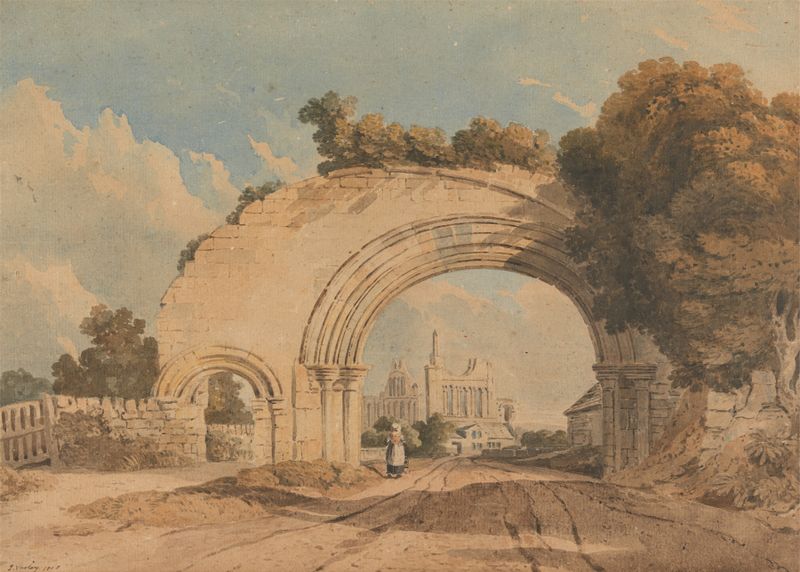
Byland Abbey, Yorkshire
John Varley

View of Conwy Castle, North Wales
John Varley
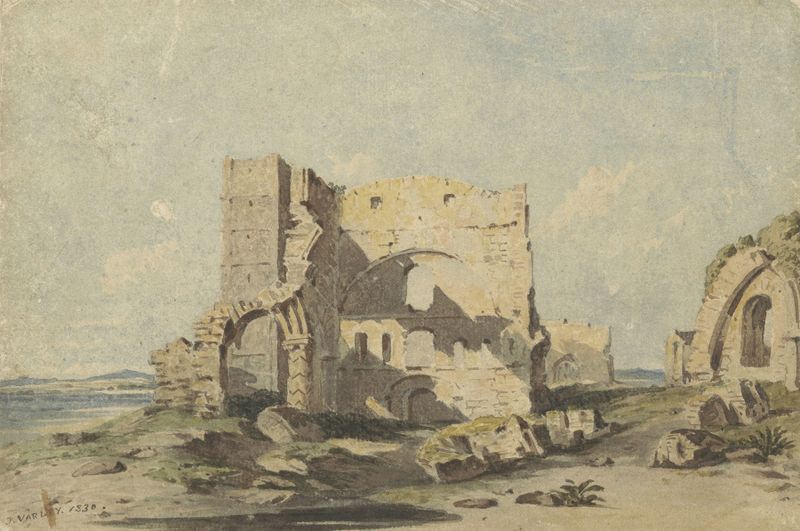
Lindisfarne Abbey op Holy Island, Northumberland
John Varley
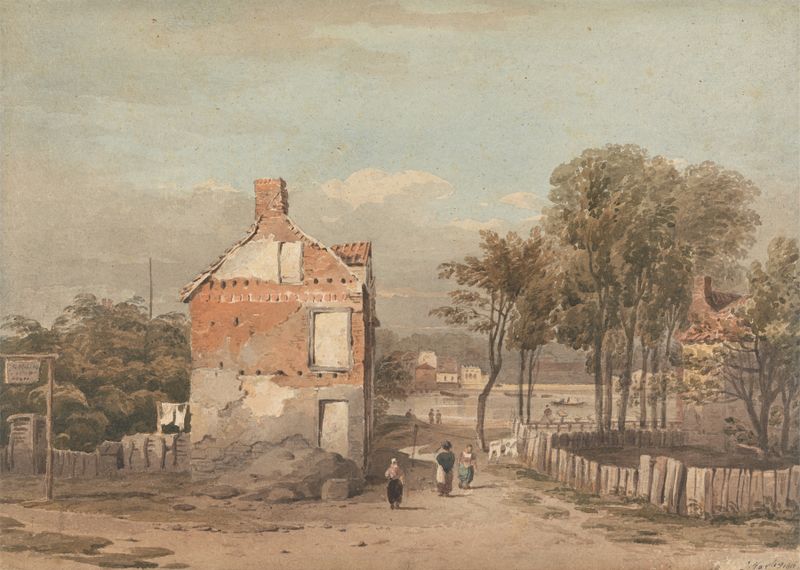
The Thames Near the Penitentiary, Millbank, London
John Varley

Vale of Clwyd, Wales
John Varley

A View along the Thames towards Chelsea Old Church
John Varley

The Thames at Windsor
John Varley
More Architecture Art
Browse all →
The statue of Liberty
Frédéric Auguste Bartholdi

View of Houses in Delft, Known as ‘The Little Street’
Johannes Vermeer

View of Houses in Delft, Known as ‘The Little Street’
Johannes Vermeer

The Cathedral in Rouen. The portal, Grey Weather
Claude Monet

The yellow house
Vincent van Gogh

The Church in Auvers-sur-Oise, View from the Chevet
Vincent van Gogh