
Little Owl and Scops Owl. — History & Facts
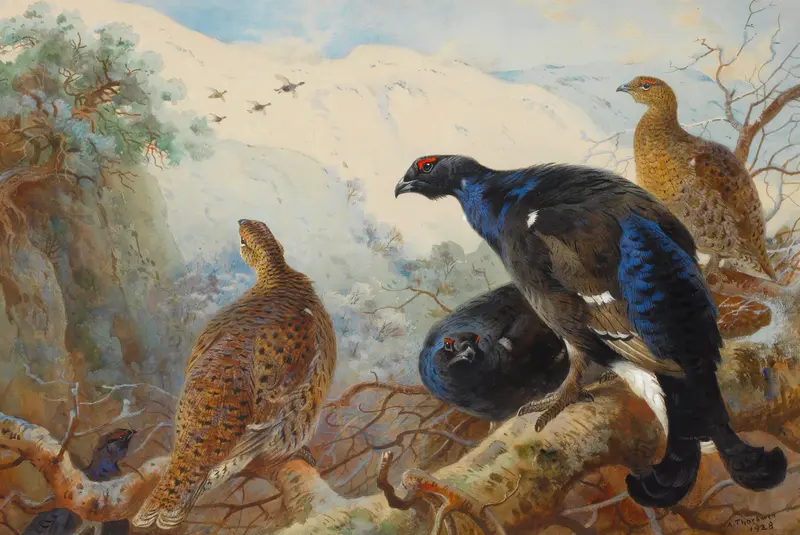
What first arrests the eye in Little Owl and Scops Owl is the intense, almost human alertness in the gaze of each bird. The larger owl, round and sturdy, faces forward with a look of wary confidence, its talons gripping the branch with quiet authority. Beside it, the slighter Scops owl seems more elusive, angled partly away, its feathered tufts raised like attentive ears.
The cool, clear light falls gently across their plumage, picking out the intricate patterns in watercolor and gouache—each feather rendered with a precision that rewards close inspection. In the background, a soft haze and a distant skein of birds suggest the hush of early morning or evening, a moment suspended between vigilance and calm. Painted in 1925, this work belongs to a tradition of naturalist illustration that flourished in Britain at the turn of the twentieth century, when artists like Archibald Thorburn brought the wild world into drawing rooms and libraries. Such images were prized by collectors, scientists, and bird enthusiasts alike, valued both for their beauty and their accuracy.
Thorburn’s reputation was built on his ability to combine exact observation with a sense of living presence, and here, even without knowing the painting’s full journey, we glimpse the spirit of an era fascinated by nature’s detail and variety. The careful brushwork and luminous washes invite the viewer to linger, to imagine the stillness of the branch and the sudden, silent flight that might follow.
More Artworks by Archibald Thorburn

The Watchful Hinds
Archibald Thorburn
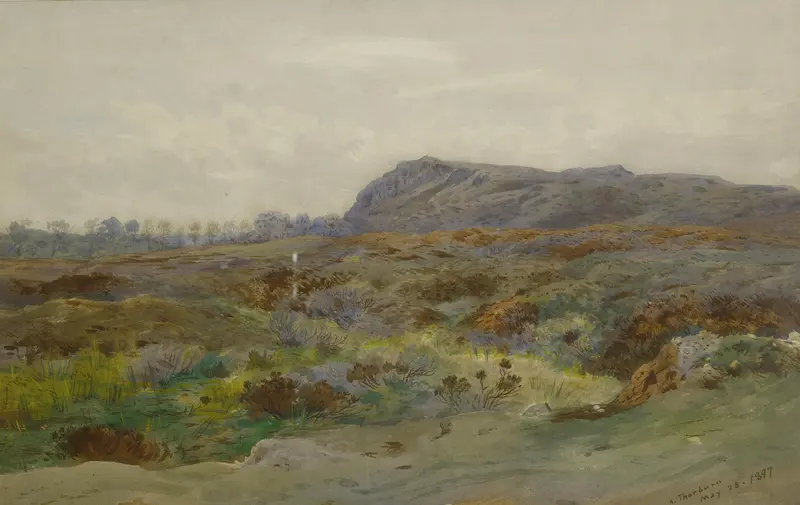
Moorland Landscape
Archibald Thorburn
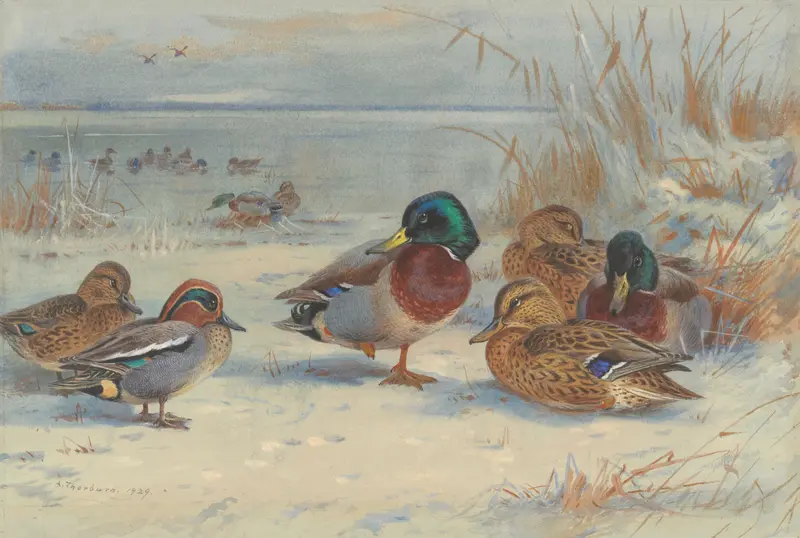
Mallard and teal in the snow
Archibald Thorburn
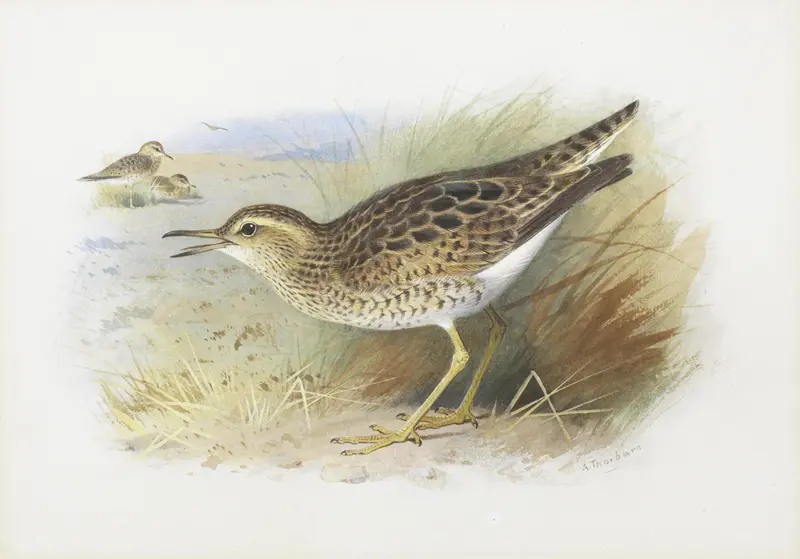
Bartram's Plover
Archibald Thorburn
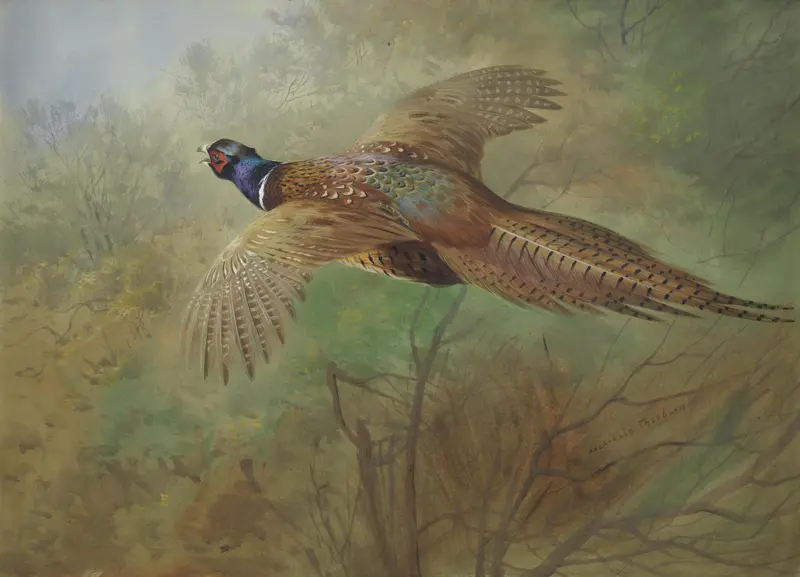
Pheasant in flight
Archibald Thorburn
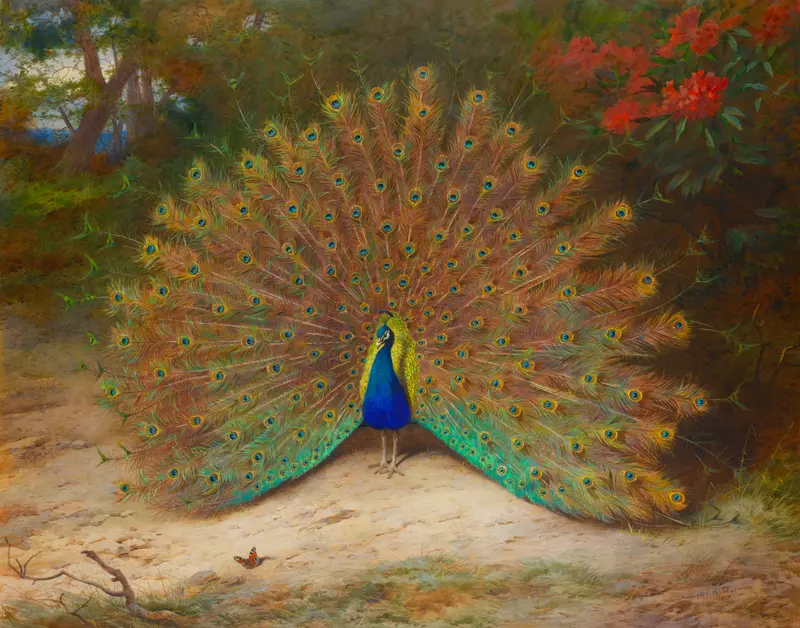
Peacock and Peacock Butterfly
Archibald Thorburn
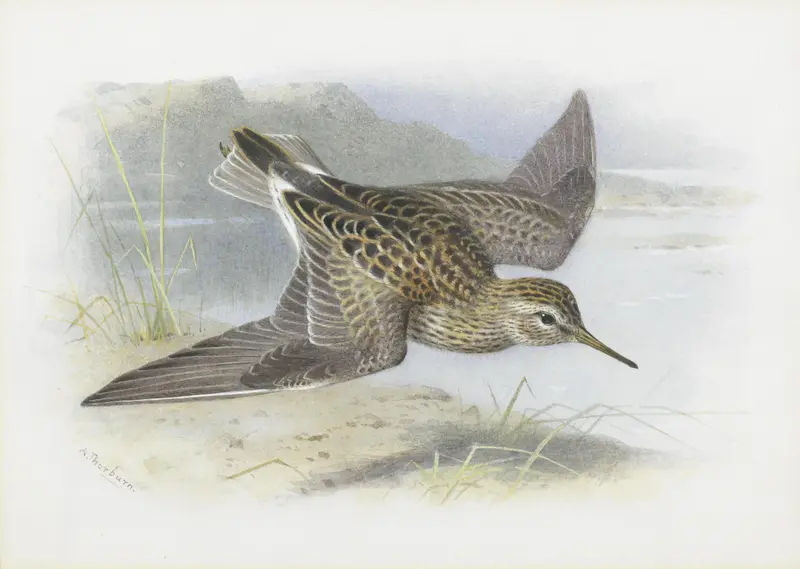
Pectoral Sandpiper
Archibald Thorburn
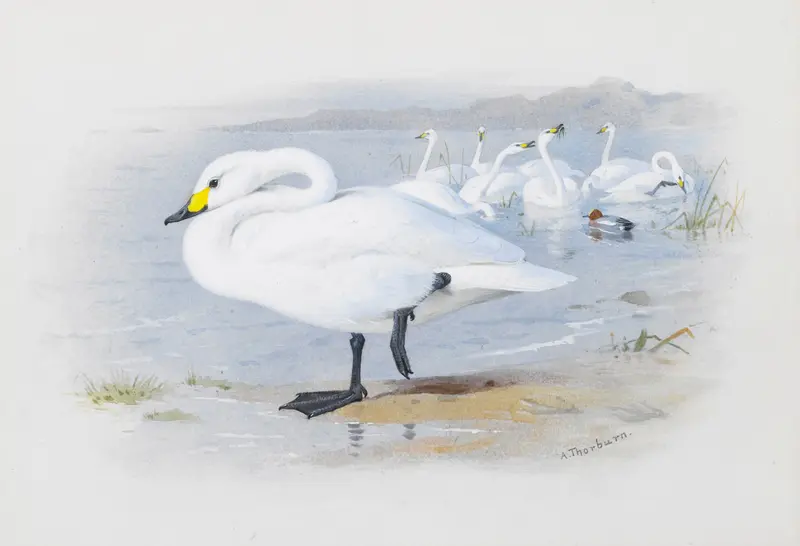
Bewick's swan.
Archibald Thorburn
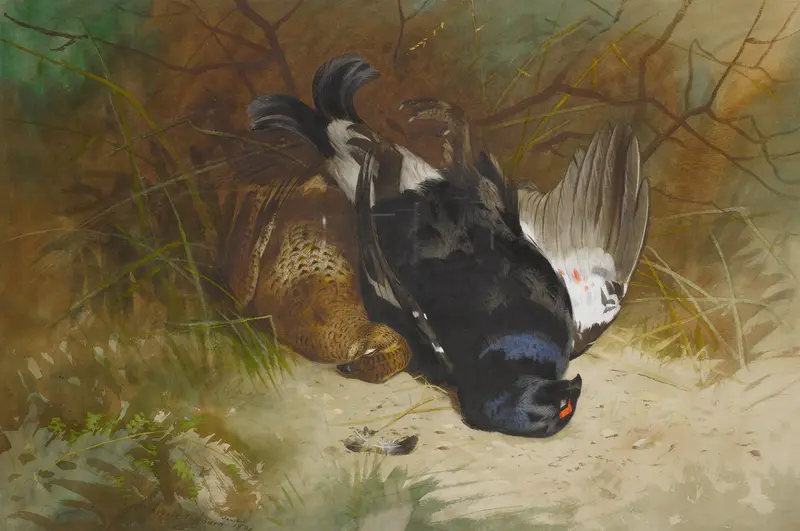
Still life of a pair of Blackgame.
Archibald Thorburn
Blackgame
Archibald Thorburn





