Little Rock Pine — History & Facts
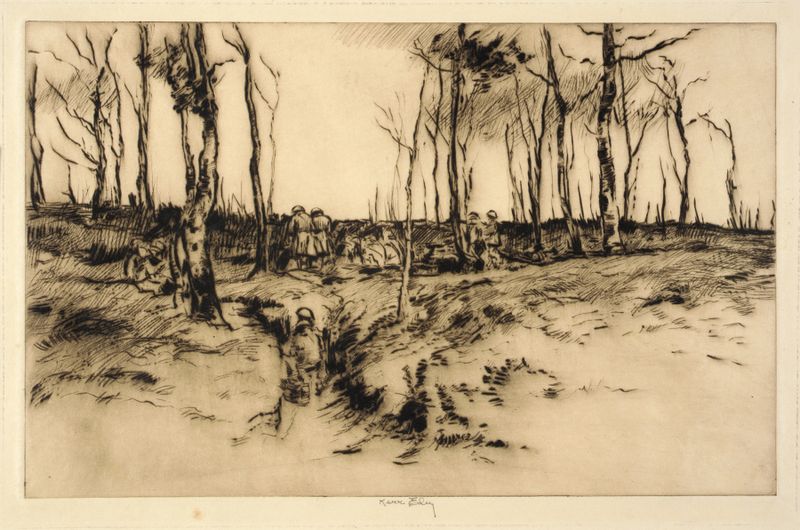
What if beauty was never meant to be finished? In the stillness of Little Rock Pine, a haunting yearning echoes through the landscape, inviting the viewer to linger amidst the trees. Look to the center of the composition where the majestic pine stands, its rugged bark etched in delicate detail. The interplay of light and shadow enhances the textures of the tree, drawing attention to its gnarled branches that reach skyward. Surrounding this centerpiece, softer hues of blue and green cradle the scene, creating a tranquil atmosphere that contrasts with the strength of the pine.
The subtle gradations of color reveal the artist's mastery in capturing both the solidity of nature and the ephemeral quality of light. In this work, the towering pine symbolizes resilience and permanence against the backdrop of a transient world. The delicate strokes evoke a sense of intimacy, as if the viewer is peering into a moment frozen in time. The emotional weight lies in the unfulfilled longing it embodies, reflecting both the beauty of nature and the artist's deep connection to it.
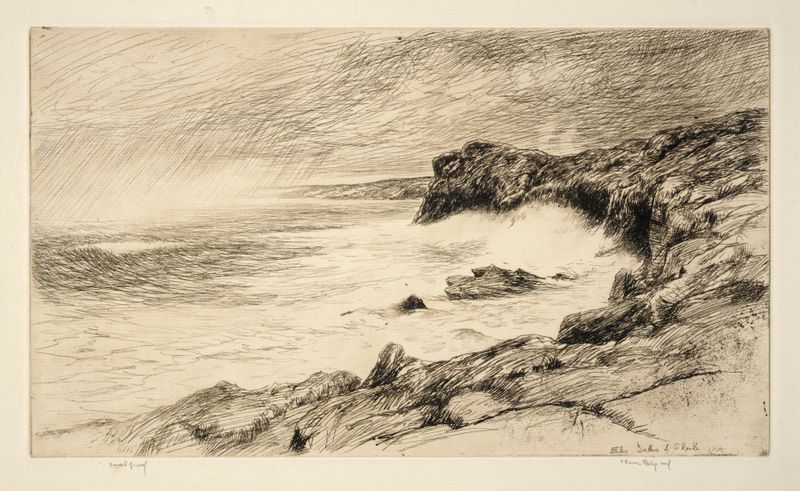
Each element is imbued with a sense of anticipation, hinting at stories untold and moments yet to come. Created in 1921, this piece emerged during a transformative period in the artist's life, as Kerr Eby explored various styles while deeply influenced by the American realist tradition. Living amidst the burgeoning modernist movement, he sought to capture the profound beauty of the natural world. This painting reflects his desire to connect with the landscape, a longing that resonates throughout his work, even as society rapidly changed around him.