
Lord Randal (Some British Ballads) — History & Facts
What first catches the eye in Arthur Rackham’s Lord Randal (Some British Ballads) is the tension that crackles in the quiet of a rustic interior. The table, set with simple bread and a jug, becomes a stage for a drama of suspicion and foreboding. Lord Randal, gaunt and weary, leans away from his companion, his face drawn and wary as he slices into his meal.
Across from him, a woman—her hands clasped tightly, her gaze fixed and unreadable—sits with an air of nervous anticipation. Even the hound beneath the table seems to sense the unease, its head lowered, eyes wary. Rackham’s palette is muted, all earth and shadow, drawing the viewer into the hush of a moment heavy with unspoken words. This illustration belongs to a world where stories were sung long before they were written, and where the ballad of Lord Randal—one of betrayal and fatal consequence—would have been as familiar as the creak of a cottage beam.
Created for Some British ballads and published around 1919, Rackham’s work stands at the crossroads of Edwardian nostalgia and the modern book arts revival. Illustrators like Rackham were celebrated for bringing old tales to life for a new generation, their images often more haunting than the words themselves. While little is recorded about this specific drawing beyond its place in that collection, its quiet menace and psychological depth invite us to linger, searching the faces, the hands, the shadows for what comes next.
More Artworks by Arthur Rackham
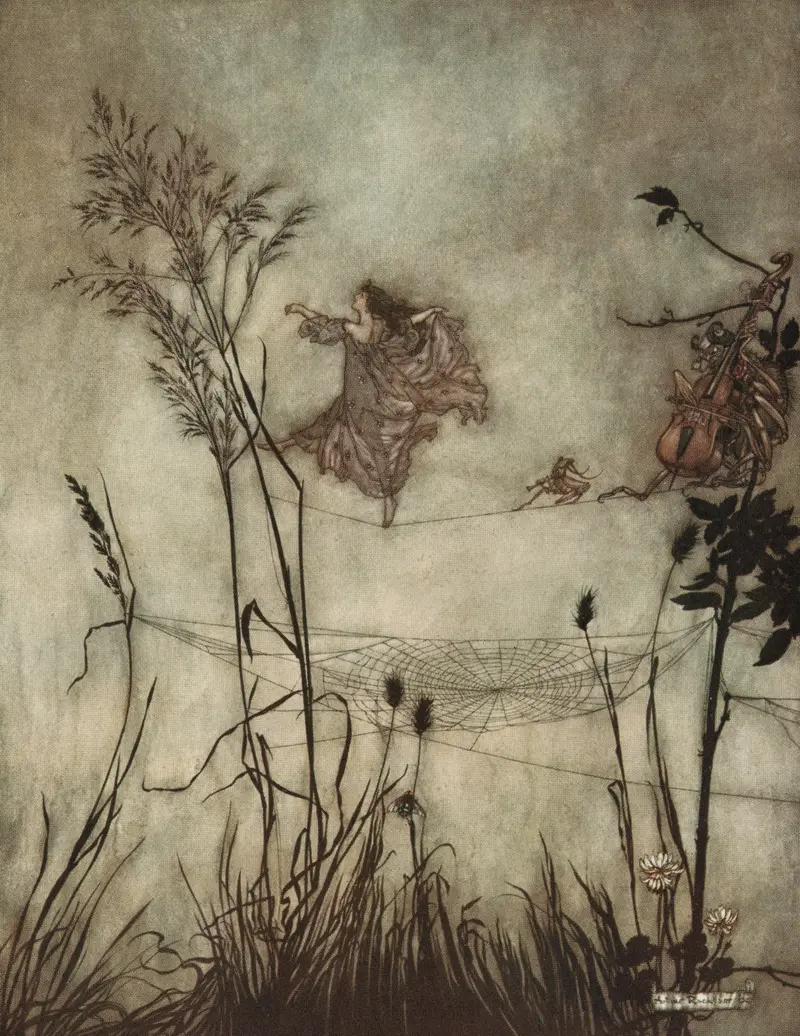
The Fairies Are Exquisite Dancers
Arthur Rackham
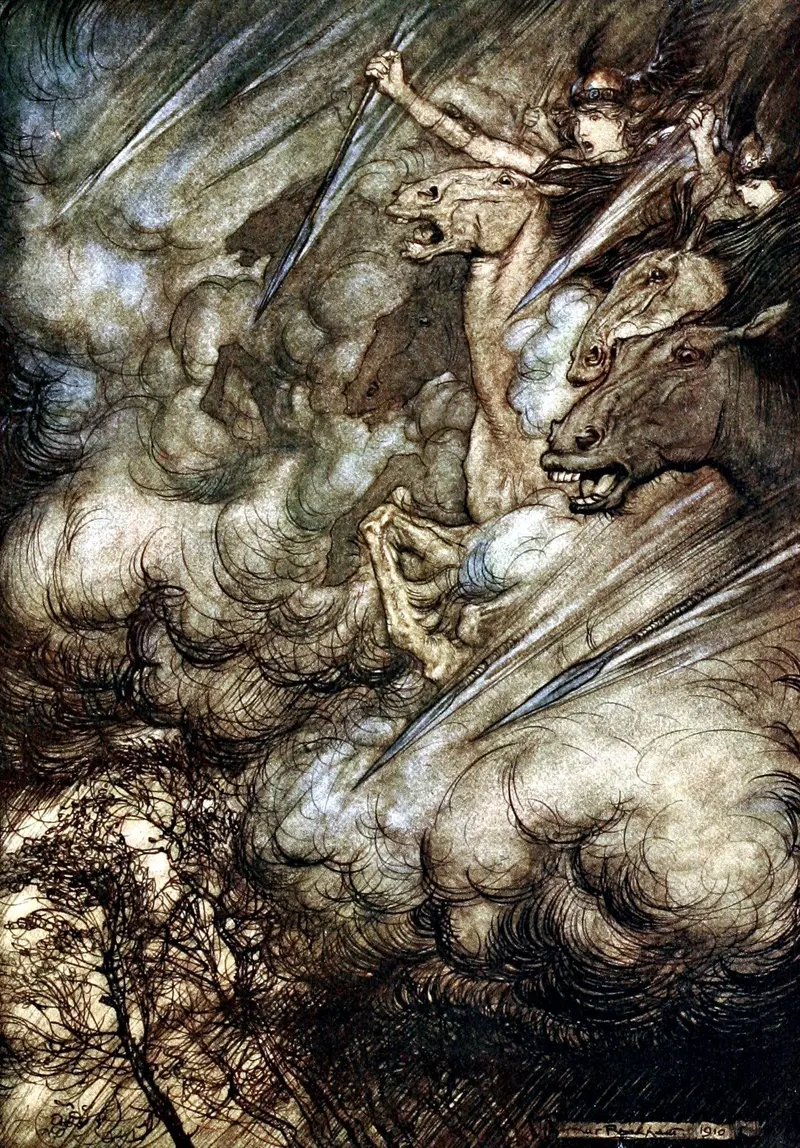
The Ride of the Valkyries
Arthur Rackham

Arthur Rackham ('A Transpontine Cockney')
Arthur Rackham
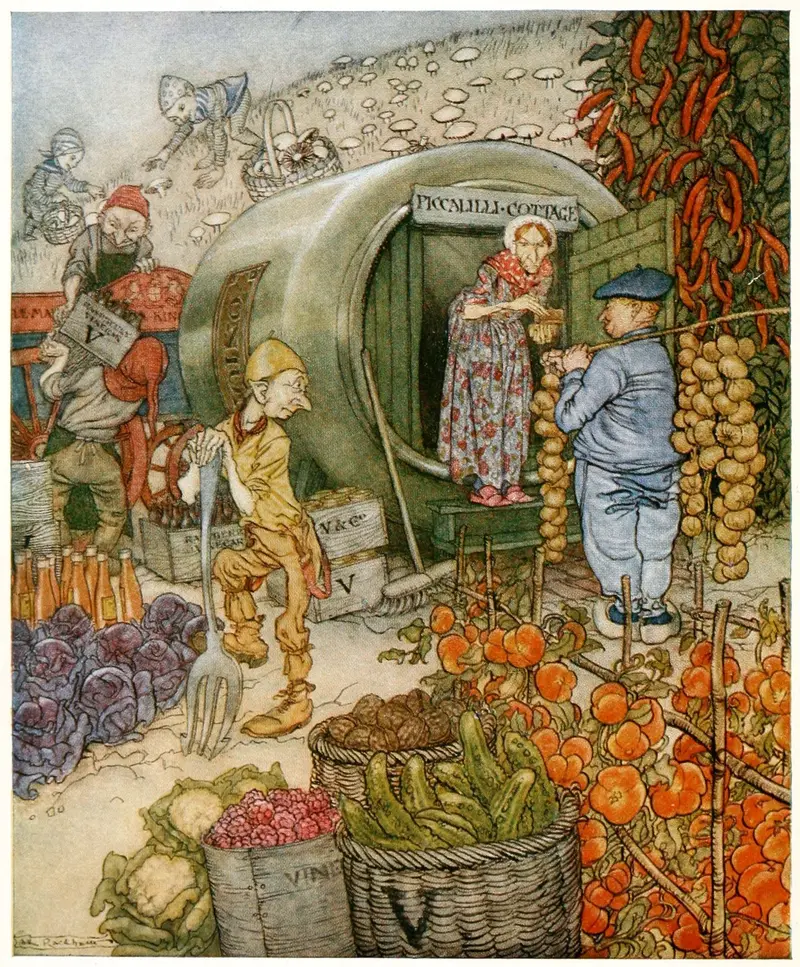
English Fairy Tales (Frontispiece)
Arthur Rackham
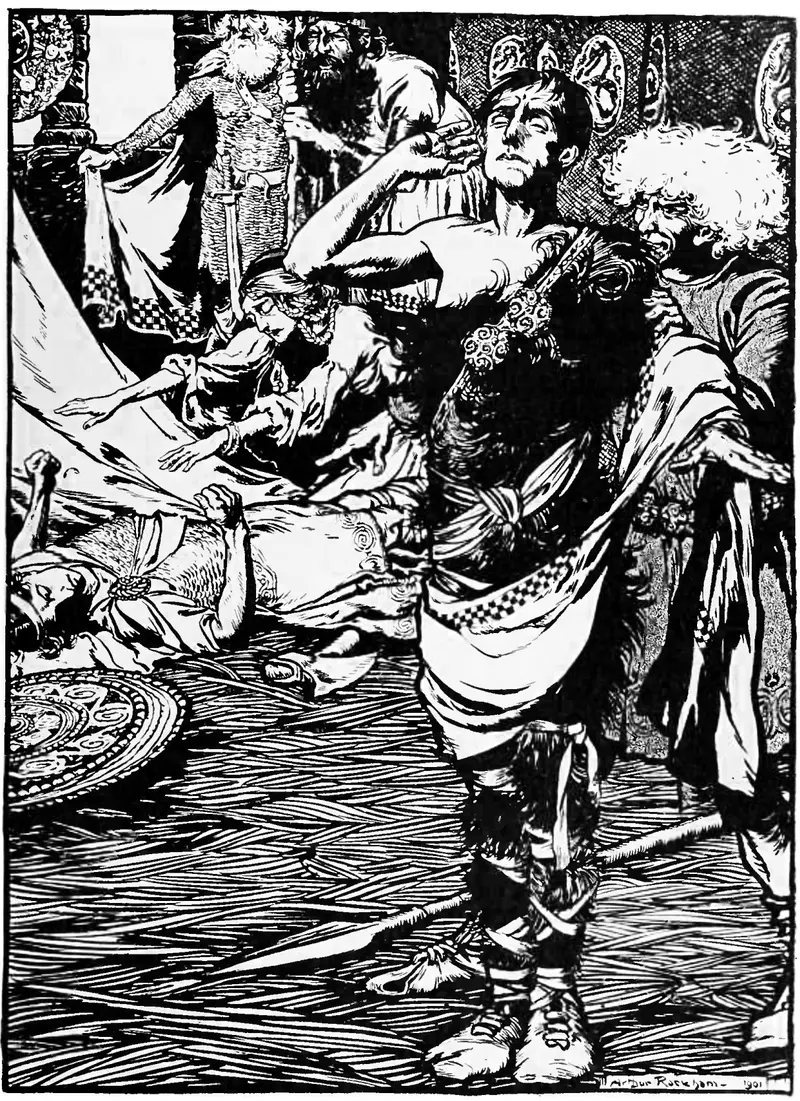
There Broke Forth a Wailing and a Lamentation
Arthur Rackham
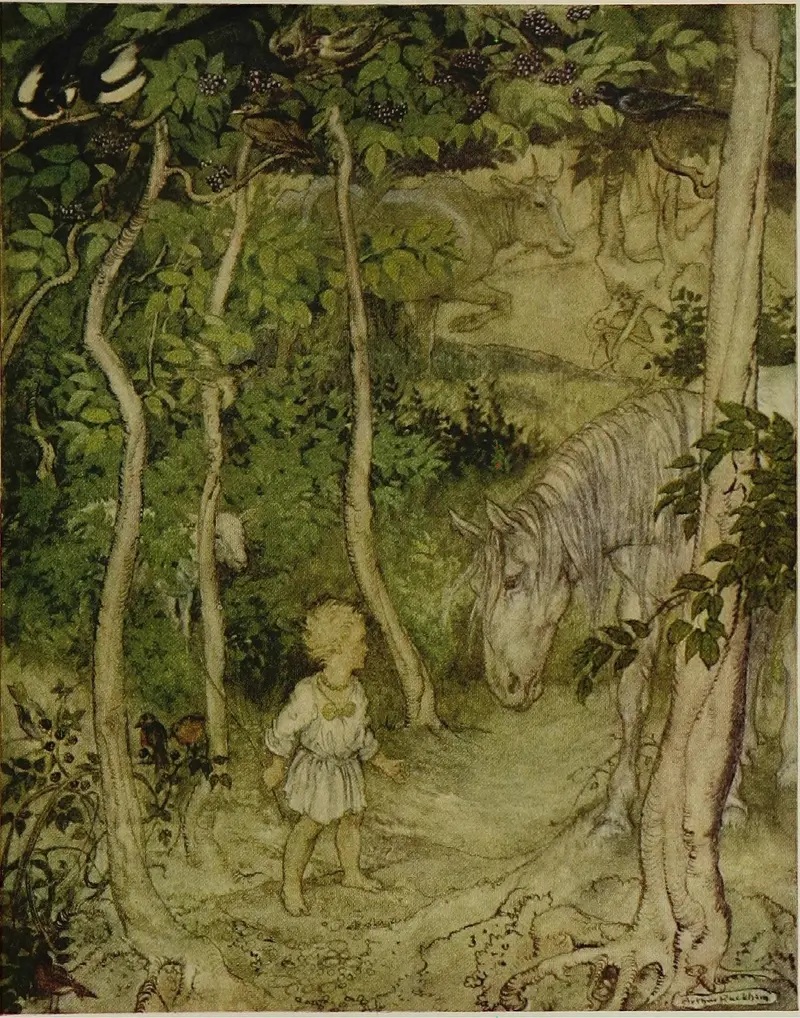
Irish Fairy Tales
Arthur Rackham
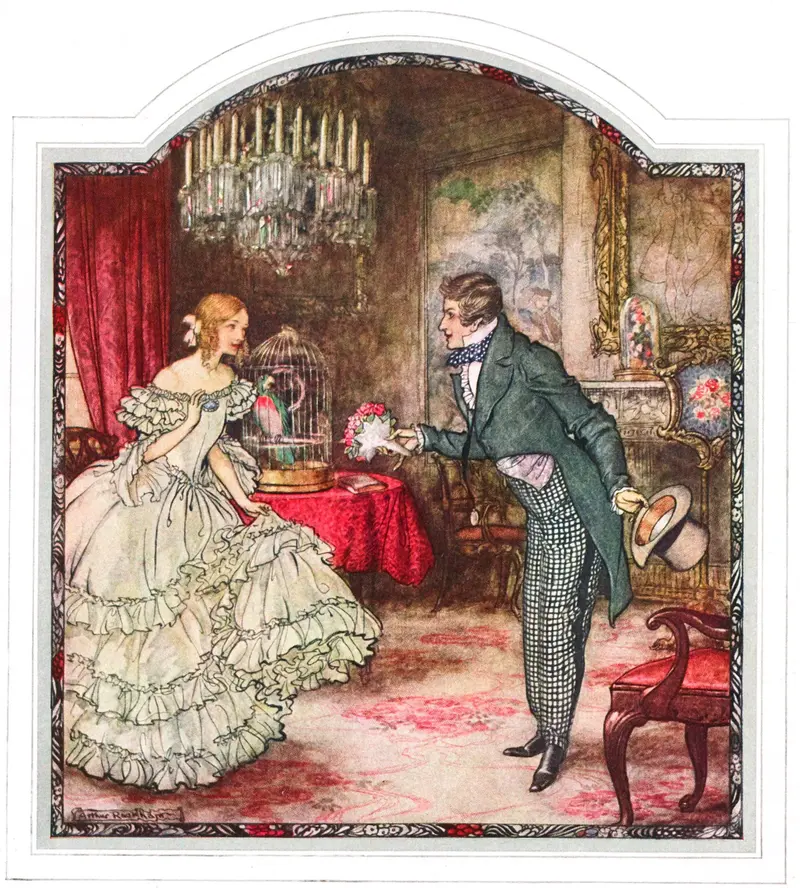
The Bouquet
Arthur Rackham

Mother Goose: The Old Nursery Rhymes
Arthur Rackham
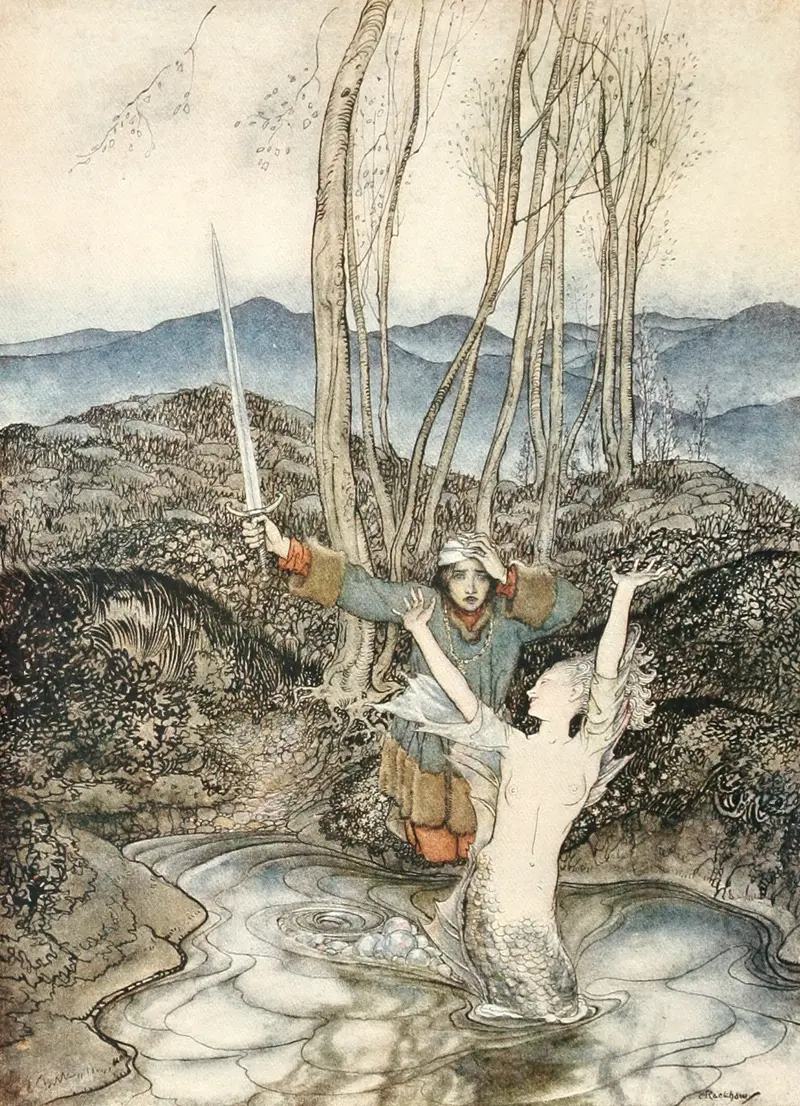
Clerk Colvill and the Mermaid
Arthur Rackham
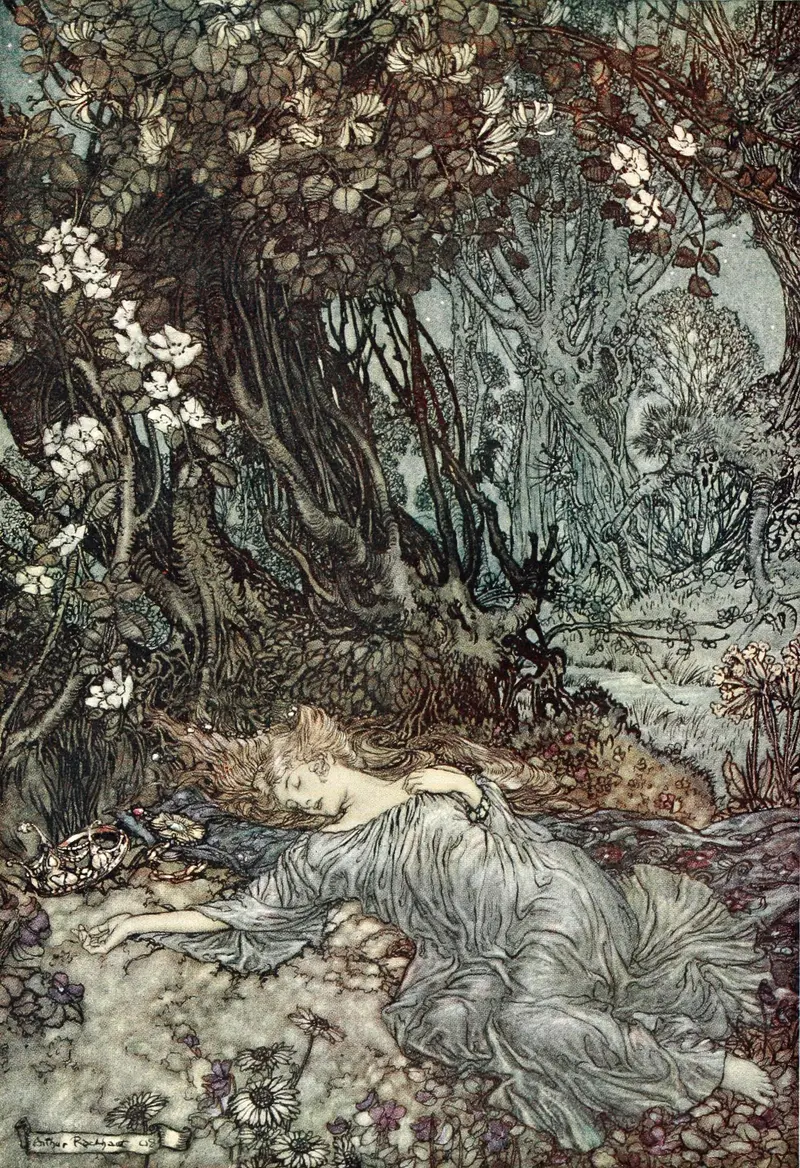
Titania Lying Asleep (A Midsummer Night's Dream)
Arthur Rackham





