Loss kaljul — History & Facts
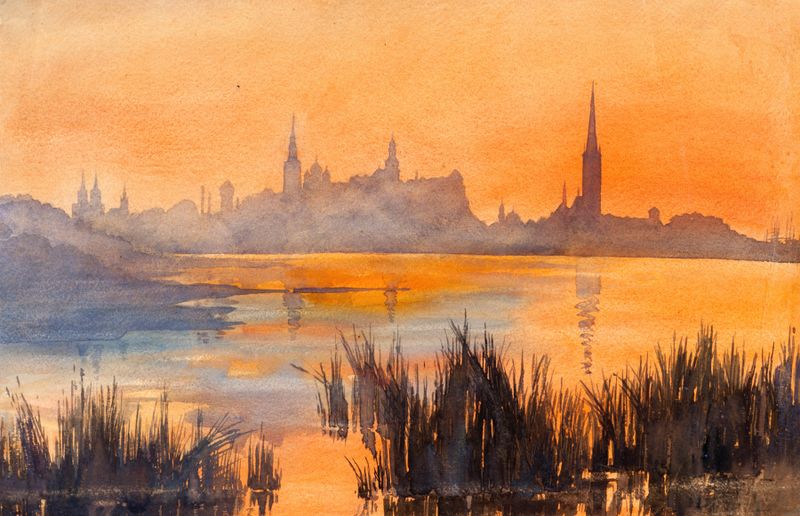
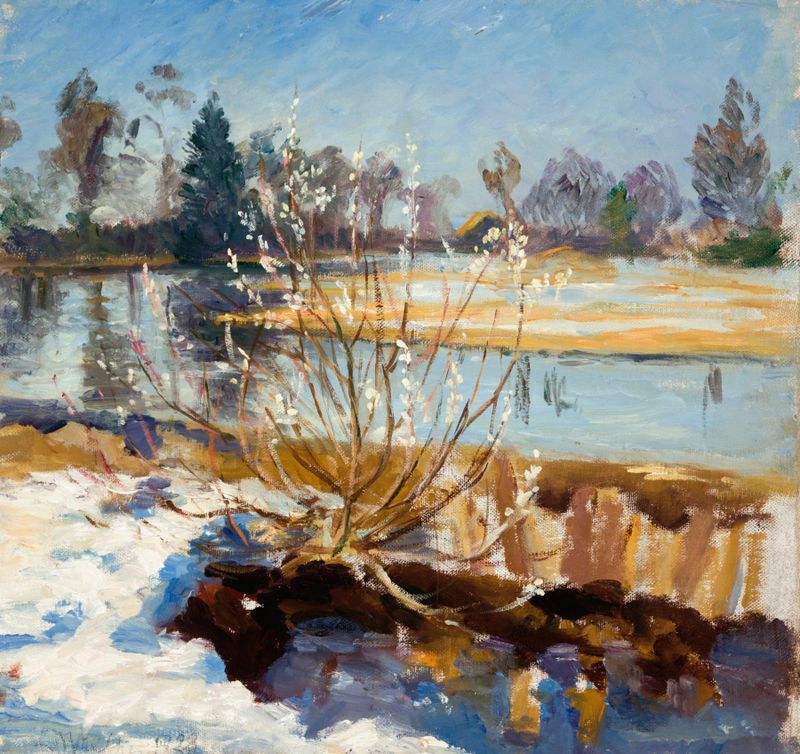
Could a single brushstroke hold eternity? In Loss kaljul, the viewer is invited to confront the fragility of existence through a landscape steeped in reflection and melancholic beauty. Look to the center of the canvas, where a still body of water mirrors the somber hues of twilight. The soft, muted blues and grays harmonize to create an atmosphere of introspection. Notice how the gentle ripples disturb the surface, yet the reflections remain hauntingly clear, suggesting a transient moment caught between reality and illusion.
The sparse landscape surrounding the water enhances the sense of isolation, leading the eye to linger on the delicate interplay of color and light. The artwork captures an emotional tension between hope and despair. The fading light hints at the end of a day, while the stillness of the water evokes a longing for what once was. The subtle brushstrokes convey a sense of movement, reflecting the passage of time and the inevitability of change.
In this quiet solitude, there’s a profound sense of loss, but also the possibility of renewal hidden within the depths. Created in 1918, Loss kaljul emerged during a tumultuous period in Lilly Walther's life, as she grappled with the aftermath of World War I and its profound impact on society. Nestled in a world shifting towards modernism, Walther was exploring the boundaries of expression, intertwining her personal experiences with the broader changes in artistic movements. This painting reflects not just her inner turmoil, but also the collective mourning felt across a continent reeling from conflict.