
Loue Valley, Stormy Weather — History & Facts
A heavy sky presses down on the Loue Valley, its dark clouds rolling over the land like a slow-moving tide. The eye is drawn first to the pale limestone cliffs, their rough faces catching the last slant of light before shadow overtakes the valley. This is not a landscape of idle beauty, but one of tension and anticipation—the kind of place where the air feels thick and charged, where the earth seems to brace itself for what comes next.
The dense foliage in the foreground, rendered in deep greens and browns, anchors the viewer in the immediate present, while the distant hills recede into a haze of blue and grey, suggesting both depth and uncertainty. Painted around 1849, Loue Valley, Stormy Weather belongs to a moment in French art when painters like Gustave Courbet turned away from idealized views to embrace the raw, unfiltered world around them. Courbet, born in the Franche-Comté region, often returned to these familiar valleys, capturing their moods with a realism that unsettled his contemporaries. Works like this, now housed in the Musée des beaux-arts de Strasbourg, were not grand commissions but personal meditations on place and weather—records of a world in flux.
In the charged stillness of this scene, you sense the artist’s conviction that nature, in all its unpredictability, is worthy of close and honest attention. Let your gaze linger on the boundary between light and shadow; this is where Courbet’s vision comes alive.
More Artworks by Gustave Courbet
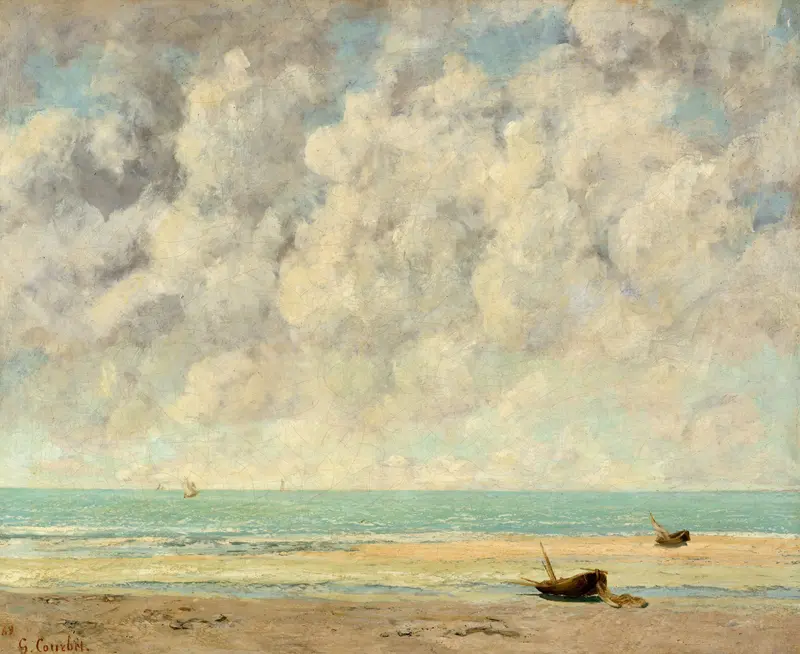
The Calm Sea
Gustave Courbet

A Burial at Ornans
Gustave Courbet
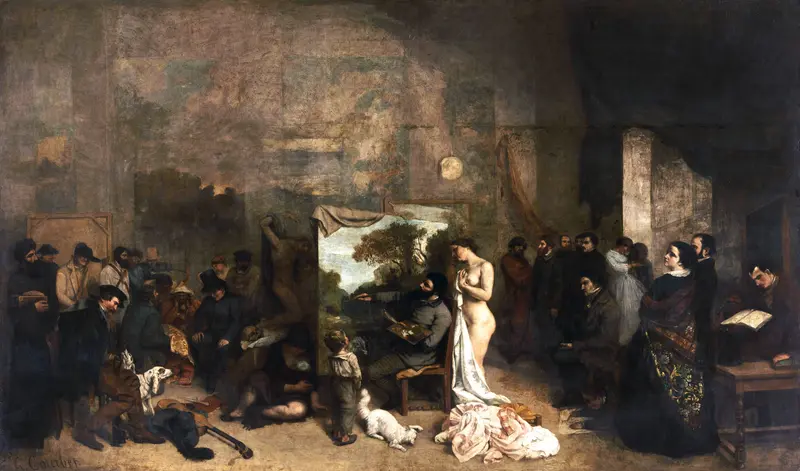
The Painter's Studio
Gustave Courbet
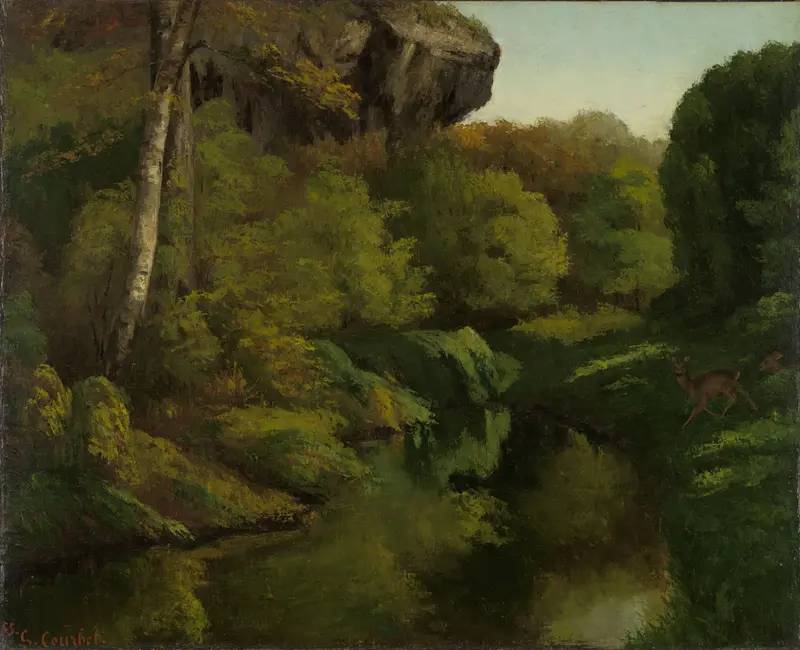
View in the Forest of Fontainebleau
Gustave Courbet
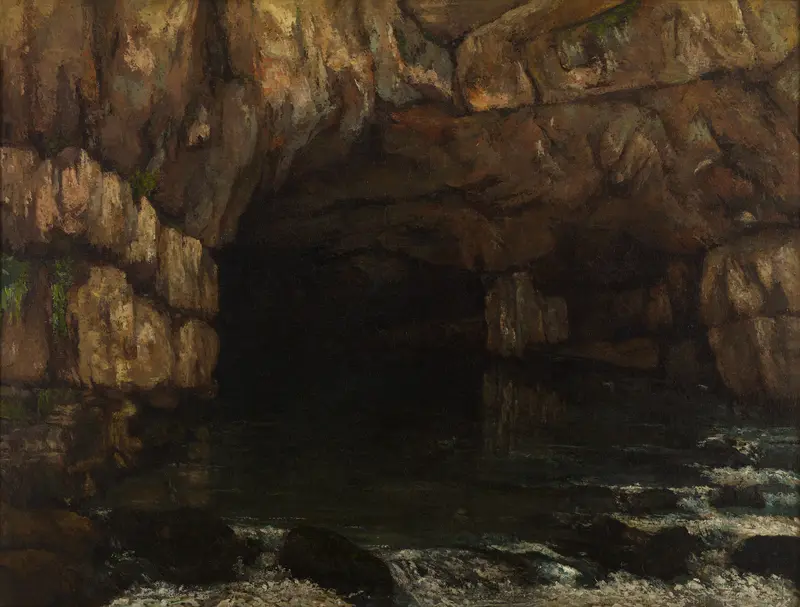
La source de la Loue (The Source of the Loue)
Gustave Courbet
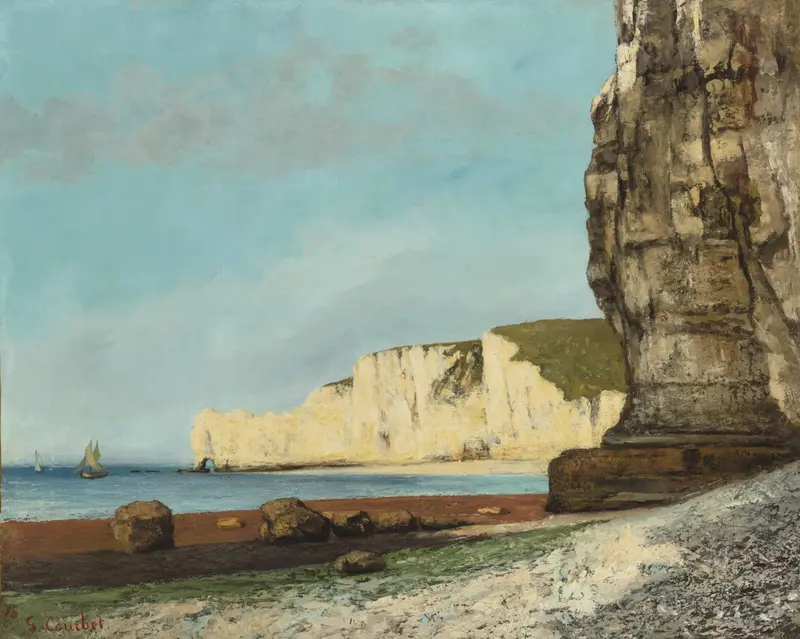
Étretat; Les Falaises
Gustave Courbet
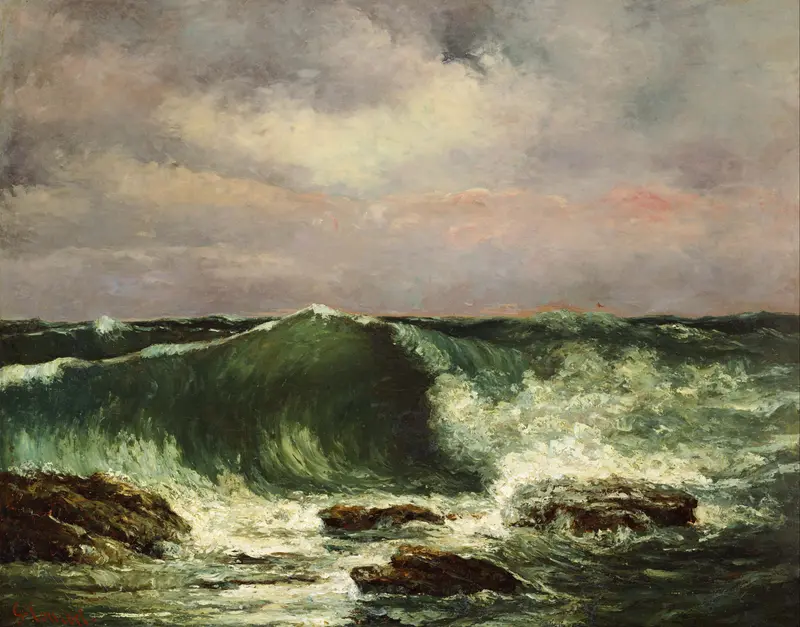
Waves
Gustave Courbet
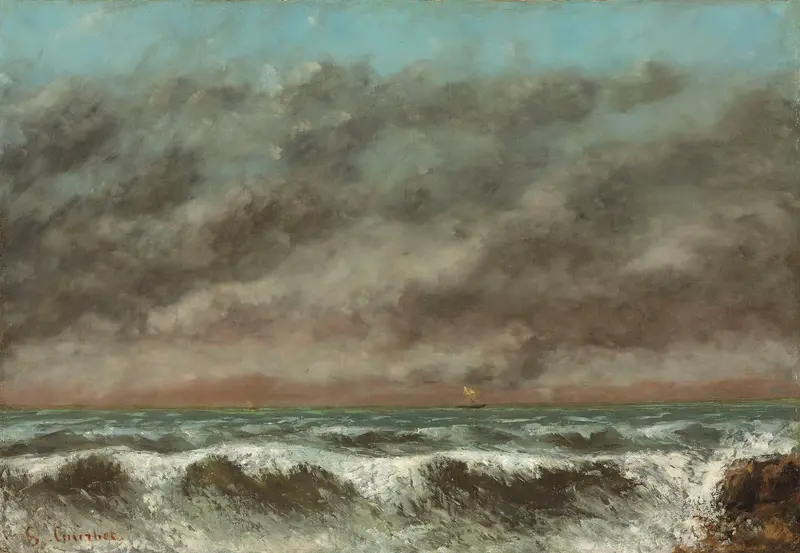
Marine
Gustave Courbet
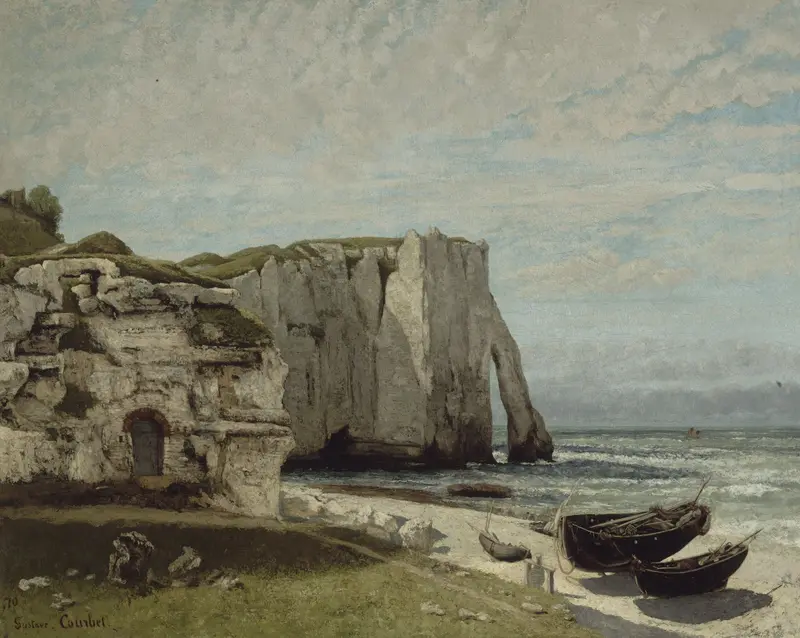
The Etretat Cliffs after the Storm
Gustave Courbet
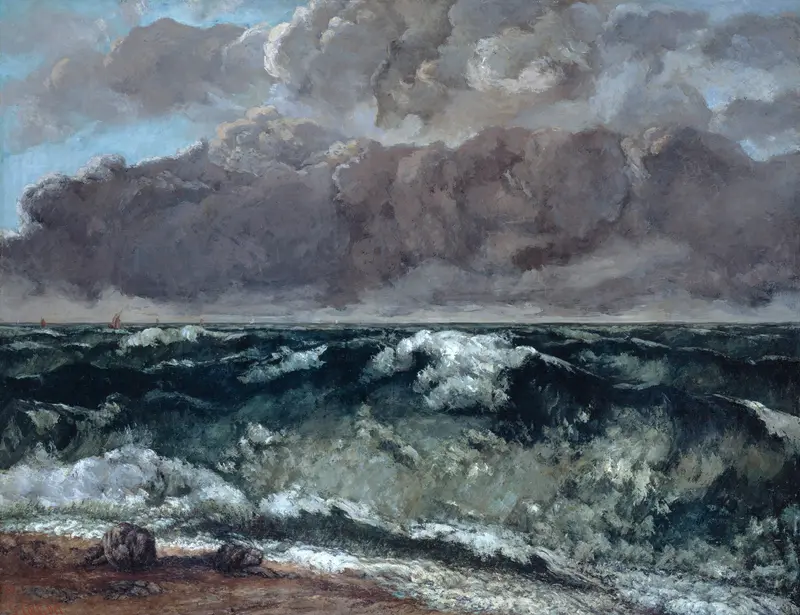
The Wave
Gustave Courbet
More Landscape Art

The Starry Night
Vincent van Gogh

View of Delft
Johannes Vermeer

Water Lilies
Claude Monet

The Grand Canal, Venice, looking north-west from the Ca' Corner to the Ca' Contarini degli Scrigni, with the campanile of Santa Maria della Carità
Canaletto

Windsor Castle
Canaletto

The Grand Canal looking North-East from the Palazzo Dolfin-Manin to the Rialto Bridge
Canaletto